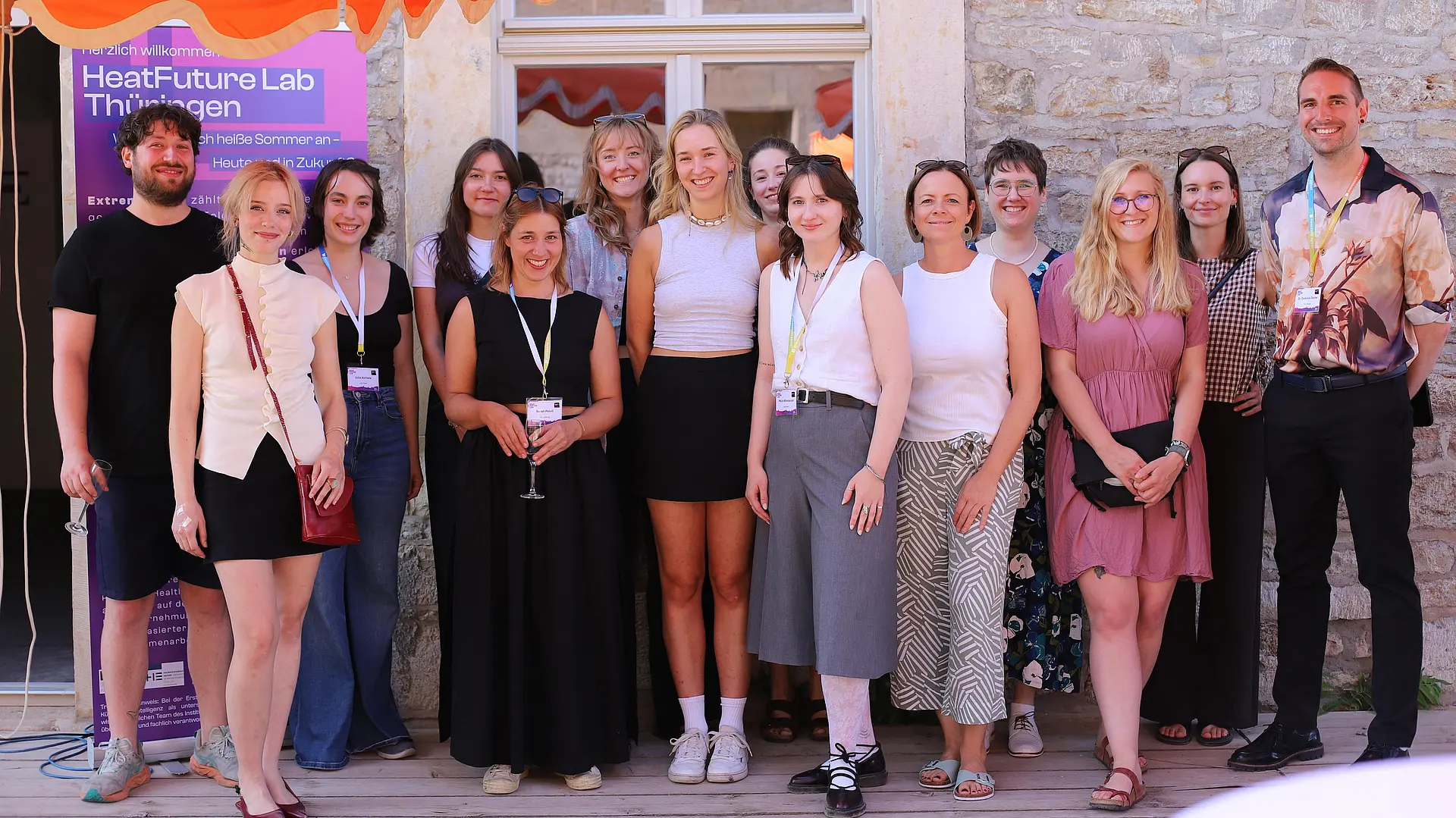
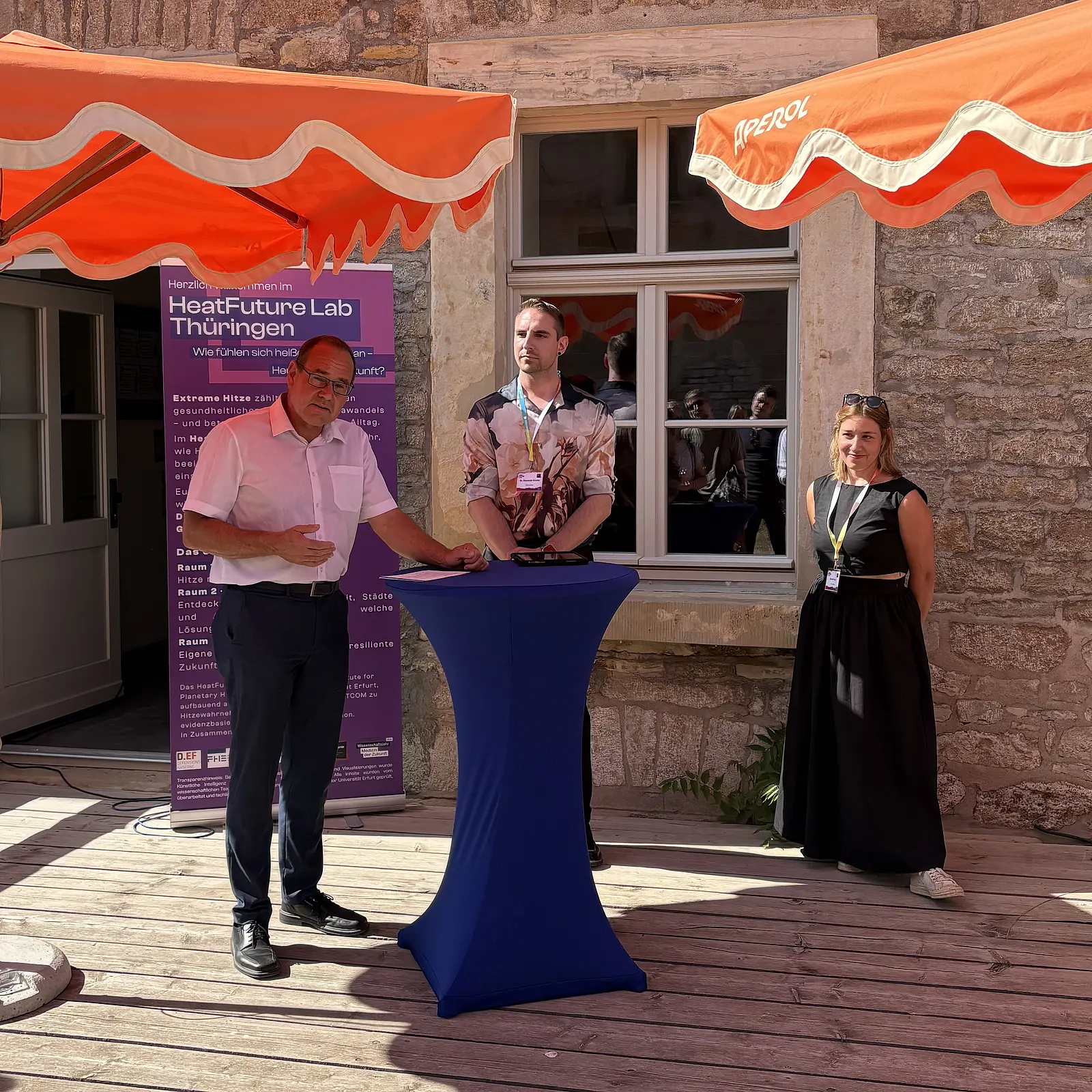
How can we better prepare for hot summers – and what role do health communication, prevention and the medicine of the future play in this? Over three weekends in August, the HeatFuture Lab Thüringen at the Institute for Planetary Health Behaviour (IPB) at the University of Erfurt invited members of the public to explore these questions together with young researchers. Around 1,100 people visited the future lab at the Defensionskaserne on Erfurt’s Petersberg, making the project a great success in participatory science communication.
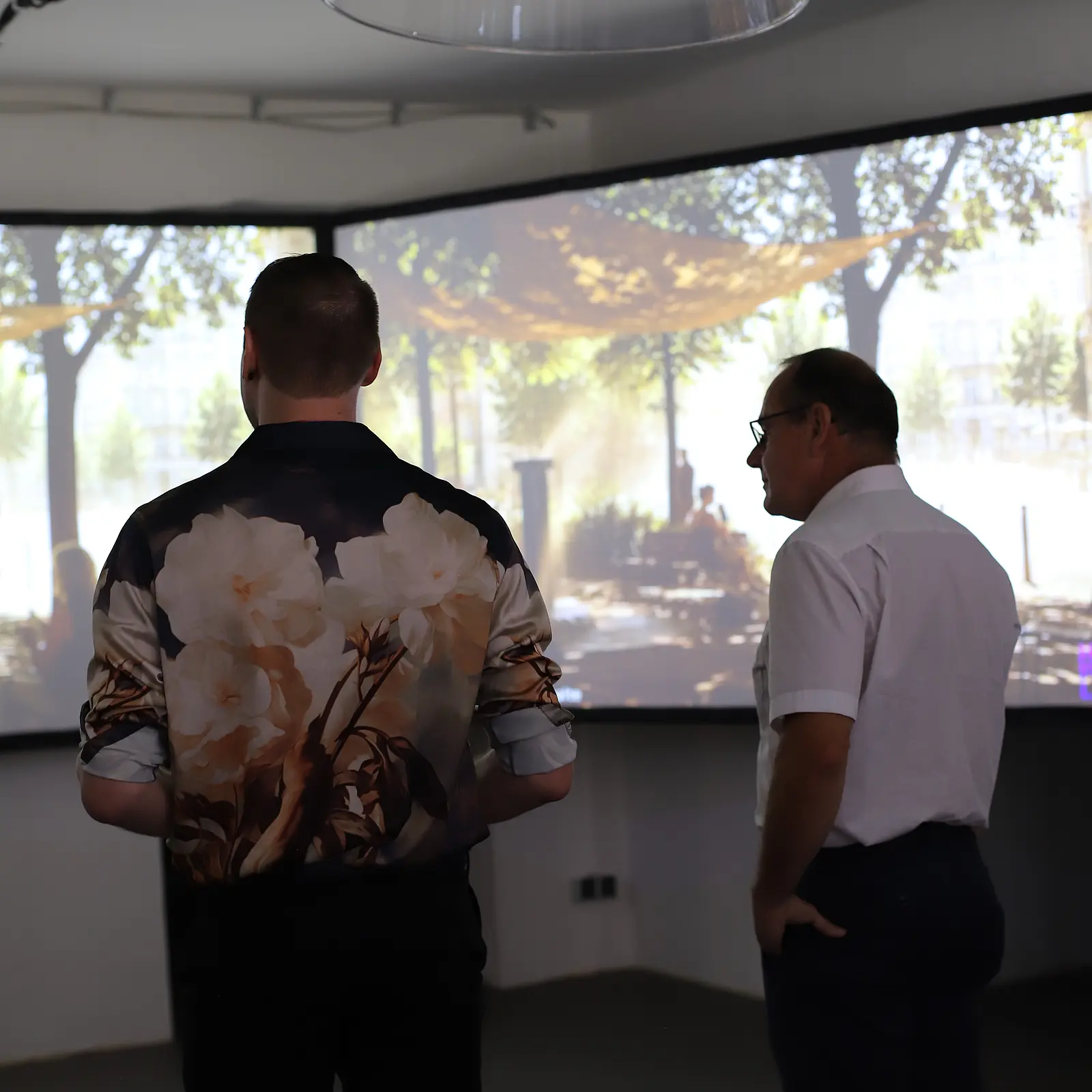
At the HeatFuture Lab, visitors were able to experience, discuss and help shape what a hot summer of the future might look like. Using AI-generated visions based on real views of Erfurt, alongside accessible information on heat and health, the lab explored how heat affects our daily lives and well-being – and how cities, health communication and healthcare can respond more effectively in the future.
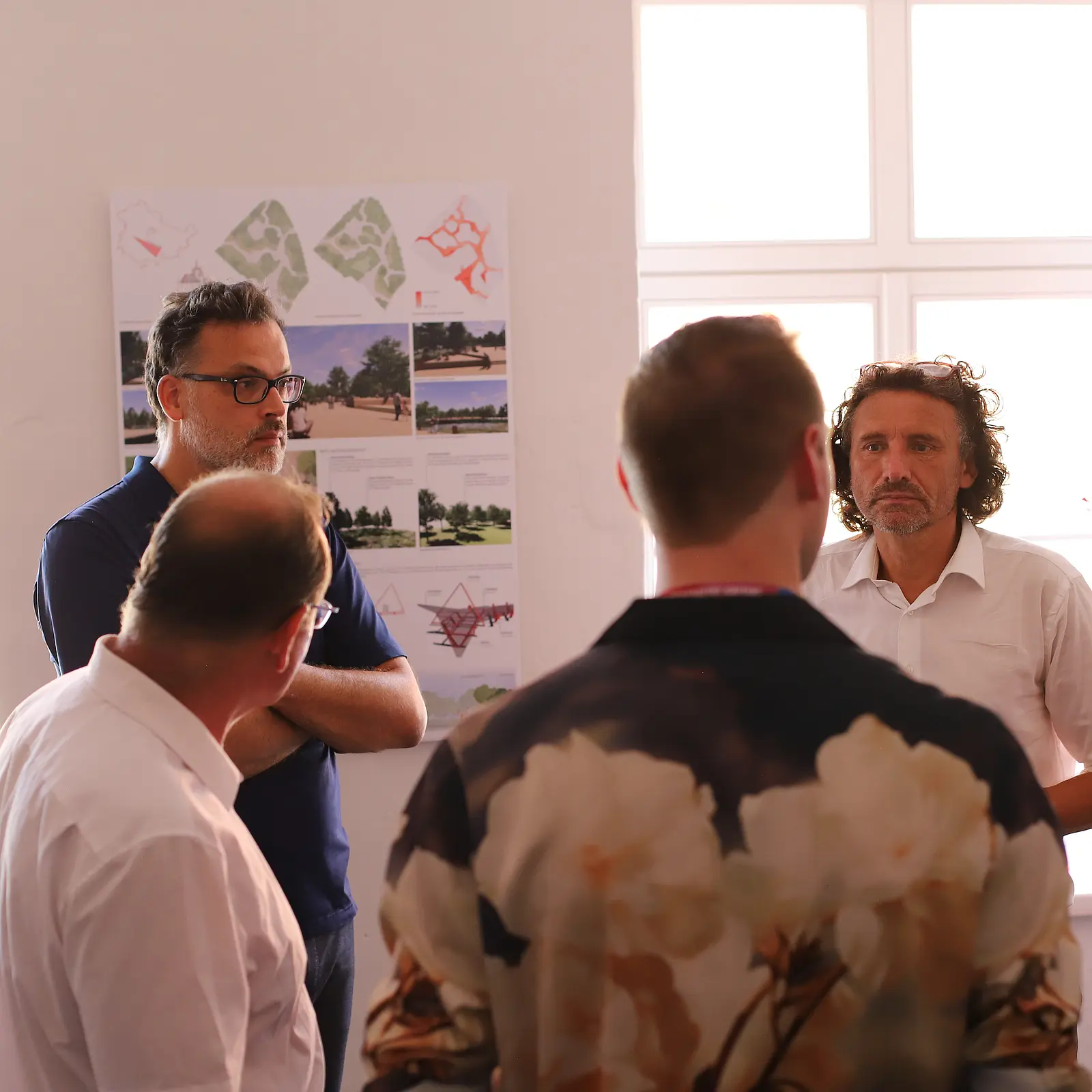
But the experience went beyond simply looking and learning: visitors developed their own visions of the future, shared ideas and wishes for dealing with heat, and engaged in conversations with the researchers on site. Across the three event weekends, this created a diverse picture of what concerns people about increasingly hot summers and what changes they would like to see in the future.
With around 1,100 visitors, the response to the HeatFuture Lab truly exceeded our expectations. We were particularly pleased by the willingness of visitors not only to explore the exhibition but also to actively get involved. Through the many conversations, visions and contributions, we gained valuable insights into what concerns people about heat and what they hope for from cities, health communication and the medicine of the future.
says Dr Dominik Daube, co-head of the Lab.
However, the project did not end with the close of the exhibition. The team at the Institute for Planetary Health Behaviour is now scientifically analysing the data collected through the participatory activities in the lab. The findings will, among other things, inform a policy brief aimed at making the results accessible to policymakers and practitioners. At the same time, key content and findings from the HeatFuture Lab will be made available digitally and shared widely with the public through the Institute for Planetary Health Behaviour.
The HeatFuture Lab Thüringen has demonstrated how science communication can become a shared process of research and co-creation: members of the public were not merely an audience, but actively contributed their perspectives, experiences and ideas. For the project team, these insights provide an important basis for further exploring how prevention, health information and healthcare can be designed to meet the challenges of increasing heat.
The HeatFuture Lab Thüringen was funded by Wissenschaft im Dialog as part of the university competition for the Wissenschaftsjahr 2026 – Medicine of the Future.

![[Translate to English:] facebook icon](/fileadmin/SocialMediaIcons/iconfinder_06-facebook_white.svg)

![[Translate to English:] instagram icon](/fileadmin/SocialMediaIcons/iconfinder_38-instagram_white.svg)
![[Translate to English:] YouTube icon](/fileadmin/SocialMediaIcons/iconfinder_18-youtube_white.svg)
![[Translate to English:] xing icon](/fileadmin/SocialMediaIcons/iconfinder_xing_white.svg)
