Transcultural History

Degree profile
Course Details
The Master program in Transcultural History enables students to study selected regions of the world in greater depth, across epochs and cultures. The aim is to discuss world-historical concepts and at the same time to explore the particular national and regional historical developments.
The Erfurt concept of a "History of World Regions" is based on a double insight: The world proves to be a global network of relationships and at the same time an ensemble of manifoldly differentiated spaces. The interaction of the Erfurt professorships refers to the fact that the cultures and world regions under consideration have always been characterized by interaction and exchange as well as by exclusion and conflict. The aim is to sharpen our awareness of the dynamic tensions of globalisation, which is determined by the dissolution of boundaries and interdependence on the one hand, and regionalisation and containment on the other.
That is why the study of history in Erfurt is designed to transcend epochs and compare cultures. It makes use of a diverse range of cultural and social science theories and methods, with particular emphasis on the perspectives of historical anthropology and a spatial analytical approach.
- world-regional and cross-epochal
- set one's own priorities
- research-oriented
- individual care
Job & Career Perspectives
Our graduates work in the following professional fields:
- in international cultural, political and scientific institutions
- in research
- in archives, libraries or museums
- in the communication of historical knowledge in the media and the public
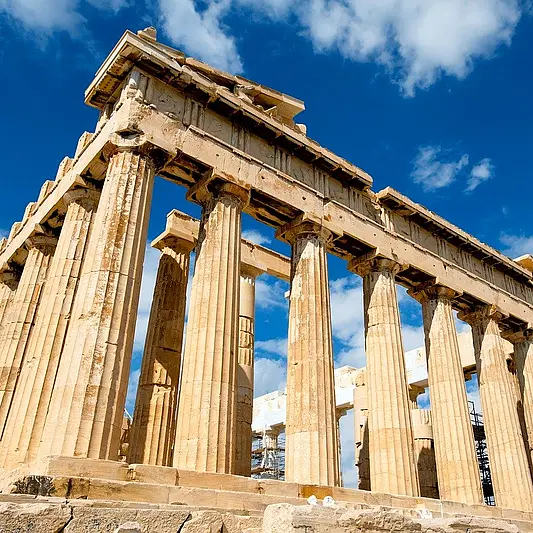
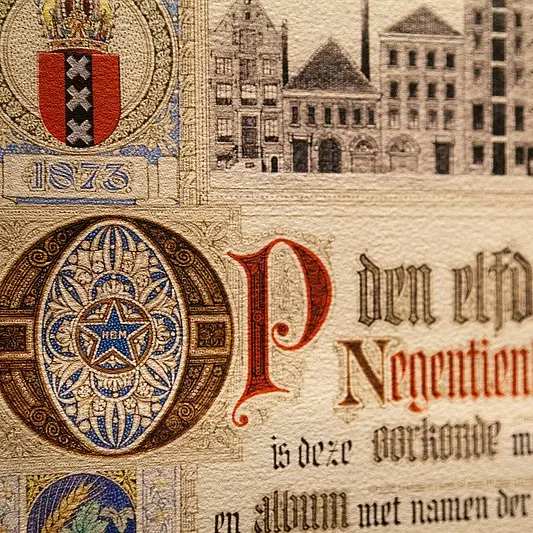
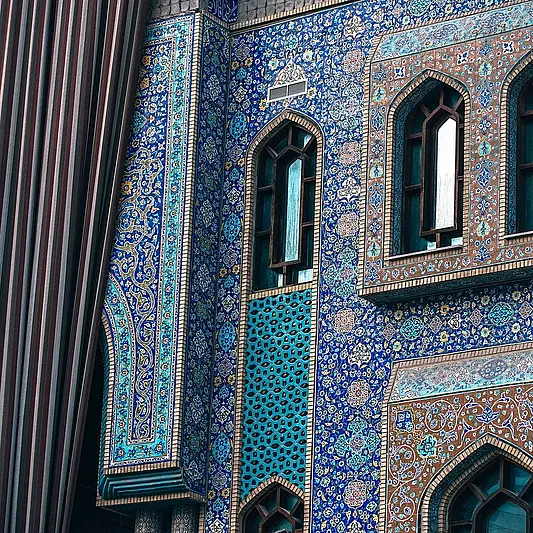
Structure of the Master’s programme in Transcultural History
Duration of the Master’s programme
The master's programme in “Transcultural History” usually lasts four semesters (two academic years).
Structure of the degree programme
The programme is divided into a three-semester phase (90 LP) and a fourth semester (30 LP), during which the master's thesis is written.
The programme comprises the following modules:
- Theories and Methods (compulsory in the first year of study);
- Globality and Locality;
- World and temporal orders: concepts and practices;
- World Regions: Contact, Conflict, Transfer;
- Spaces of Knowledge;
- Research and Practice Module (compulsory).
The master's programme in Transcultural History may be completed with the following specialisations upon application:
- North American History,
- West Asian History,
- European History,
- Public History.
Examination and Study Regulations, Sample Study Plan & Module Catalogue
In the examination regulations, you will find important information on the programme’s learning outcomes and content, the language requirements, the structure of the programme, as well as the teaching modules and module examinations.
Examination Regulations for the Master's Programme in Transcultural History 2026 (pdf)
A semester abroad during a Master’s degree programme

Studying Abroad
The Department of History maintains numerous partnerships with universities in Belgium, France, Greece, Italy, Lebanon, Poland, Romania, Switzerland, Spain, the Czech Republic, Turkey and the USA. Funding opportunities are also available for studying in other countries.
Information on studying, internships and language courses abroad:
Exchange programme with Temple University, Philadelphia

The history subject areas at Temple University in Philadelphia and the University of Erfurt have developed a successful partnership. Since 2018, this partnership has been supported by the ISAP programme of the German Academic Exchange Service.
Further information:
Open Day

Getting to know the University of Erfurt and the Department of History
A wide range of information and advisory services give you the opportunity to see for yourself what student life is like in Erfurt during the Open Day. Join a guided tour to explore the leafy campus and the beautiful old town centre.
Information on the programme: Open Day
Order or download information material

Would you like to have a copy of the course brochure? Then request our free information pack with no obligation. You’ll receive it by post, delivered straight to your door, in just a few days.
Order your information pack now!
Don’t want to wait? Then download the brochure now from the Download Centre.
Entry requirements
Entry requirements for the Master’s in Transcultural History
Language requirements for the Master’s in Transcultural History
Language requirements
Depending on the global, regional or subject-specific focus of the master's thesis, specific language skills may be required.
Language Centre
The Language Centre offers around 140 language courses each semester in 16 modern and classical (foreign) languages.
It helps you to acquire new language skills and build on your existing ones.
www.uni-erfurt.de/sprachenzentrum
International applications*
Student applicants whose first language is not German must provide evidence of their German language proficiency (level B1) at the time of application.
Information on the required German language proficiency and the German language exam for admission to higher education (DSH):
We are studying for a master's programme in Transcultural History
Please note: Once you watch the video, data will be transmitted to Youtube/Google. For more information, see Google Privacy.

History has held a special fascination for me ever since I was a child. I therefore find questions about people’s everyday lives in different eras particularly intriguing.
The main attractions of the ‘Transcultural History’ Master’s programme are the opportunity to tailor the programme to my own interests and the straightforward, direct contact with the university lecturers.
The Master’s in Transcultural History, amongst other things, caters to the students’ wishes. As students already enjoy working in a transcultural and interdisciplinary manner on the BA in History, they can now continue to do so on the Master’s programme. The course offerings are clearly structured, yet offer something for everyone, allowing students to complete their Master’s degree according to their areas of interest or specialisation .
If you do have a specific request, you can contact the student union or the lecturers, and with a bit of luck, a seminar on your chosen topic will be organised. Thanks to the university’s manageable size, you quickly get to know people and often find yourself in one of the seminars or colloquia, which is a definite plus for me.
In terms of difficulty, the modules are well within reach and offer challenges; if you run into problems, you can usually get practical help from the university lecturers quite quickly. Anyone looking for greater challenges has the opportunity to submit an application for one of the many exchange places at partner universities to broaden their horizons.
Outstanding essay: Lilú Kruspe receives the German Studies Association prize

Show moreFor her seminar paper , ‘In Search of…: German Foreign Legionnaires as Explorers in the Mirror of Contemporary Colonial Imagination’, she was awarded the prize for the best essay by a female graduate by the German Studies Association (GSA). Having completed her bachelor's programme (History with a minor in Literary Studies), Lilú is now studying for a master's programme in Transcultural History.

The recommended application period for the Master's programme Transcultural History is from 1 January to 15 September for the winter semester and for the summer semester from 1 December to 15 March. *)
Information on application deadlines and application modalities, admission, enrolment can be found at:
Apply now for Transcultural History
Student advice and counselling

Thursday
2.00–4.00 pm
Book appointments online
Downloads
Flyer Welcome to the University of Erfurt in Englisch (in English)
Flyer Master programme Transcultural History (in German)
Are you already studying history from a transcultural perspective?
about the Department of History
Department of History’s Instagram channel
![[Translate to English:] facebook icon](/fileadmin/SocialMediaIcons/iconfinder_06-facebook_white.svg)

![[Translate to English:] instagram icon](/fileadmin/SocialMediaIcons/iconfinder_38-instagram_white.svg)
![[Translate to English:] YouTube icon](/fileadmin/SocialMediaIcons/iconfinder_18-youtube_white.svg)
![[Translate to English:] xing icon](/fileadmin/SocialMediaIcons/iconfinder_xing_white.svg)
