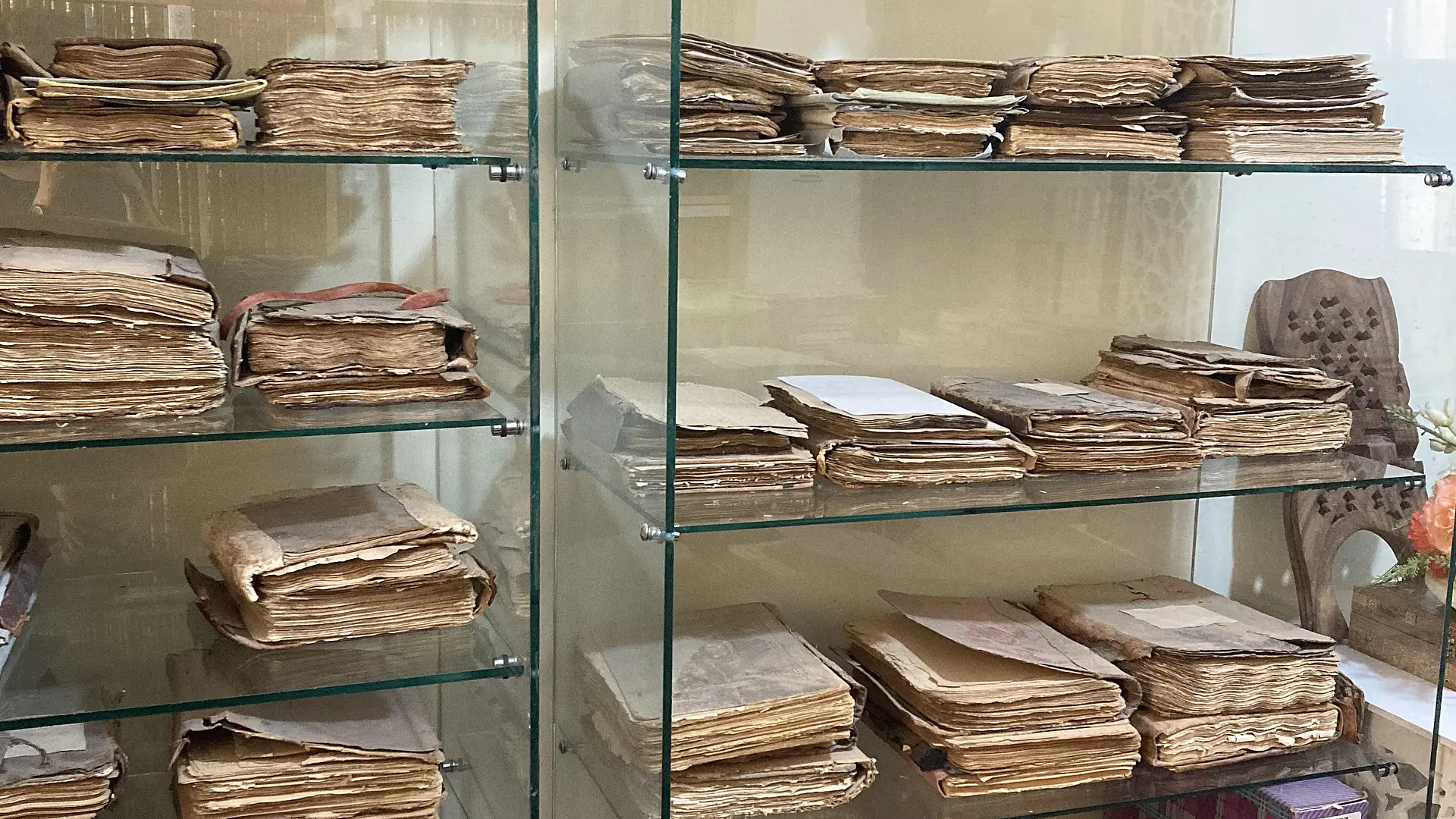
Around the early 1670s, in the southeast Moroccan oasis city of Sijilmasa, a man named Muhammad b. ʿUmar b. Abi Mahalli became concerned with what he saw as a crucially important problem. Many ostensible Muslims were, he asserted, so ignorant of basic theological doctrine that they could not even be considered monotheists. Undertaking to identify, rectify, and discipline this ignorance, Ibn ʿUmar also sought to warn people in neighboring regions of its pervasiveness by sending them a sort of explanatory, exhortative pamphlet. For their part, many of Ibn ʿUmar’s contemporaries saw these ideas and activities as dangerously disruptive, and they composed their own writings in rebuttal. Even so, Ibn ʿUmar’s texts continued to spread, especially further south into West Africa. In this talk, I take stock of the manuscripts that survive – and do not survive – from this episode, as well as the role played by the written word in disseminating and extinguishing ideas.
Caitlyn Olson is the Josephine Hildreth Detmer and Zareen Taj Mirza Assistant Professor of Islamic Studies at Bucknell University. Her research focuses on Islamic intellectual history in Morocco and the surrounding region between the 14th–18th centuries. She is currently working on a monograph with the tentative title Creed for the Common Folk: Orthodoxy and Elitism in the Early Modern Maghrib, and she also plans to undertake a critical edition of the exhortative creedal writings by Muhammad b. ʿUmar b. Abi Mahalli, the 17th–century Moroccan scholar who is featured in this talk.


![[Translate to English:] facebook icon](/fileadmin/SocialMediaIcons/iconfinder_06-facebook_white.svg)

![[Translate to English:] instagram icon](/fileadmin/SocialMediaIcons/iconfinder_38-instagram_white.svg)
![[Translate to English:] YouTube icon](/fileadmin/SocialMediaIcons/iconfinder_18-youtube_white.svg)
![[Translate to English:] xing icon](/fileadmin/SocialMediaIcons/iconfinder_xing_white.svg)
