The Mutual Aid Dilemma: Disasters, Crises and Social Reproduction
C19.00.02
About the event
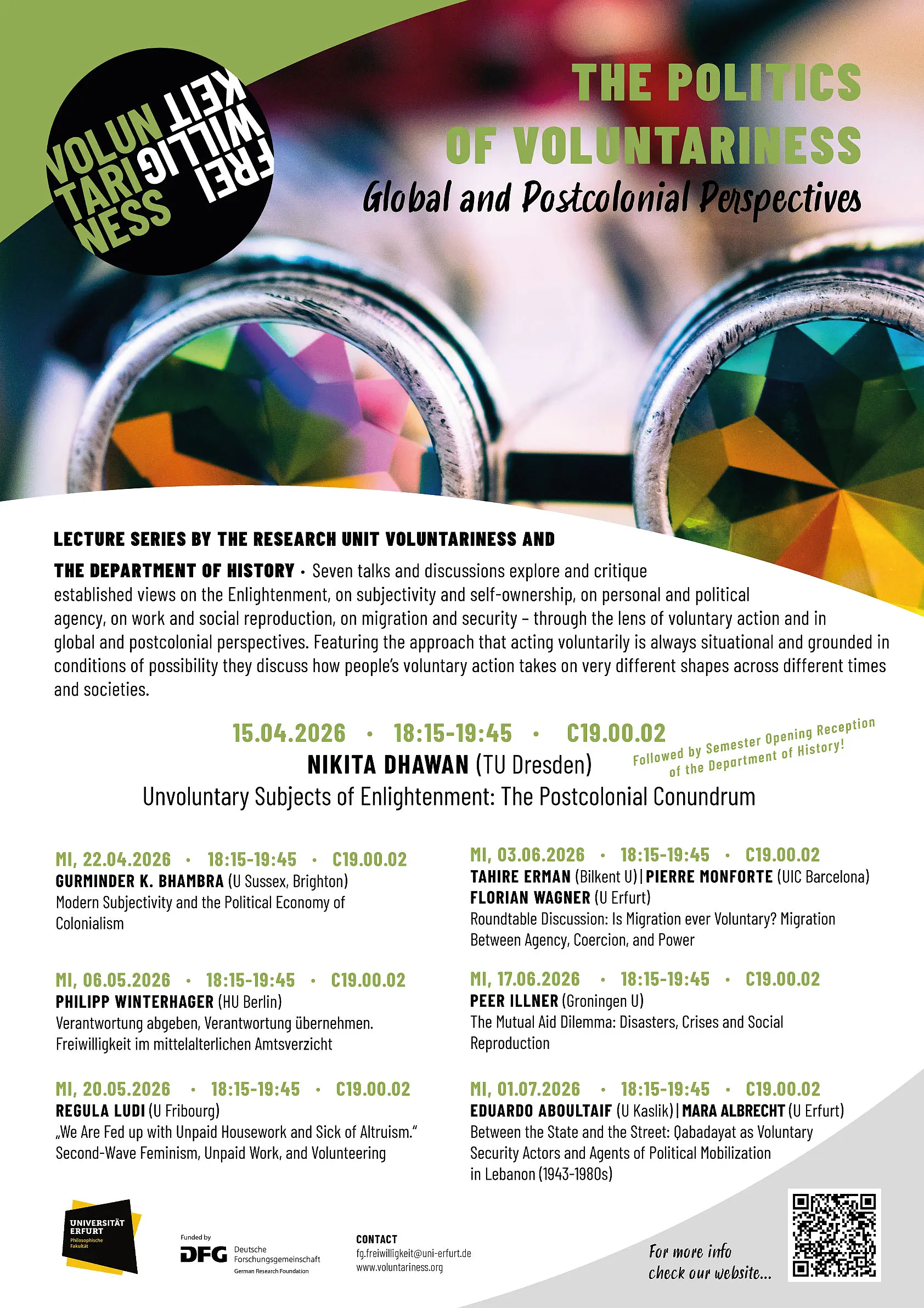
In an age of climate catastrophe, mutual aid has gained renewed importance in providing relief when hurricanes, floods and wildfires hit, as cuts to federal spending put significant strain on communities struggling to survive. Harking back to the self-organized welfare programs of the Black Panther Party, radical social movements from Occupy to Black Lives Matter are building voluntary aid networks within and against the state. However, as the federal responsibility for relief is lifted, mutual aid plays a double-edged role in cuts to social spending. Framing disaster relief through the lens of social reproduction, this talk tracks a shift in American emergency aid towards a new relationship between the state, the market, and civil society.
Seven talks and discussions explore and critique established views on the Enlightenment narratives, on subjectivity and self-ownership, on personal and political agency, on work and social reproduction, on migration and security – through the lens of voluntary action and in global and postcolonial perspectives. Featuring the approach that acting voluntarily is always situational and grounded in conditions of possibility they discuss how people’s voluntary action takes on very different shapes across different times and societies.

![[Translate to English:] facebook icon](/fileadmin/SocialMediaIcons/iconfinder_06-facebook_white.svg)

![[Translate to English:] instagram icon](/fileadmin/SocialMediaIcons/iconfinder_38-instagram_white.svg)
![[Translate to English:] YouTube icon](/fileadmin/SocialMediaIcons/iconfinder_18-youtube_white.svg)
![[Translate to English:] xing icon](/fileadmin/SocialMediaIcons/iconfinder_xing_white.svg)
