Unvoluntary Subjects of Enlightenment: The Postcolonial Conundrum
C19.00.02
About the event
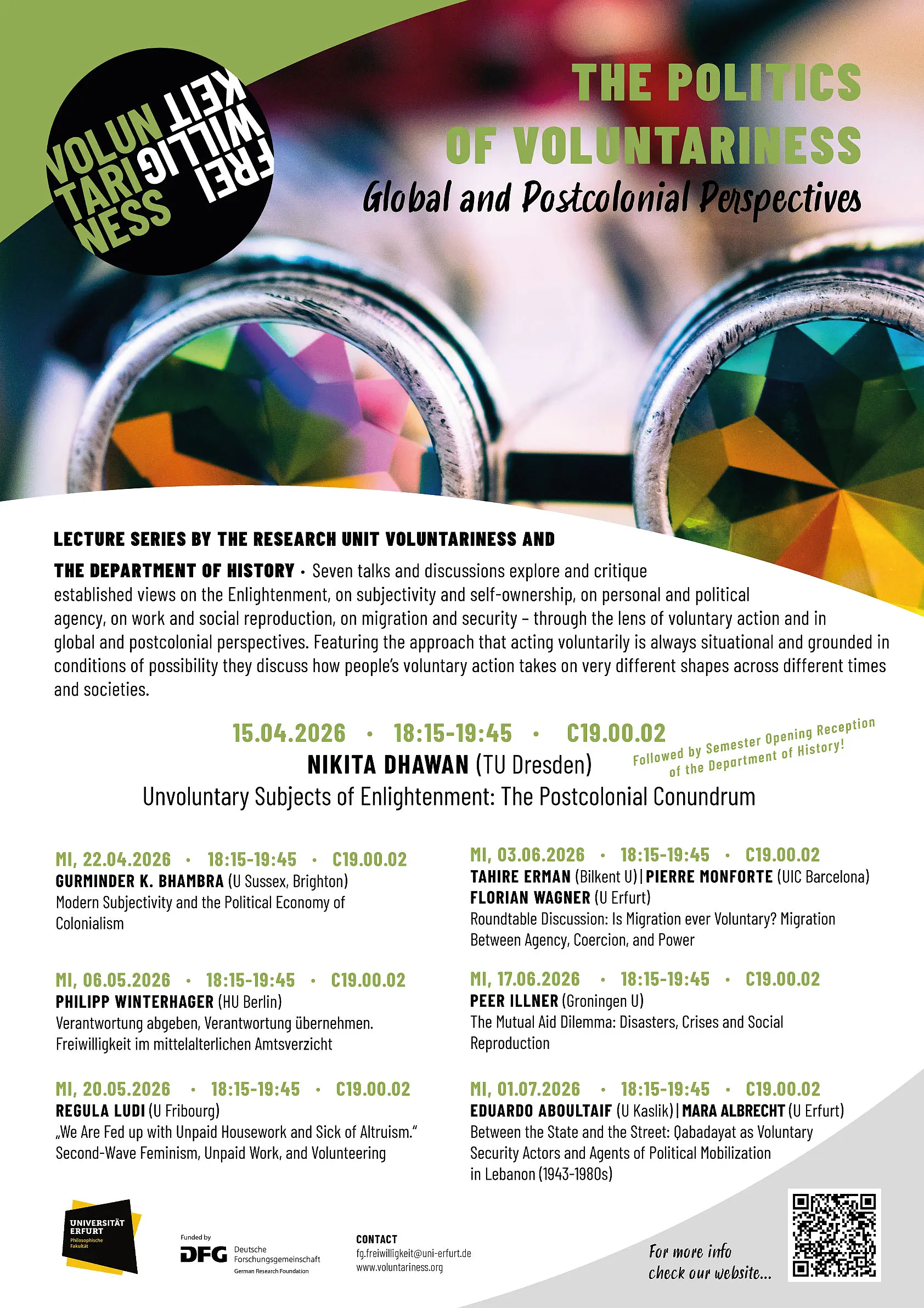
The opening talk examines how postcolonial subjects became entangled in Enlightenment narratives of reason, progress, and modernity not through voluntary adoption, but through coercive incorporation into imperial projects. It explores how Enlightenment ideals functioned less as universal promises and more as disciplinary demands that reshaped colonized peoples’ social, political, and ethical horizons. By focusing on how modernity was imposed rather than chosen, the talk highlights the ambivalent legacy of Enlightenment norms in postcolonial life: at once a language of emancipation and a structure of domination. Ultimately, the analysis invites a reconsideration of what it means to inhabit Enlightenment when its terms were never offered as a choice.
Seven talks and discussions explore and critique established views on the Enlightenment narratives, on subjectivity and self-ownership, on personal and political agency, on work and social reproduction, on migration and security – through the lens of voluntary action and in global and postcolonial perspectives. Featuring the approach that acting voluntarily is always situational and grounded in conditions of possibility they discuss how people’s voluntary action takes on very different shapes across different times and societies.


![[Translate to English:] facebook icon](/fileadmin/SocialMediaIcons/iconfinder_06-facebook_white.svg)

![[Translate to English:] instagram icon](/fileadmin/SocialMediaIcons/iconfinder_38-instagram_white.svg)
![[Translate to English:] YouTube icon](/fileadmin/SocialMediaIcons/iconfinder_18-youtube_white.svg)
![[Translate to English:] xing icon](/fileadmin/SocialMediaIcons/iconfinder_xing_white.svg)
