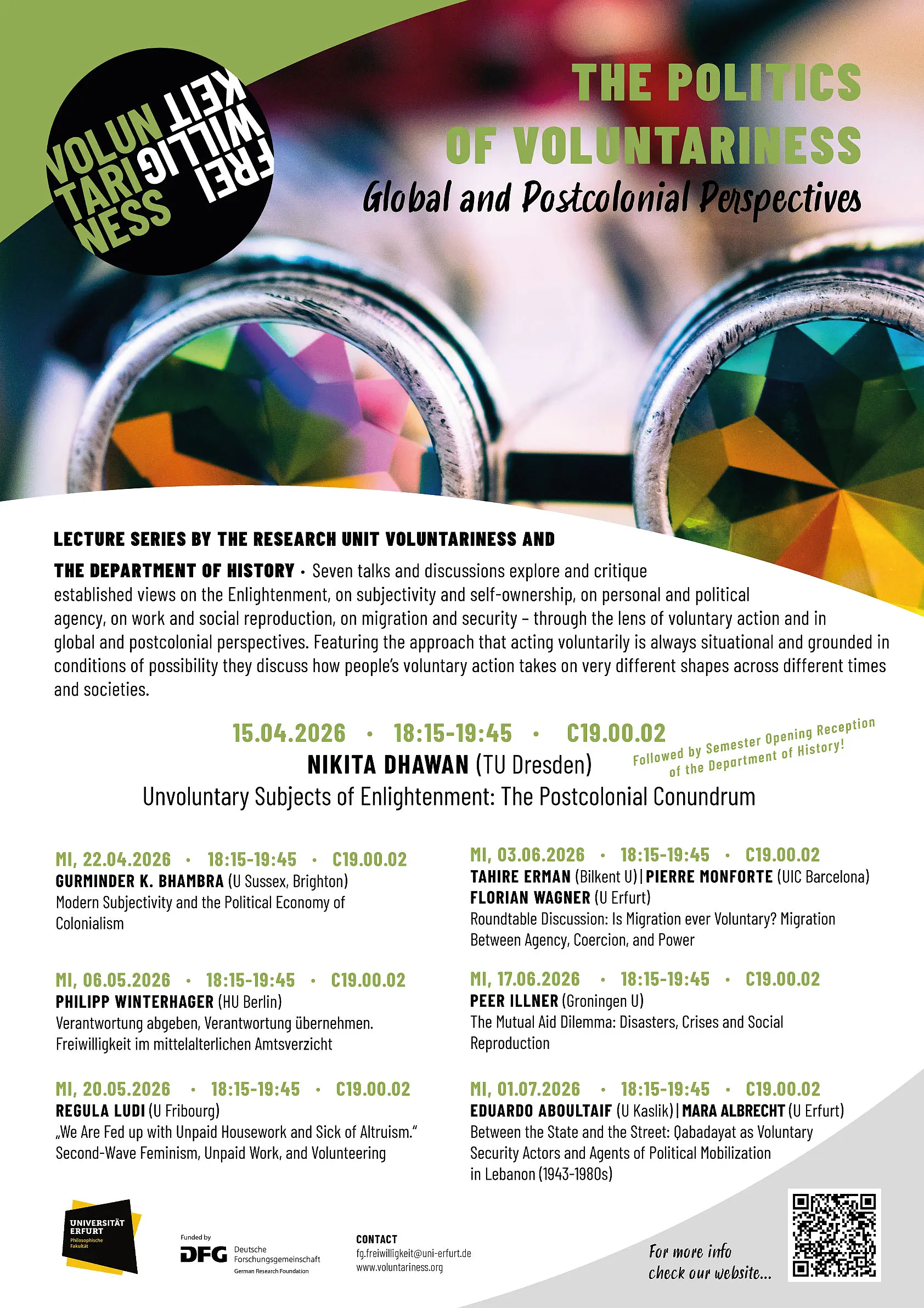
Between the State and the Street: Qabadayat as Voluntary Security Actors and Agents of Political Mobilisation in Lebanon (1943-1980s)
C19.00.02
About the event
The talk will focus on the Qabadayat, a local phenomenon of voluntary security actors in Lebanon from Ottoman times until well into the Lebanese Civil War (1975–1990). Typically from humble origins, these strongmen became leaders of the young men in their neighborhoods. Celebrated for their physical strength and adherence to masculine codes of honor, the Qabadayat are often remembered as local heroes. They constituted a significant informal institution at the neighborhood level, acting as intermediaries and power brokers within Lebanon's patronage system. By connecting local populations with political elites and state representatives, the Qabadayat were agents of political mobilization, e.g., for elections or protests. Their diverse responsibilities included protecting the neighborhood against external threats, policing crime, settling internal disputes, and preserving traditions and moral rules. However, their local authority was usually based on the use or threat of violence. We position the Qabadayat within the broader field of research on voluntariness and voluntary engagement. The talk focuses on their voluntary nature and their ambiguous position as both protectors of the neighborhood and as violent actors who skirted the rule of law. It traces their evolving role within the political system from Lebanon's independence in 1943 until they gradually disappeared during the civil war when militias replaced them.
Seven talks and discussions explore and critique established views on the Enlightenment narratives, on subjectivity and self-ownership, on personal and political agency, on work and social reproduction, on migration and security – through the lens of voluntary action and in global and postcolonial perspectives. Featuring the approach that acting voluntarily is always situational and grounded in conditions of possibility they discuss how people’s voluntary action takes on very different shapes across different times and societies.

![[Translate to English:] facebook icon](/fileadmin/SocialMediaIcons/iconfinder_06-facebook_white.svg)

![[Translate to English:] instagram icon](/fileadmin/SocialMediaIcons/iconfinder_38-instagram_white.svg)
![[Translate to English:] YouTube icon](/fileadmin/SocialMediaIcons/iconfinder_18-youtube_white.svg)
![[Translate to English:] xing icon](/fileadmin/SocialMediaIcons/iconfinder_xing_white.svg)
