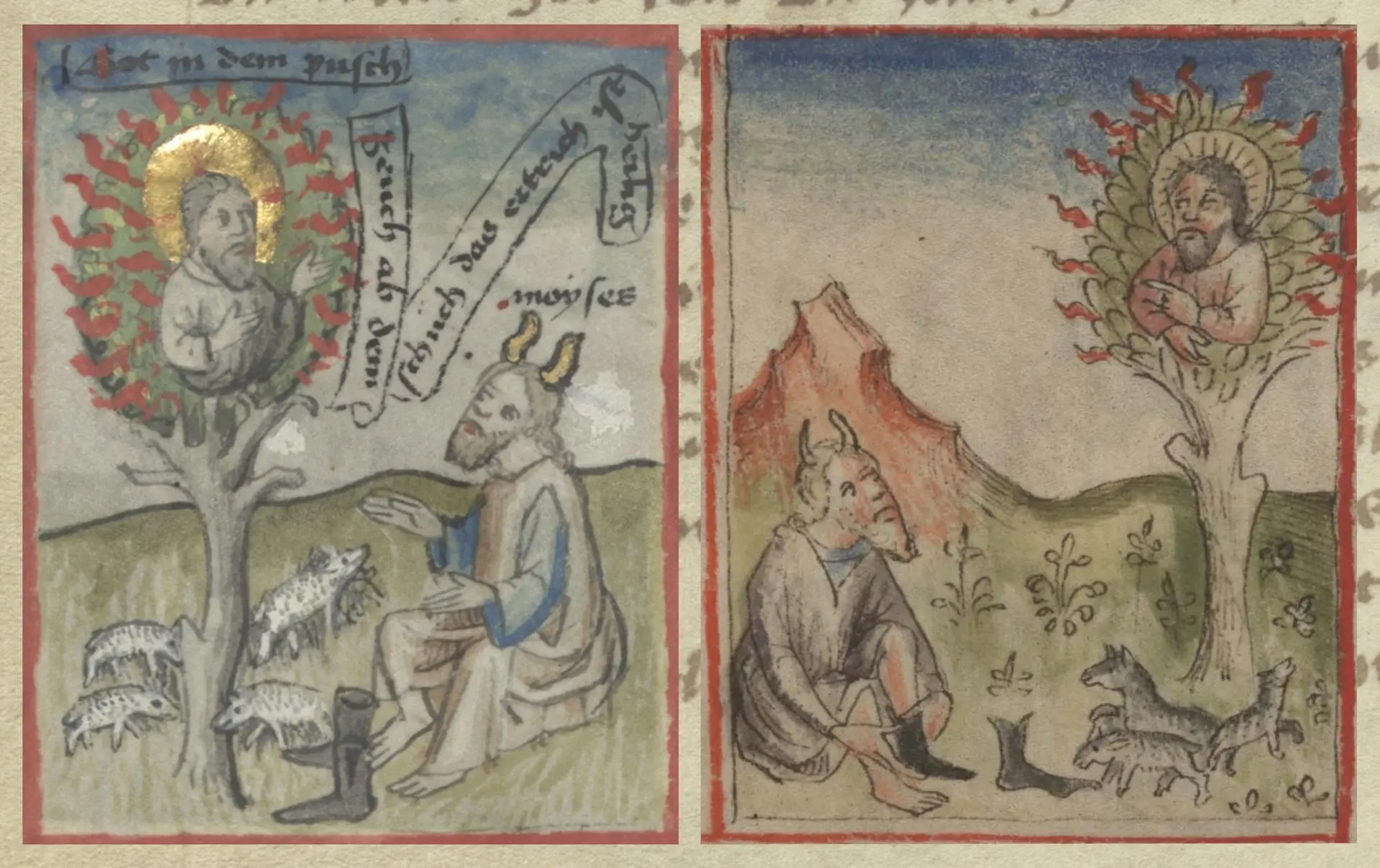
The Jena copy, dated 1462, was produced in Lower Bavaria, while the Gotha copy clearly belongs to the same chronological and topographical context. Both belong to a group of 68 surviving manuscripts from the 14th and 15th centuries in which events from the Old and New Testaments are typologically related.
Of course, these two manuscripts have not escaped the attention of researchers, but apart from being catalogued in the relevant manuscript catalogues, they have mostly only been touched upon. Central aspects such as the background to the production and the technical examination of the manuscripts, their location in late medieval book illumination, the sometimes strikingly different iconography in the two sister manuscripts, the script and the text versions have not yet been examined.
The conference will bring together experts in late medieval book culture and intellectual history who will discuss questions of provenance history, palaeography, text and art history as well as the reception history of this contemporarily successful book type.
The programme and further information can be found on the conference website.


![[Translate to English:] facebook icon](/fileadmin/SocialMediaIcons/iconfinder_06-facebook_white.svg)

![[Translate to English:] instagram icon](/fileadmin/SocialMediaIcons/iconfinder_38-instagram_white.svg)
![[Translate to English:] YouTube icon](/fileadmin/SocialMediaIcons/iconfinder_18-youtube_white.svg)
![[Translate to English:] xing icon](/fileadmin/SocialMediaIcons/iconfinder_xing_white.svg)
