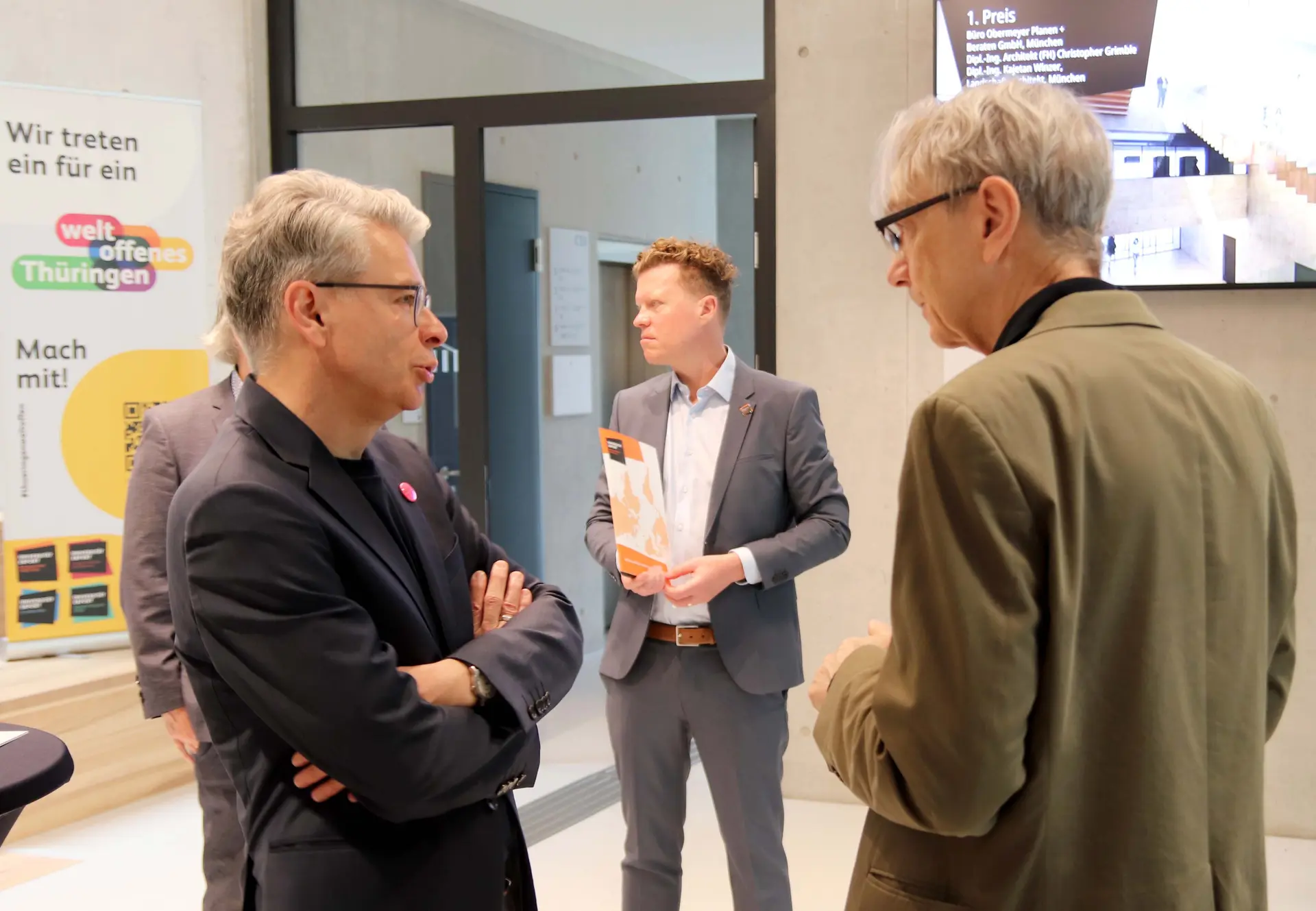
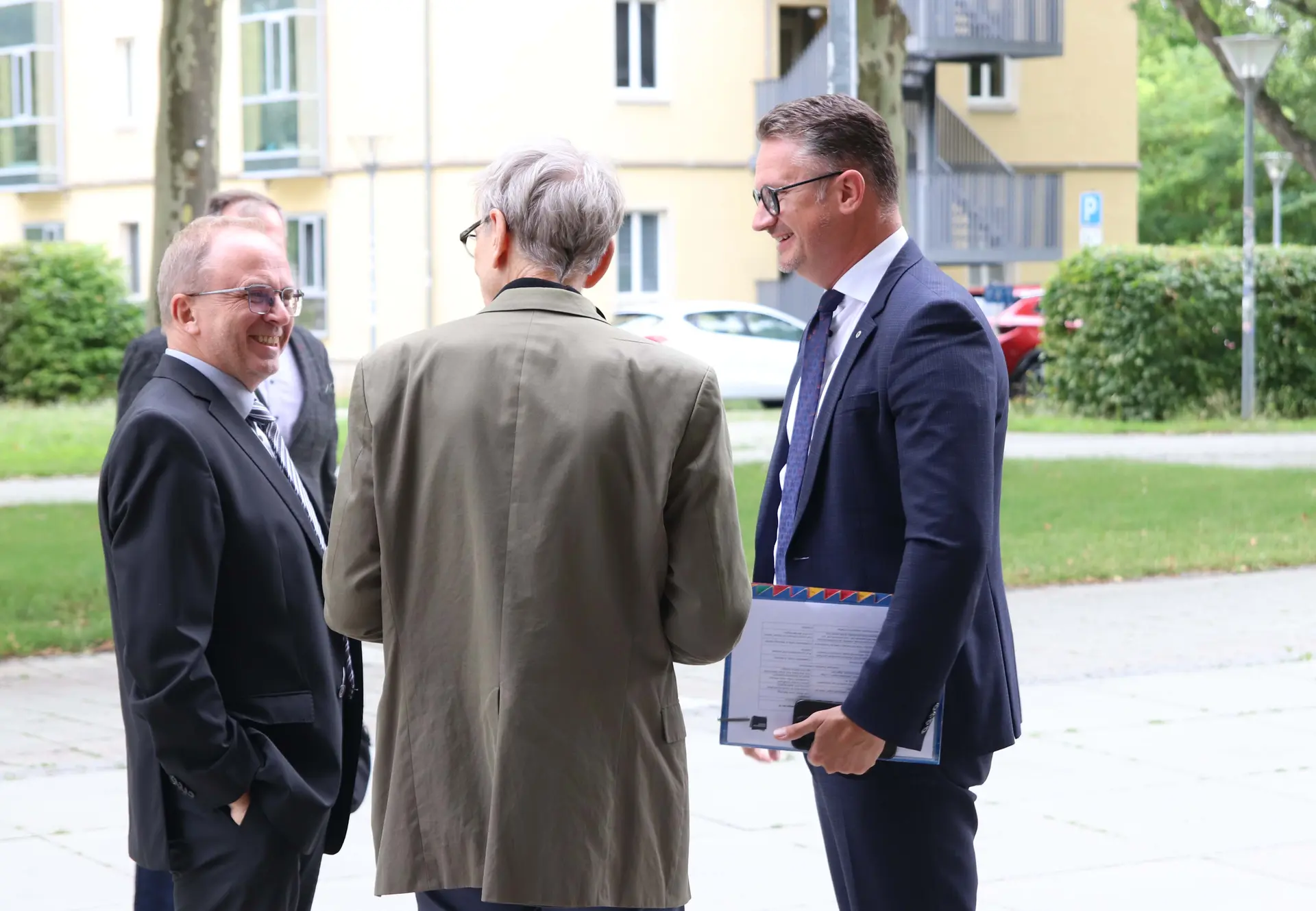
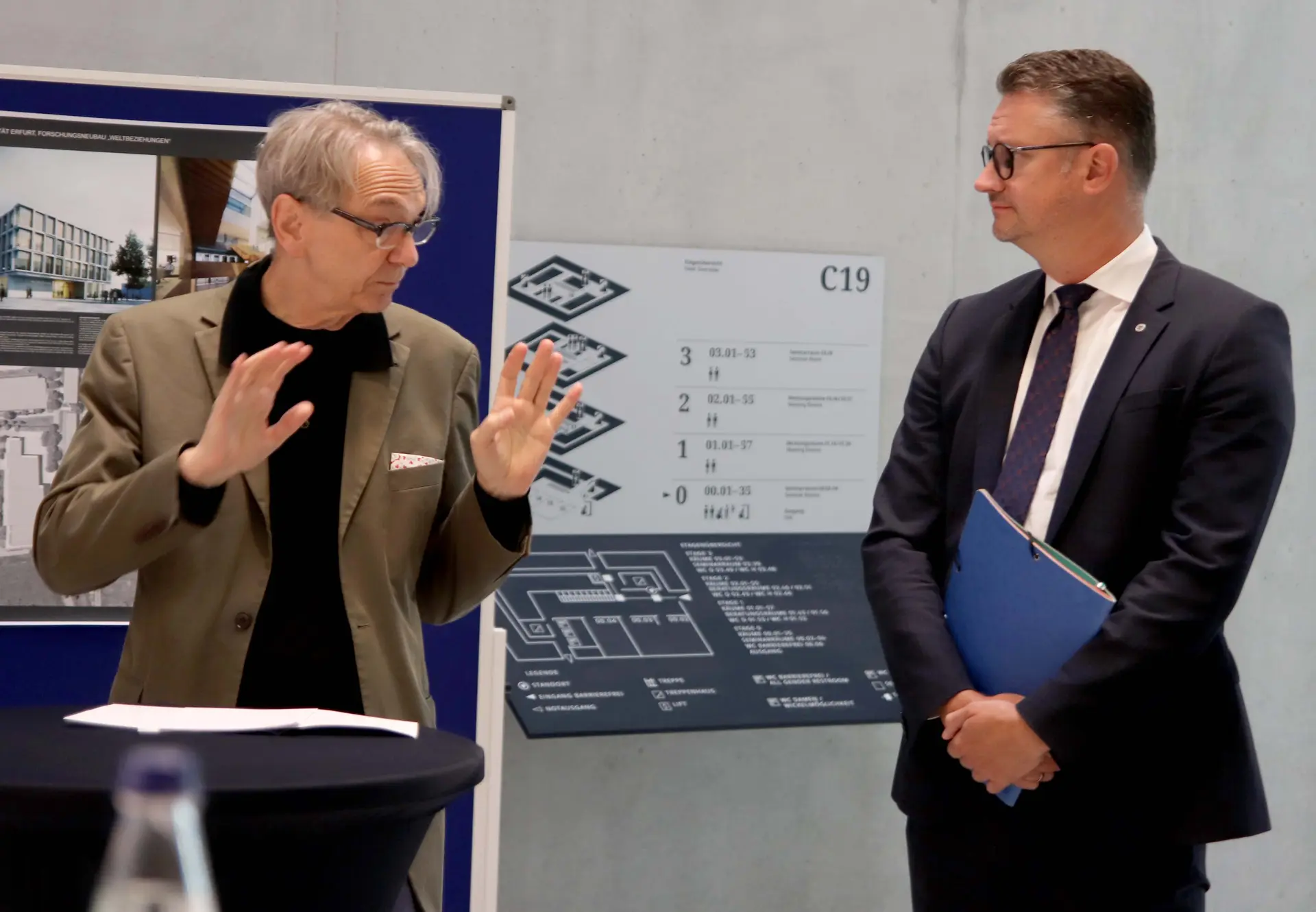
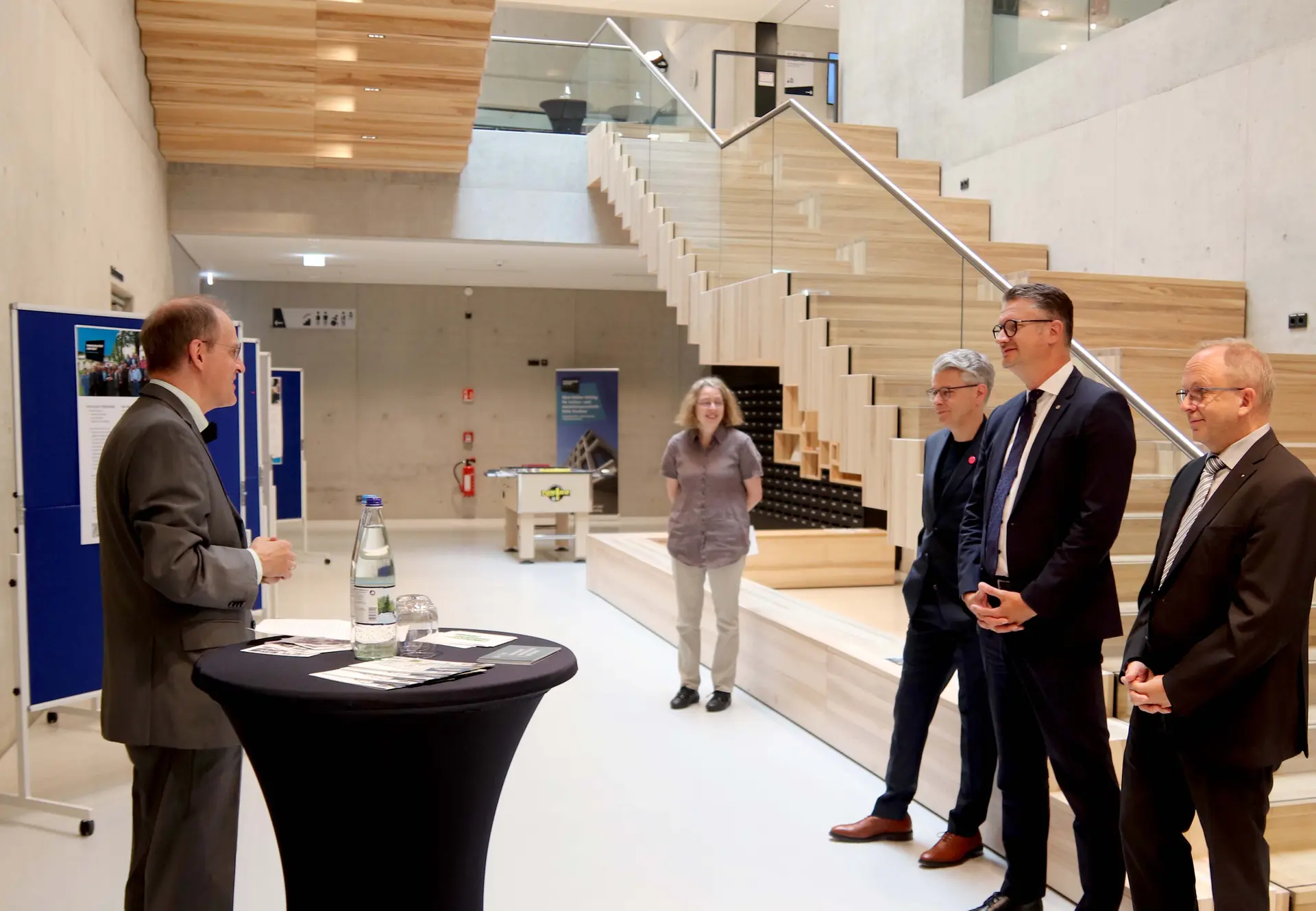
The Minister was impressed – not only by the architecture of the research building, which will open in 2023, with its "thinking cells" and public meeting places that enable an effective mix of secluded and collaborative work and exchange, but also by the University of Erfurt's research strength: "In the past ten years, we have made an enormous leap in our third-party funding and, as the DFG Funding Atlas 2024 has shown, we need not shy away from comparison with major universities," Professor André Brodocz, Vice President for Research and Academic Careers, made clear right at the start of the minister's visit.
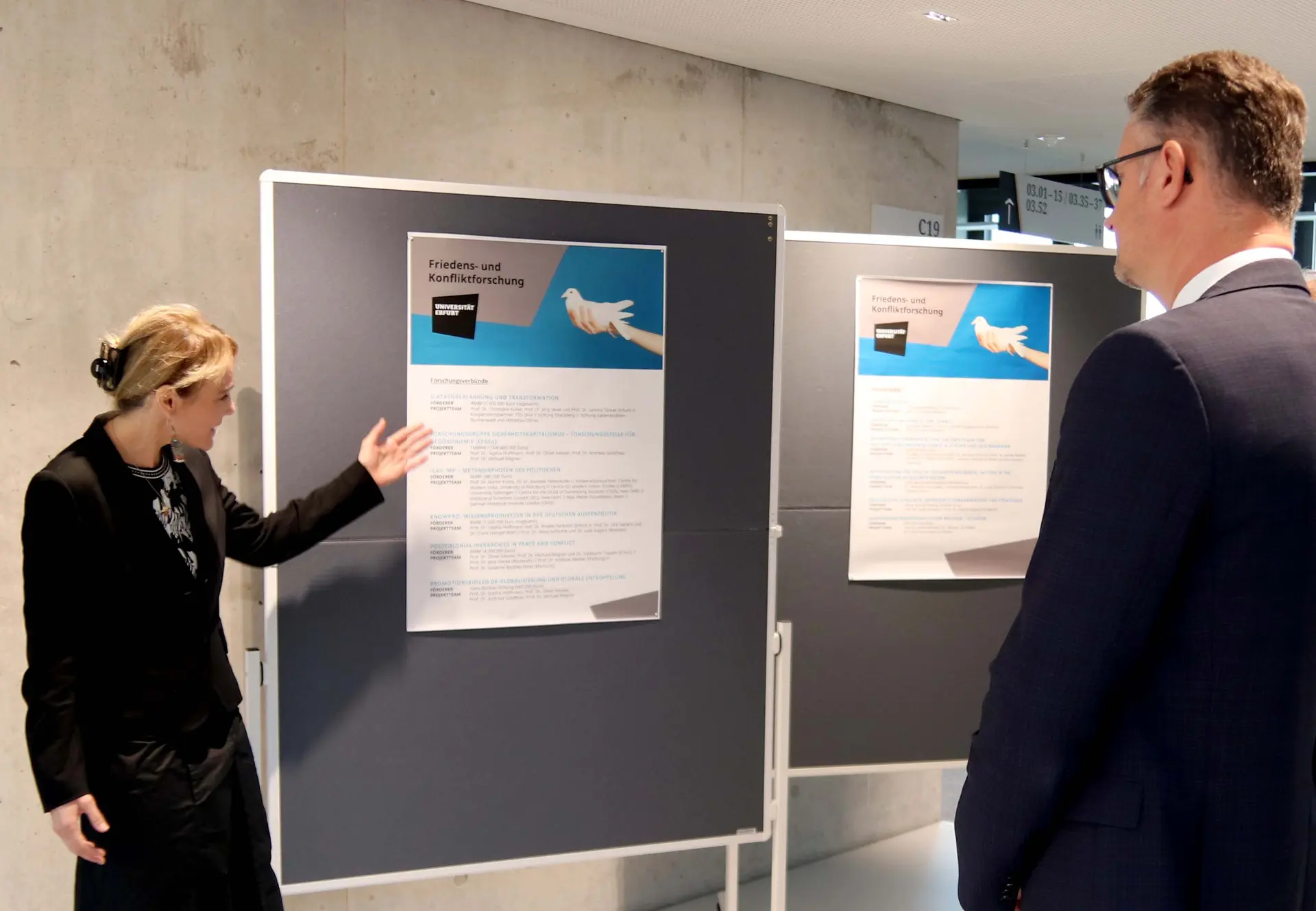
But the diversity of the institutions and projects that the University of Erfurt brings together under the umbrella of the "World Relations" research building also left an impression: the Max-Weber-Kolleg and the Climate-N project presented themselves, as did the Collaborative Research Centre "Structural Change of Property", the "Voluntariness" research group, the Willy Brandt School of Public Policy, the Institute for Planetary Health Behaviour (IPB) and various individual and joint projects in the field of peace and conflict research, as well as teaching and learning research at the university and the Theological Research Centre. "We wanted to show the Minister today that the quality of networking here at the University of Erfurt is very high and that we have a special range of activities in addition to educational research and teacher training," explained Professor Walter Bauer-Wabnegg, President of the University, addressing the Minister. With a view to the upcoming Framework Agreement VI between the state and the Thuringian universities, the President sees this profile-related diversity of the universities as a particular strength. Making them "fruitful for each other" and focussing more on coordination than collaboration could be a decisive point for the future.
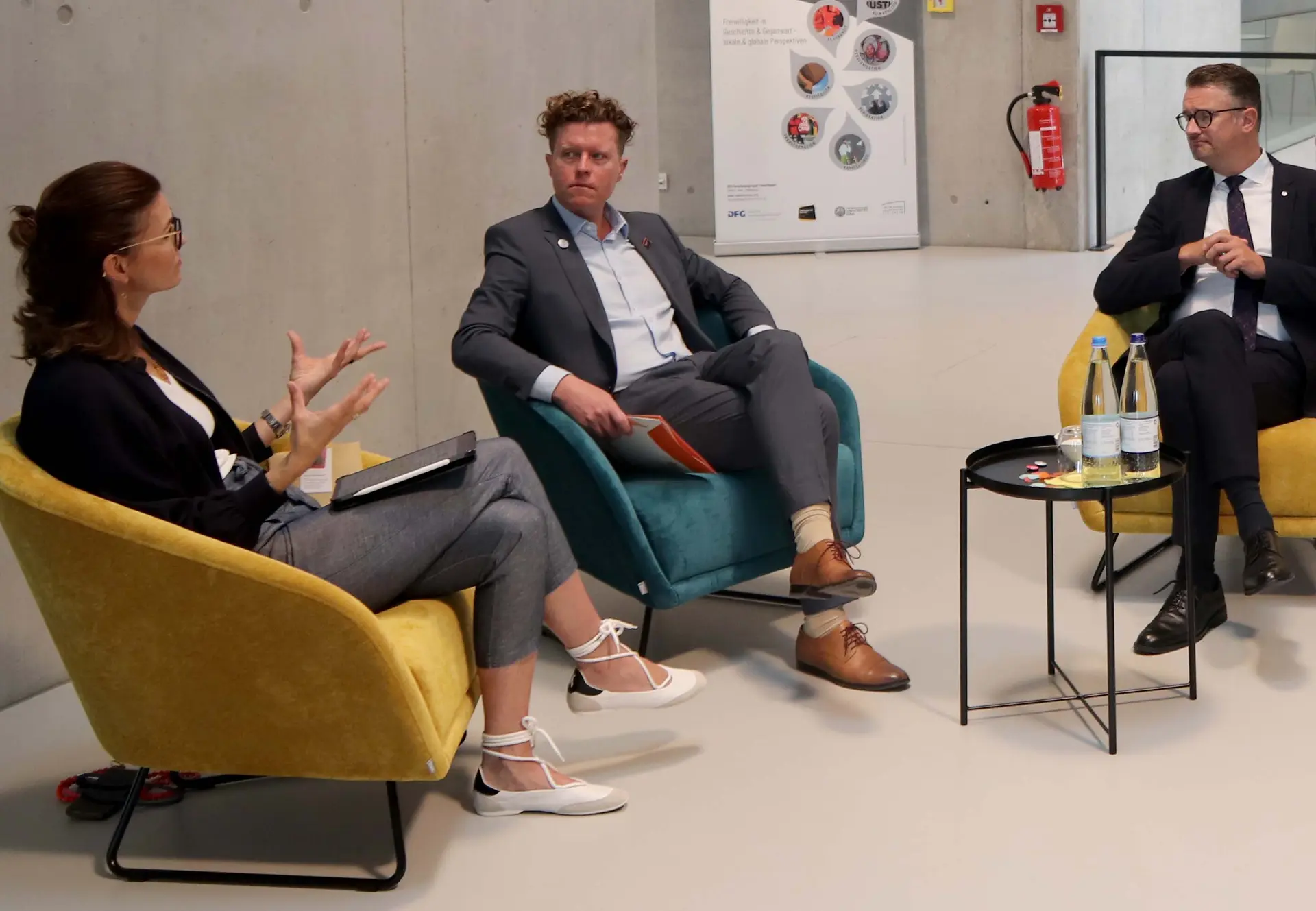
What also became clear: Research at the University of Erfurt is highly transferable and increasingly seeks dialogue with society. "This is of enormous importance – not least for a resilient democracy," explained Professor André Brodocz. IPB Director Professor Cornelia Betsch and Professor Andreas Goldthau, Director of the Brandt School, agreed that this requires above all trust in science and listen to people. "Everything we have presented today, we must and of course want to see in interaction with schools and see how we can have an impact in schools with these socially highly relevant topics," recalled the President. The minister agreed. "We have to dare to do something," he explained – also with a view to new learning formats and projects.
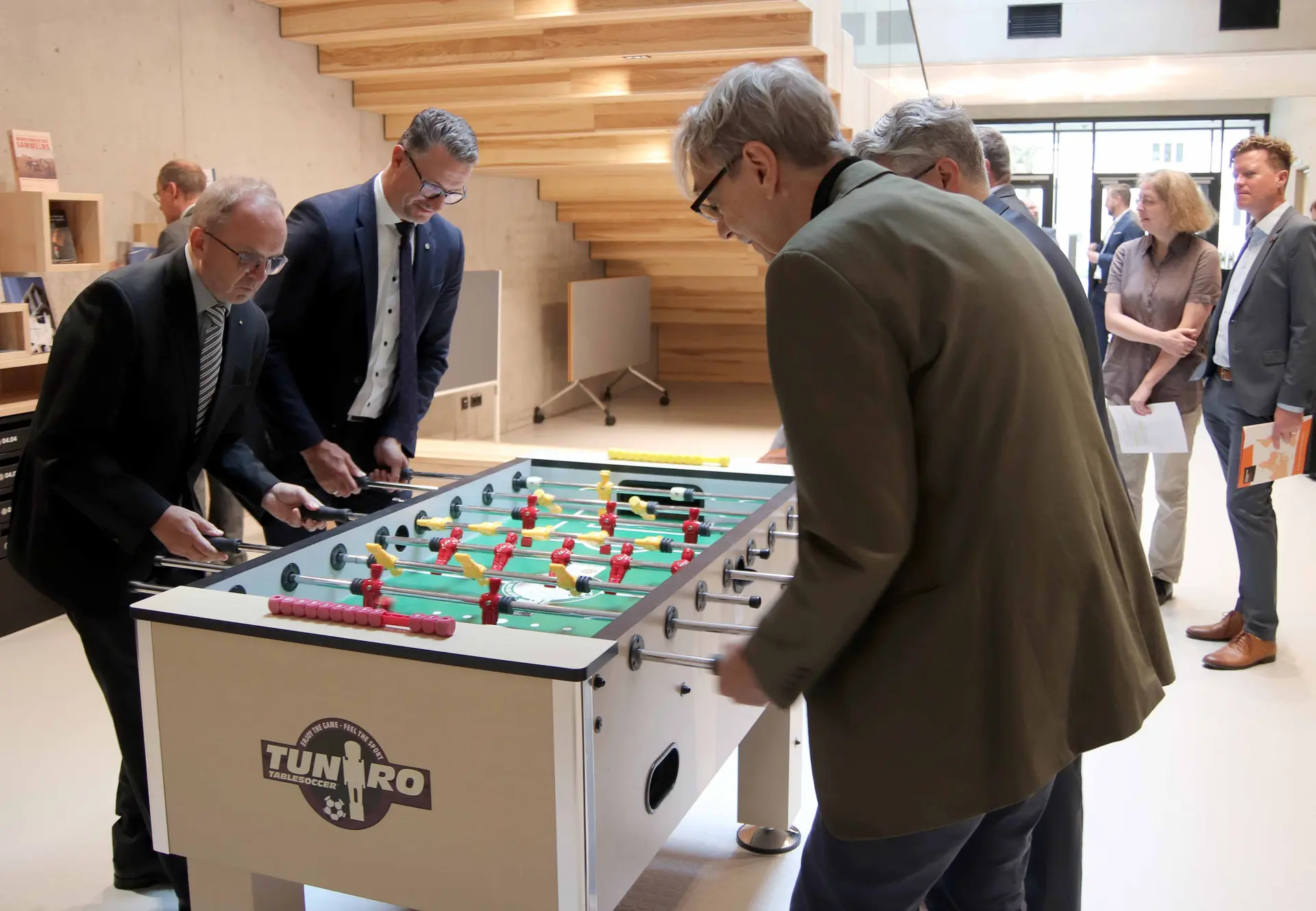
An extremely harmonious meeting that left satisfied faces in its wake. Well, perhaps with one exception: During a short table football interlude, they did briefly play against each other. The result: 3:0, for whom we will not go into detail here. For diplomatic reasons...


![[Translate to English:] facebook icon](/fileadmin/SocialMediaIcons/iconfinder_06-facebook_white.svg)

![[Translate to English:] instagram icon](/fileadmin/SocialMediaIcons/iconfinder_38-instagram_white.svg)
![[Translate to English:] YouTube icon](/fileadmin/SocialMediaIcons/iconfinder_18-youtube_white.svg)
![[Translate to English:] xing icon](/fileadmin/SocialMediaIcons/iconfinder_xing_white.svg)
