Economics, Law and Social Sciences - Law concentration

At a glance
Course content in law
The growing global interdependence of politics, law, economics and culture is one of the major societal challenges of our time. Interdisciplinary knowledge, such as that offered by the Faculty of Economics, Law and Social Sciences at the University of Erfurt, is therefore becoming increasingly important.
It is the only faculty in Germany to bring together these three disciplines:
- Law,
- Social Sciences (Political Science and Sociology),
- Economics.


Looking for an alternative to a law degree?
On the Economics, Law and Social Sciences - Law concentration degree programme, you will learn to understand and apply German and European law, including its international dimensions. To this end, the programme provides you with the necessary legal knowledge and an understanding of the political, social and economic foundations of law, as well as the ability to reflect on these from a theoretical perspective.
On completion of the degree, you will be able to:
- assess legal issues,
- shape future legal relationships, and
- contribute to the further development of the law.
This degree programme does not lead to the State Examination.
- Constitutional Law
- Administrative law
- Civil law
- Commercial law
- European law
- Fundamentals of Law
Economics, Law and Social Sciences at the University of Erfurt – a successful and well-established programme since 2000

The Faculty of Economics, Law and Social Sciences brings together the subject areas of Law (Public Law and Private Law), Social Sciences ( Political Science and Sociology) and Economics to form an innovative teaching and research programme.
Research in Economics, Law and Social Sciences combines disciplinary and interdisciplinary perspectives and, in addition to fundamental theoretical questions in economics, social sciences and law , amongst other things, to the transformation of the state and the market within the context of the current multi-level European system, as well as to the political, economic and legal instruments for crisis management.
Through our degree programmes , we offer our approximately 800 students the best possible conditions for developing an interdisciplinary perspective on the societal challenges of the 21st century from the perspective of Economics, Law and Social Sciences. The fact that most of our students come from outside the region is a clear indication of the high appeal of our degree programmes.
Is it feasible to study Economics, Law and Social Sciences?
The university lecturers are open-minded and explain the material so well that absolutely everyone can understand it. The additional tutorials are also a useful and optional way to learn.
You’re also given a good introduction to the course and receive immediate help from students in higher semesters.
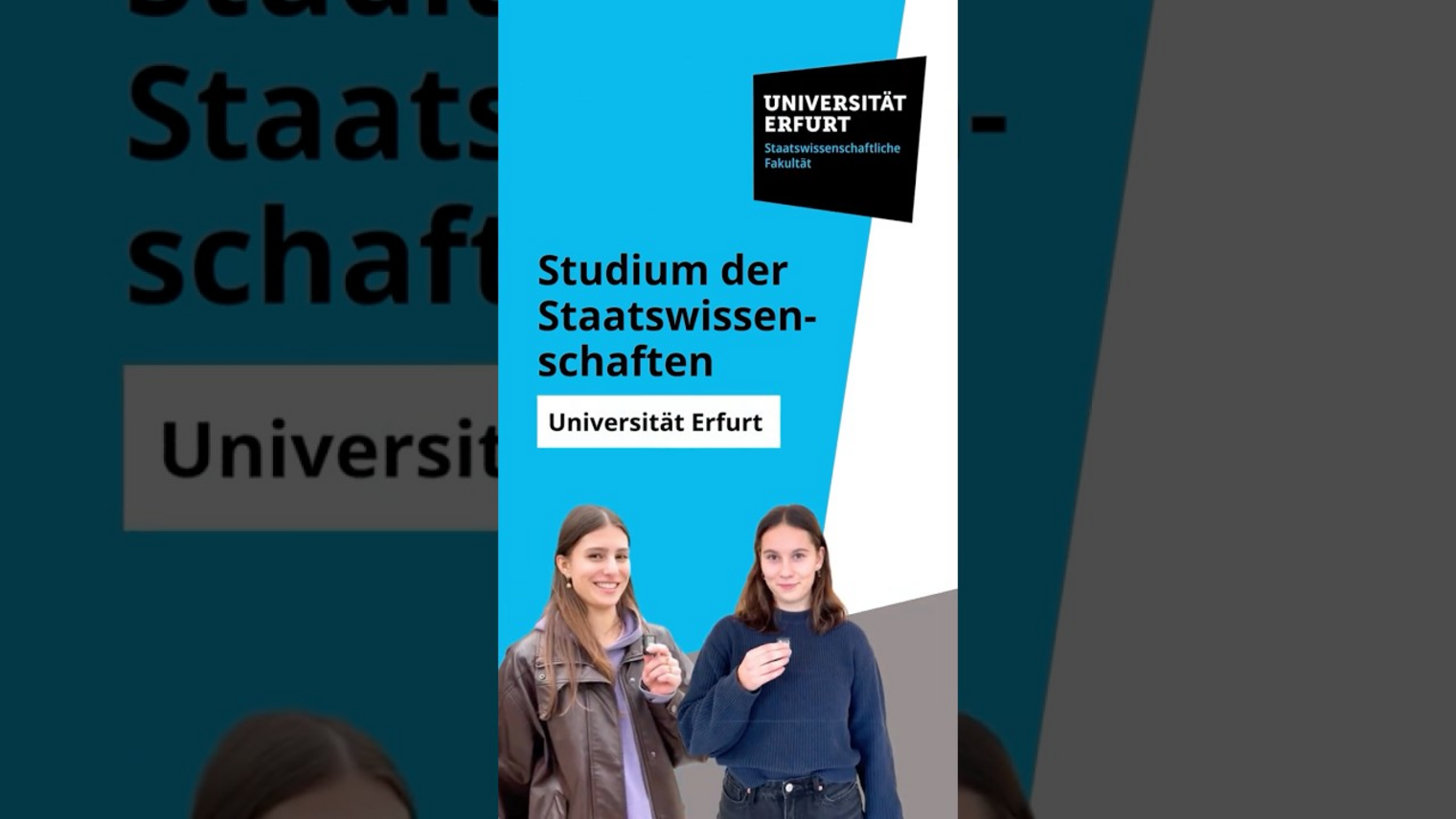
Studying Economics, Law and Social Sciences at the University of Erfurt
Please note: Once you watch the video, data will be transmitted to Youtube/Google. For more information, see Google Privacy.
Studied law – and then what?
You don’t need a law degree – become a legal expert! Our law graduates work in the following fields:
- Legal advice for companies and associations (e.g. asan in-house lawyer or legal adviser)
- public administration (e.g. in government departments, local authorities)
- National and international non-governmental organisations (e.g. as a legal adviser)
- Legal research (e.g. at universities or research institutes)
- Management of private-sector companies (e.g. in compliance departments or legal administration departments)
- Public relations and politics (e.g. in political consultancy or as a spokesperson)
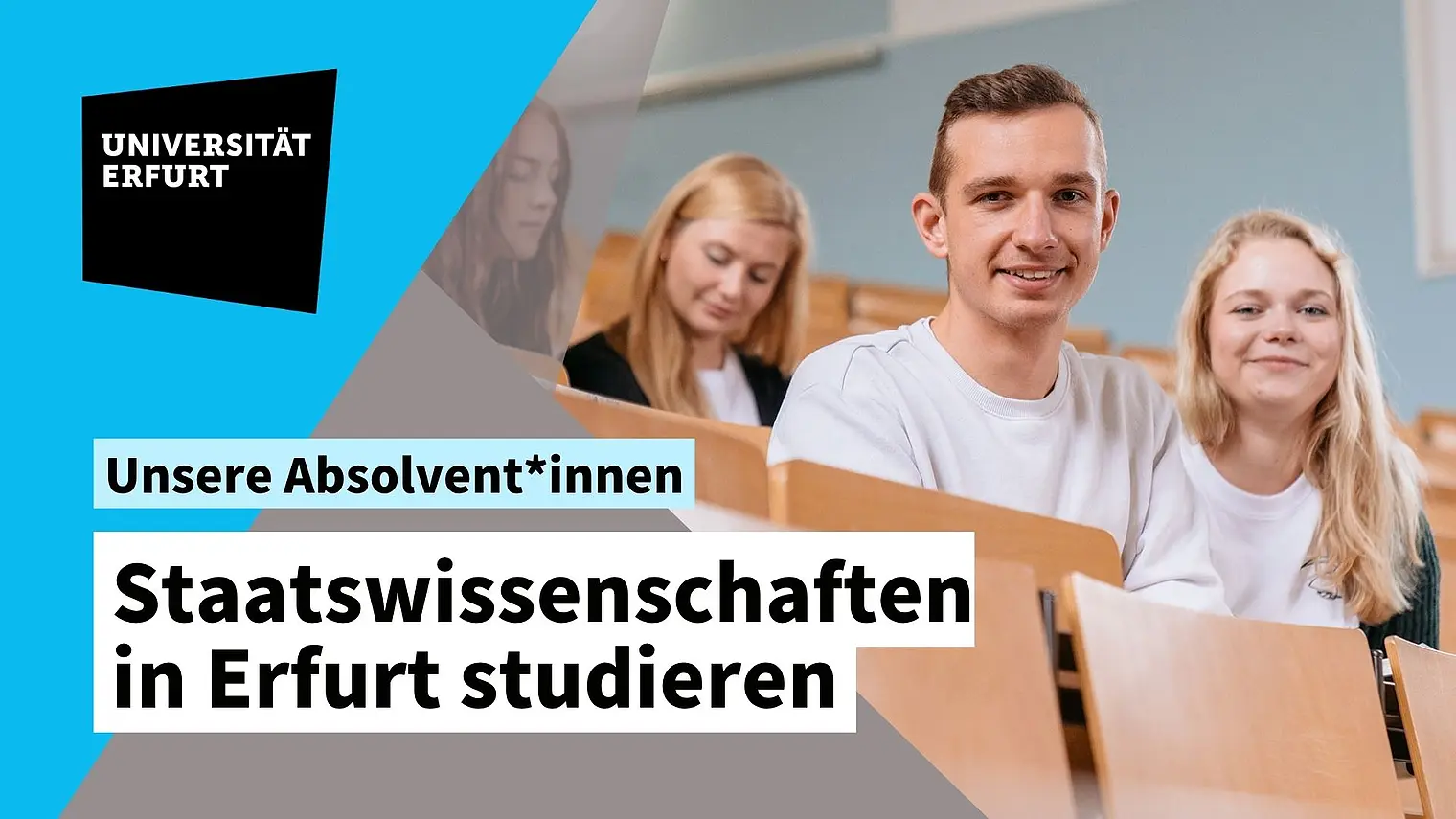
Get to know our former students from the Economics, Law and Social Sciences programme
Our former students are satisfied and successful
Please note: Once you watch the video, data will be transmitted to Youtube/Google. For more information, see Google Privacy.
Structure of the Law Degree Programme
Structure of the Bachelor’s degree programme at the University of Erfurt
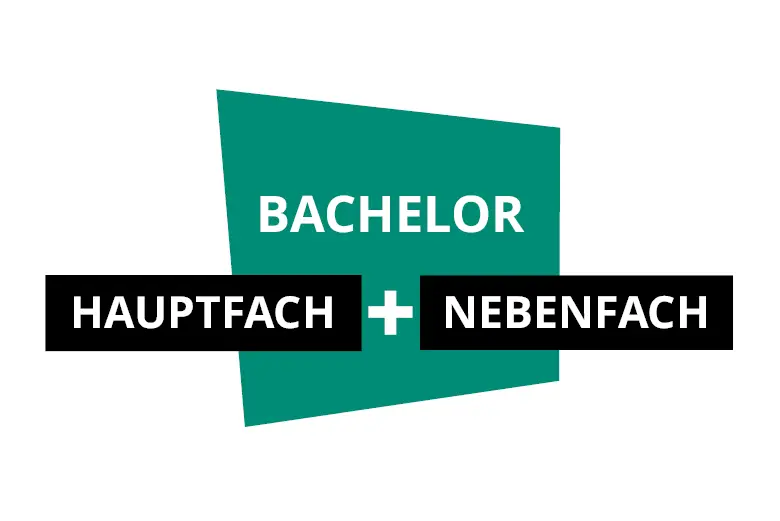
Dual-subject Bachelor’s degree: main subject and minor subject
At the University of Erfurt, you always combine two subjects in your Bachelor’s degree programme: a major and a minor (two-subject Bachelor’s degree).
The Studium Fundamentale is integrated into the main subject. Additional courses, which may be outside your main subject, enable you to apply what you have learnt in practice and acquire further key skills.
How long does a law degree take?
- The standard duration of study is six semesters (three years).
- Flexibility and breadth: You can choose a subject that complements your interests or allows you to develop your skills in a completely new field. This broadens your horizons and gives you an interdisciplinary perspective.
- Excellent career prospects: By taking a minor subject, you’ll gain additional skills that can give you an edge in the job market.
- Personalised profile development: You’ll develop a personal profile that reflects your interests and strengths.
- New perspectives: You’ll learn how different disciplines operate and think, which will help you solve complex problems from various angles.
Combining law
You may choose Law as either a major subject or a minor subject. Law cannot be taken as a minor subject alongside a main subject in Technology.
If you are studying Law alongside another subject from the field of Economics, Law and Social Sciences, such as
- International Relations
- Management
- Economics, Law and Social Sciences
- Economics, Law and Social Sciences - Economics concentration
you will take part in the joint Orientation phase for Economics, Law and Social Sciences. These combinations are also the most popular amongst our students.

STUDIMAT online tool
Our online tool, STUDIMAT, helps you choose a combination of major and minor subjects, taking into account the University of Erfurt’s rules on subject combinations .
It offers you the opportunity to look beyond your own subject and engage with fascinating, socially relevant topics. You will learn to think and work in an interdisciplinary way – a skill that is becoming increasingly important in today’s world.
Why it’s worth it for you:
- You’ll broaden your horizons by gaining insights into various subject areas.
- You’ll develop key skills such as critical thinking and creative problem-solving approaches.
- You’ll improve your social and communication skills, which will benefit you during your studies and later in your career.
- You can contribute your personal interests and values and develop them further.
Structure of the degree programme: Major in Law (Economics, Law and Social Sciences)
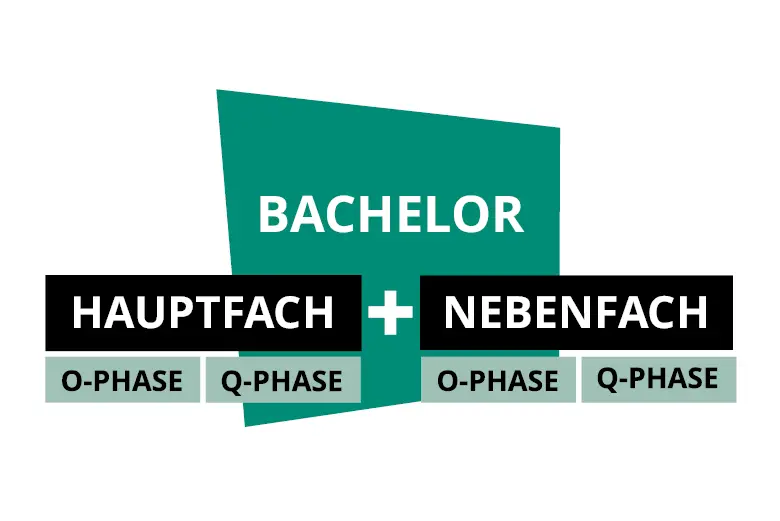
The first two semesters are referred to as the Orientation phase (O-phase,1st–2nd semesters). During this time, you can explore the degree programme system, familiarise yourself with the study and examination regulations, and try them out in practice. Once the O-phase is complete, you have the option to change your subject if necessary.
Upon successful completion of this phase, you may progress to the Qualification phase (Q-phase, 3rd–6th semesters). During this phase, you will deepen your knowledge of the course content and develop your own area of specialisation. The Q-phase concludes in your main subject with the completion of your bachelor's thesis.
Orientation phase (1st–2nd semesters)
If you combine the subject in Law with a minor subject from the Faculty of Economics, Law and Social Sciences (International Relations, Management, Social Sciences or Economics), you will take part in the joint orientation phase for Economics, Law and Social Sciences.
Compulsory modules:
- Fundamentals of Law I (6 LP)
- Constitutional Law (6 LP)
- Civil Law I (6 LP)
- Fundamentals of Social Sciences: International Relations (6 LP)
- Fundamentals of Social Sciences: Introduction to the Social Sciences (6 LP)
- Foundations of Social Sciences: Statistics (6 LP)
- Introduction to Business Administration (6 LP)
- Introduction to Microeconomics (6 LP)
- Introduction to Macroeconomics and Economic Policy (6 LP)
and a Q-phase module from your major or minor subject (open to O-phase students)
If you have combined the subject in Law with a minor subject outside the Faculty of Economics, Law and Social Sciences (excluding International Relations, Management, Social Sciences or Economics):
Compulsory modules:
- Fundamentals of Law I (6 LP)
- Constitutional Law (6 LP)
- Civil Law I (6 LP)
Compulsory elective modules:
- Fundamentals of Social Sciences: International Relations (6 LP)
- Fundamentals of Social Sciences: Introduction to the Social Sciences (6 LP)
- Foundations of Social Sciences: Statistics (6 LP)
- Introduction to Business Administration (6 LP)
- Introduction to Microeconomics (6 LP)
- Introduction to Macroeconomics and Economic Policy (6 LP)
Qualification phase (3rd–6th semesters)
During the Qualifying phase of the Law (Economics, Law and Social Sciences) degree programme, students must complete modules totalling 90 credit points (LP/ECTS).
Compulsory modules:
- Fundamentals of Law II (6 LP)
- Career Prospects (6 LP)
- Final module – Law (12 LP)
Compulsory elective modules:
- General Administrative Law (6 LP)
- Specialised Administrative Law (6 LP)
- European Law (6 LP)
- Case Studies in Public Law (6 LP)
- Civil Law II (6 LP)
- Company Law (6 LP)
- Competition Law (6 LP)
- Employment Law (6 LP)
- Case Studies in Civil Law (6 LP)
Elective modules:
- Fundamentals of Law III, IV or V (6 LP each)
- Advanced Public Law (6 LP)
- Sub-areas of Constitutional Law (6 LP)
- International Law (6 LP)
- Civil Law III or IV (6 LP each)
- Advanced Course in Company Law (6 LP)
- Advanced Course in Competition Law (6 LP)
- Specialisation in Labour Law (6 LP)
and three compulsory elective modules in the ‘Studium Fundamentale’ programme (18 LP).
Structure of the degree programme: Minor in Law (Economics, Law and Social Sciences)
The first two semesters are referred to as the Orientation phase (O-phase,1st–2nd semesters) . During this time, you can explore the degree programme system, familiarise yourself with the study and examination regulations, and try them out in practice. Once the O-phase is complete, you have the option to change your subject if necessary.
Upon successful completion of this phase, you may progress to the Qualification phase (Q-phase, 3rd–6th semesters). During this phase, you will deepen your knowledge of the course content and develop your own area of specialisation. The Q-phase concludes in your main subject with the completion of your bachelor's thesis.
Orientation phase (1st–2nd semesters)
If you combine the subject in Law with a minor subject from the Faculty of Economics, Law and Social Sciences (International Relations, Management, Social Sciences or Economics), you will take part in the joint Orientation phase for Economics, Law and Social Sciences.
Compulsory modules:
- Fundamentals of Law I (6 LP)
- Constitutional Law (6 LP)
- Civil Law I (6 LP)
- Fundamentals of Social Sciences: International Relations (6 LP)
- Fundamentals of Social Sciences: Introduction to the Social Sciences (6 LP)
- Foundations of Social Sciences: Statistics (6 LP)
- Introduction to Business Administration (6 LP)
- Introduction to Microeconomics (6 LP)
- Introduction to Macroeconomics and Economic Policy (6 LP)
and a Q-phase module from your major or minor subject (open to O-phase students)
If you have combined the subject in Law with a minor subject outside the Faculty of Economics, Law and Social Sciences (not International Relations, Management, Social Sciences or Economics):
Compulsory modules:
- Fundamentals of Law I (6 LP)
- Constitutional Law (6 LP)
- Civil Law I (6 LP)
Compulsory elective modules:
- Fundamentals of Social Sciences: International Relations (6 LP)
- Fundamentals of Social Sciences: Introduction to the Social Sciences (6 LP)
- Foundations of Social Sciences: Statistics (6 LP)
- Introduction to Business Administration (6 LP)
- Introduction to Microeconomics (6 LP)
- Introduction to Macroeconomics and Economic Policy (6 LP)
Qualification phase (3rd–6th semesters)
Compulsory modules:
- Fundamentals of Law II (6 LP)
Compulsory elective modules:
- General Administrative Law (6 LP)
- European Law (6 LP)
- Case Studies in Public Law (6 LP)
- Civil Law II (6 LP)
- Company Law (6 LP)
- Competition Law (6 LP)
- Employment Law (6 LP)
- Case Studies in Civil Law (6 LP)
Elective modules:
- Fundamentals of Law III, IV or V (6 LP each)
- Specialised Administrative Law (6 LP)
- Advanced Public Law (6 LP)
- Sub-areas of Constitutional Law (6 LP)
- International Law (6 LP)
- Civil Law III or IV (6 LP each)
- Advanced Course in Company Law (6 LP)
- Advanced Course in Competition Law (6 LP)
- Specialisation in Labour Law (6 LP)
Dual-subject Bachelor’s degree: combining Economics, Law and Social Sciences
Possible combinations
At the University of Erfurt, you will study one main subject and one minor subject as part of your Bachelor’s degree (two-subject Bachelor’s degree). You may need to take combination rules into account.
Combination rule:
- Law as a major can be combined with any minor. The minor in Law cannot be combined with the major in Technology.
- If you combine Law with another Economics, Law and Social Sciences subject (International Relations, Management, Social Sciences or Economics), you will take part in the joint orientation phase for Economics, Law and Social Sciences subjects.
Examination and Study Regulations, Sample Study Plan & Module Catalogue
Studying Abroad: An International Perspective

Take the opportunity to gain international experience! Thanks to numerous partnerships with universities abroad, you have the chance to spend a semester or a year abroad whilst you are studying. Such a stay not only broadens your academic horizons, but also strengthens your intercultural and language skills. To help you prepare, the University of Erfurt offers free language courses at the Language Centre. The semester abroad should take place during the qualification phase, ideally in the 5th academic semester.
The International Office will be happy to assist you with organising your stay abroad.
Internships during your degree


Entry requirements (no numerus clausus)
Law Degree Programme – Entry Requirements
Studying with an Abitur
- General university entrance qualification or subject-specific university entrance qualification, or equivalent prior learning
General information on entry requirements (studying without a school-leaving certificate)
Language requirements for law
Language Centre
The Language Centre offers around 140 language courses each semester in 16 modern and classical (foreign) languages. It helps you to acquire new language skills and build on your existing ones.
Studying law without an entry requirement
Studying law without an entry requirement
At the University of Erfurt, there are no expected admission restrictions (no admissions restricted courses) for Law (Economics, Law and Social Sciences - Law concentration). If you meet the entry requirements, you can enrol directly on the degree programme or submit an application if you are combining it with a major or minor subject that is subject to admission restrictions (see application).
Although the University of Erfurt does not offer a traditional law degree, it does provide an exciting and well-rounded alternative in the form of its Economics, Law and Social Sciences degree programme with a law concentration. The programme introduces students to key areas of law, such as constitutional, civil and administrative law, thereby providing a foundation for a wide range of career paths in the legal and public sectors.
Details of the degree programme
After your bachelor's programme: master's programmes
Further Master’s programmes at the University of Erfurt
Did you combine two specialisations in Economics, Law and Social Sciences (including law) during your bachelor's programme? If so, our master's programmes are ideal for you:
Master's programme in Economics, Law and Social Sciences
Master's programme in Democracy and Economy
How about an English-taught degree programme in the field of political science?
Similar bachelor's programmes in this field of study
You might also be interested in these degree programmes:
Are you looking for degree programmes other than Law? We offer a range of other degree programmes in the fields of business, law and politics:
Bachelor's programme in International Relations
Bachelor's programme in Management
Bachelor's programme in Economics, Law and Social Sciences – Economics concentration
Bachelor's programme in Economics, Law and Social Sciences – Economics concentration
Discover more fields of study at the University of Erfurt!
Law vs. Legal Studies
Six differences between studying law and the bachelor's programme in Law
What are the differences between a traditional law degree and the bachelor's programme in Economics, Law and Social Sciences - Law concentration?
| Aspect | Traditional law degree | Economics, Law and Social Sciences - Law concentration |
|---|---|---|
| Qualification | State Examination | Bachelor of Arts (B.A.) |
| Duration of study | approx. 9 semesters until the first State Examination | standard duration of study: 6 semesters |
| Structure of the programme | focuses on law, culminating in the State Examination | interdisciplinary approach: combining law, social sciences and economics |
| Career prospects | qualifies graduates for traditional legal professions such as judge, public prosecutor and solicitor | prepares graduates for roles in businesses, associations, public administration, NGOs and research |
| State examination | required to practise traditional legal professions | no state examination; degree awarded upon completion of a bachelor's thesis |
| Practical relevance | internships during the degree programme; legal traineeship following the first state examination | practice-oriented modules and interdisciplinary projects during the degree programme |
Testimonials and reviews of the bachelor's programme in Law
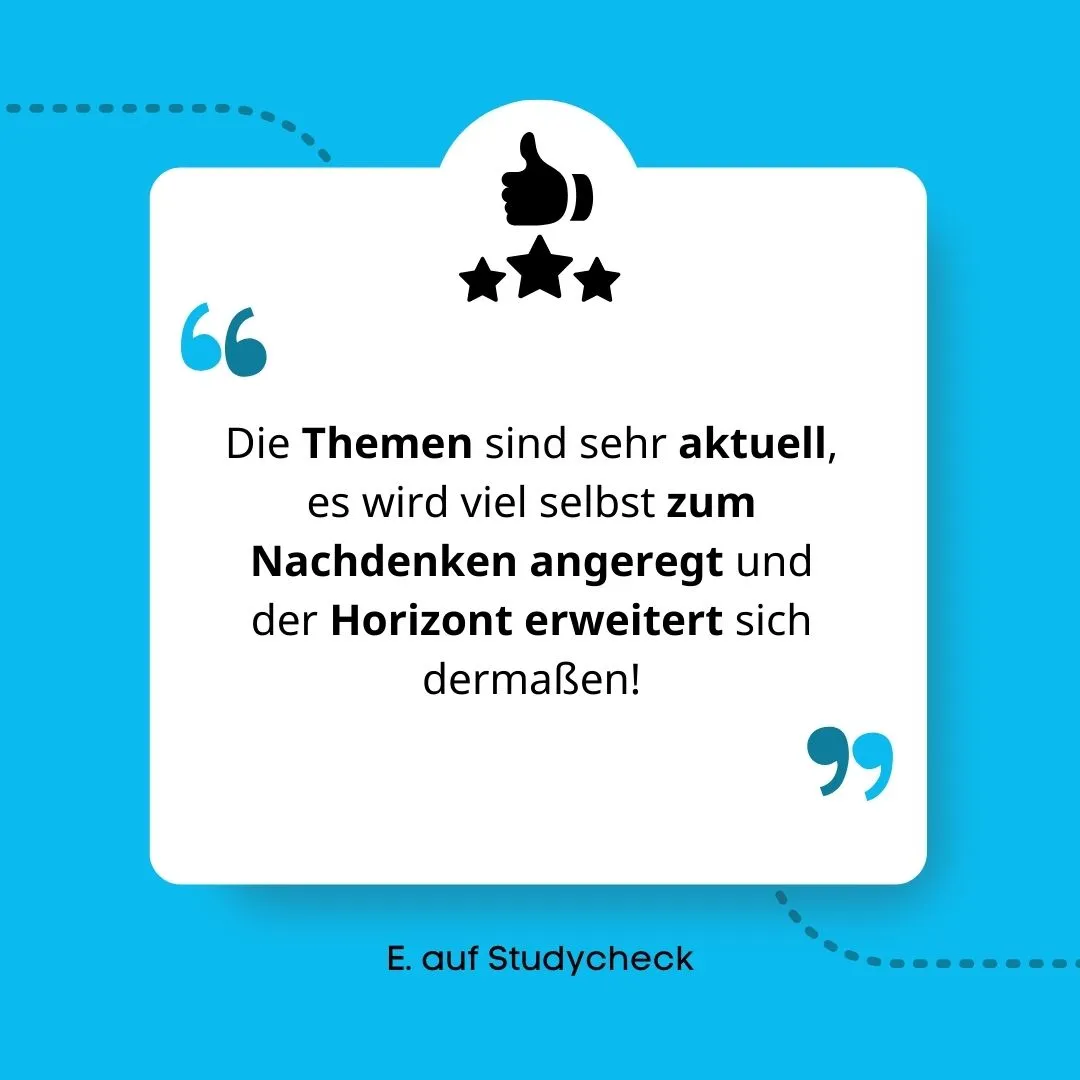
The university is located near the city centre. The university itself is a mix of old and modern buildings. KIZ, the golden building, is very light and has a modern design. The campus is within walking distance from one building to the next. You can also enjoy the natural surroundings whilst you’re out and about. In Nordpark, when the weather’s nice, people party hard, chill out and have barbecues. All in all, studying here is great fun!
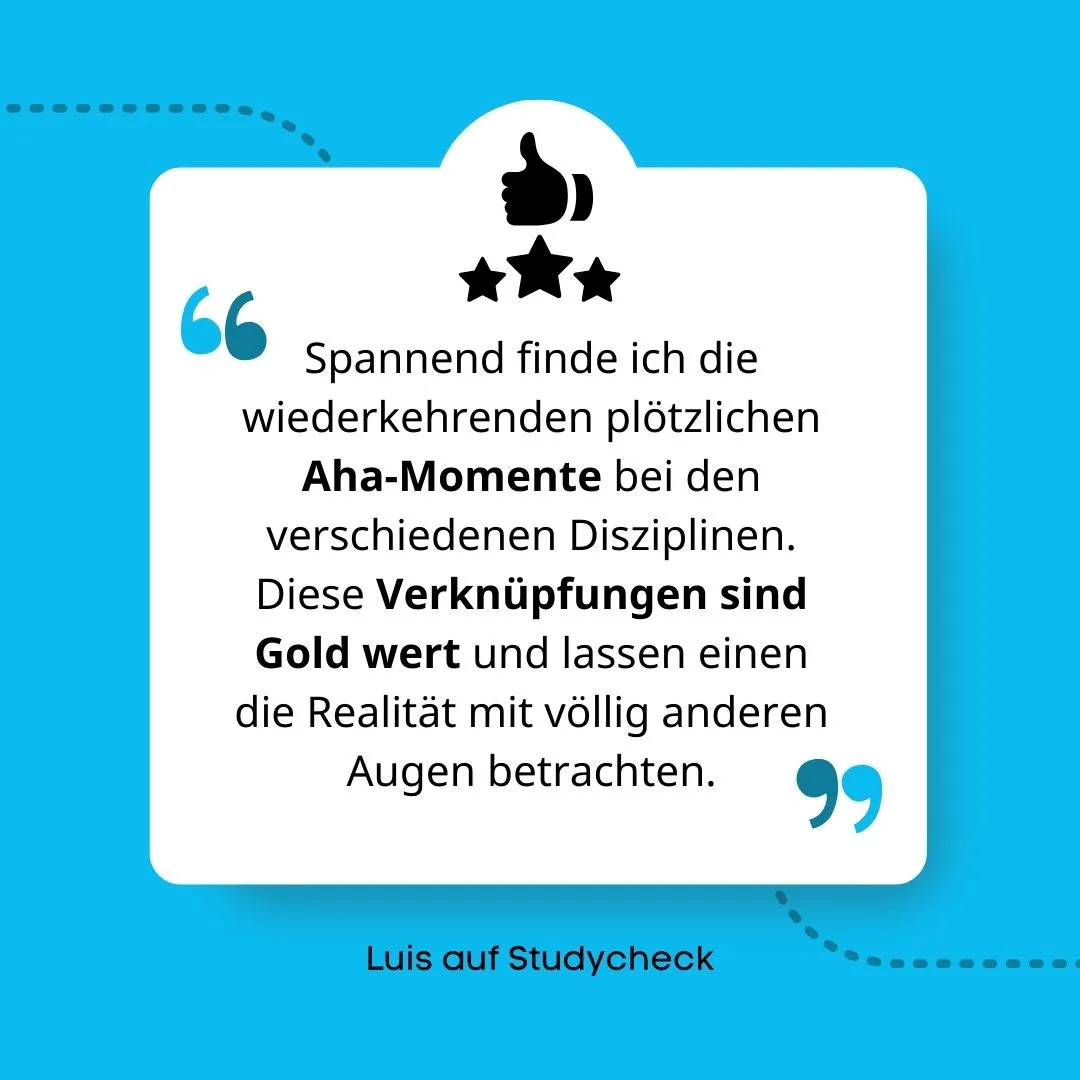
I discovered my interest in law during my first semester. Dealing with the law, solving cases, and getting to know different areas of law – these are all things I enjoy. At the University of Erfurt, I’m gaining the perfect insight into law, both online and in person. I’m looking forward to learning much more about this degree programme in the coming semesters.
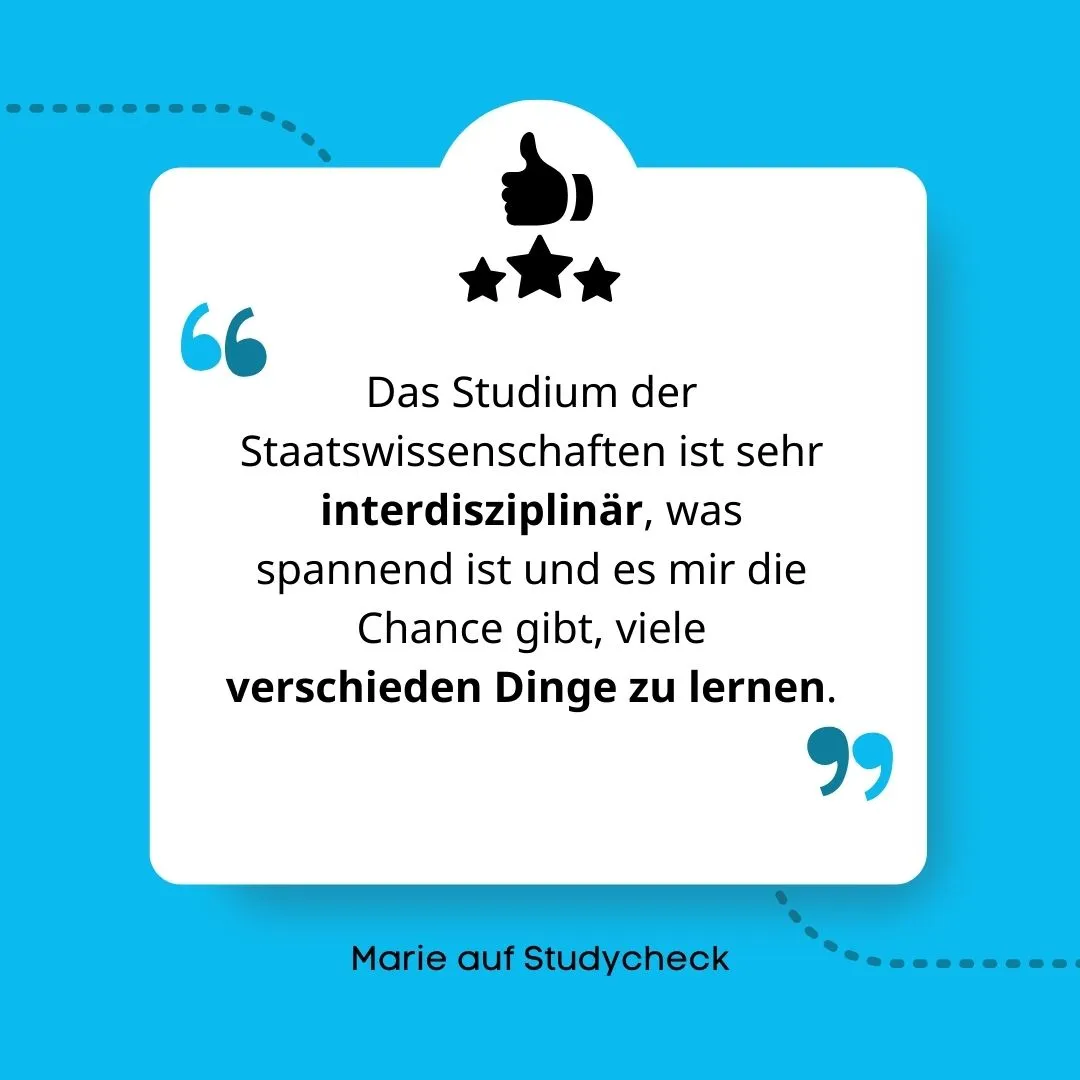
Despite some initial difficulties in understanding the structure and organisation of the degree programme, you soon find your feet, particularly with the help of friendly and approachable university lecturers and professors. I also particularly like the fact that, especially in the first year of study, you gain an insight into other areas of political science, namely Social Sciences and Economics. This gives you the opportunity to deepen your knowledge of Economics, Law and Social Sciences and broaden your interests.
Secure your place on the bachelor's programme in Law:
The Economics, Law and Social Sciences - Law concentration has no entry requirements ( no numerus clausus).
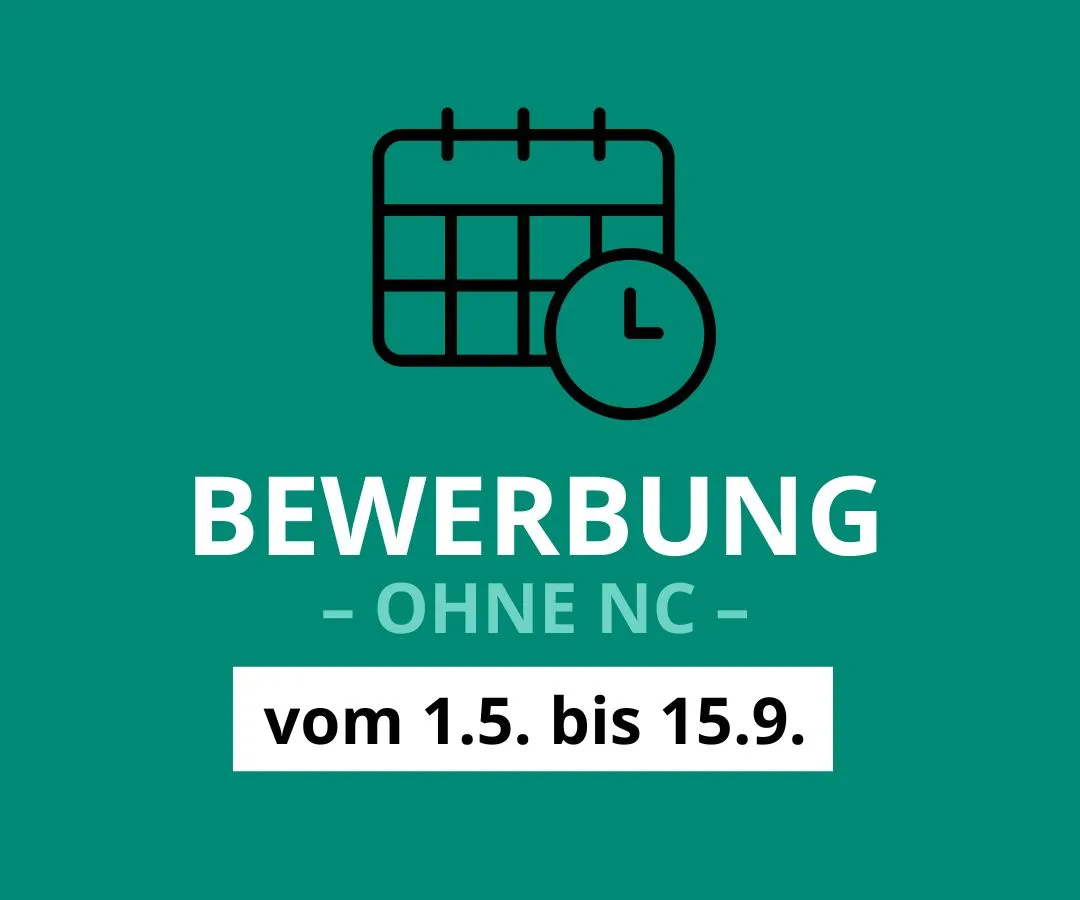
Application deadline for two subjects with no entry requirements
If you are combining the Economics, Law and Social Sciences - Law concentration (no entry requirements ) with a subject with no entry requirements, you can enrol directly via the University of Erfurt’s application portal from 1 May to 15 September.
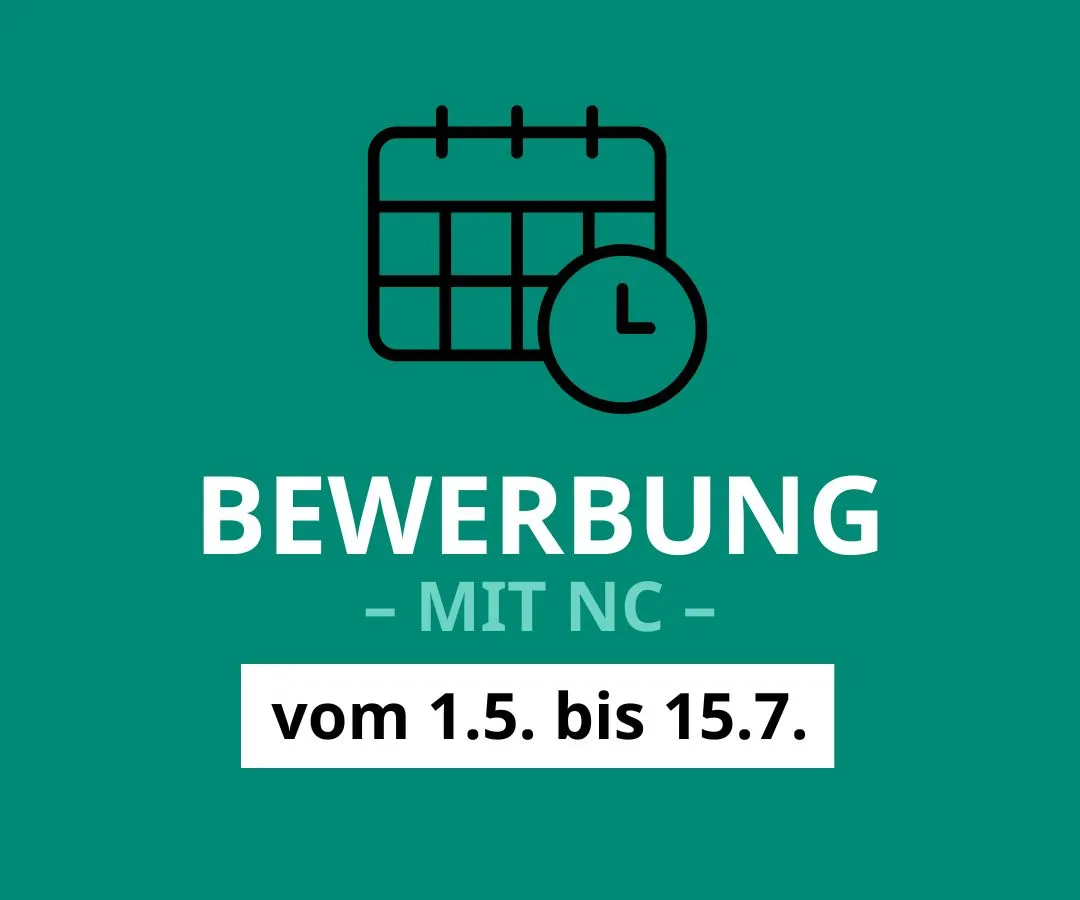
Application deadline for at least one subject with restricted admission
If you wish to combine the Economics, Law and Social Sciences – Law concentration (no entry requirements) with a subject subject to restricted admission (with entry requirements), such as International Relations, you should submit your application between 1 May and 15 July via the following link.
Discover Economics, Law and Social Sciences
Open Day & Discovery Days

Open Day
A wide range of information and advisory services give you the opportunity to see for yourself what studying and living in Erfurt are like during the Open Day. Join guided tours to explore the green campus and the beautiful old town centre. Information about the programme:
Discovery Days
Discovery Days at the University of Erfurt give you the chance to experience ‘university life up close’. Over the course of a week (on as many days as you like), you can attend selected courses (lectures or seminars) and get a taste of campus life. Information and programme:
Order or download information material

Would you like to have a copy of the course brochure? Then request our free information pack with no obligation. You’ll receive it by post directly to your home in just a few days.
Order your information pack now!
Don’t want to wait? Then download the leaflet now from the Download Centre.
subject advice and counselling

Please briefly describe your request in advance and attach your study report (ELVIS) and a current certificate of enrolment.
Economics, Law and Social Sciences Students’ Council
Would you like to chat with students from Economics, Law and Social Sciences? Drop them a line or follow them on Facebook and Instagram!
- fsstaatswissenschaft@uni-erfurt.de
- Instagram: FSR Economics, Law and Social Sciences

Are you considering studying Economics, Law and Social Sciences at the University of Erfurt, but are still unsure what to expect?
Then simply contact us by e-mail at: stawi2b@uni-erfurt.de
and we will arrange a telephone call.
We are happy to answer any questions you may have about course content or future opportunities, but also about Erfurt as a city to study in or our student life.
Download the information pack
Leaflet: ‘Studying at the University of Erfurt’ (pdf)
Leaflet: ‘Course catalogue at the University of Erfurt’ (pdf)
Leaflet: ‘Bachelor's Programme in Economics, Law and Social Sciences’ (pdf)
Leaflet: “Studying Economics, Law and Social Sciences at the University of Erfurt” (pdf)


Spot on! I studied that too.
Sebastian combined Economics, Law and Social Sciences with a law concentration.
![[Translate to English:] facebook icon](/fileadmin/SocialMediaIcons/iconfinder_06-facebook_white.svg)

![[Translate to English:] instagram icon](/fileadmin/SocialMediaIcons/iconfinder_38-instagram_white.svg)
![[Translate to English:] YouTube icon](/fileadmin/SocialMediaIcons/iconfinder_18-youtube_white.svg)
![[Translate to English:] xing icon](/fileadmin/SocialMediaIcons/iconfinder_xing_white.svg)
