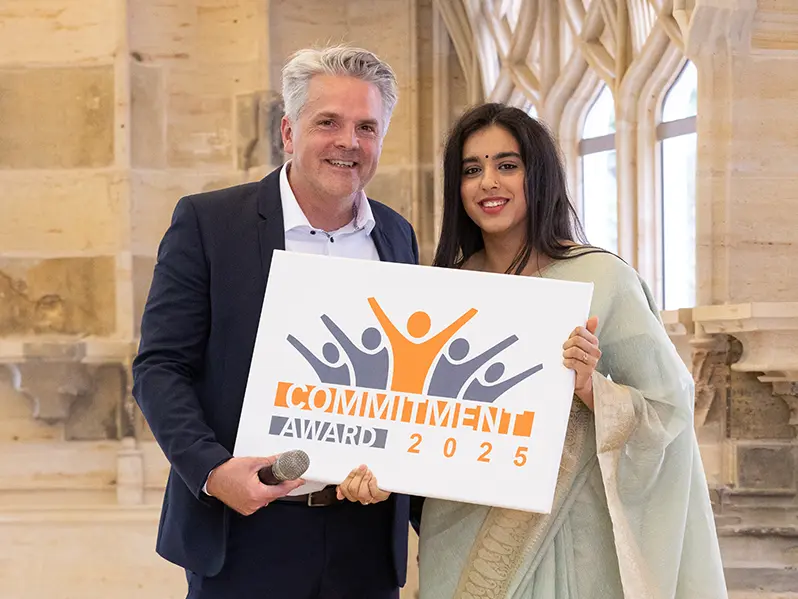
One of them is Yashaswini Nand, who wants to prevent sexual harassment in India with her project "Halla Bol" – by educating children and raising public awareness. In India, the sexual abuse of children is still a widespread but barely discussed problem due to stigmatisation and a lack of awareness of the issue. "I want to close this gap with 'Halla Bol'," says Yashaswini Nand. To do this, the student wants to develop child-orientated educational content and not only make it easily accessible to everyone, but also integrate it into the curricula of schools across the country. The pilot project is currently being implemented in three districts in Jharkhand: East Singhbhum, West Singhbhum and Ranchi. The plan is to expand the project to 20 schools in each district.
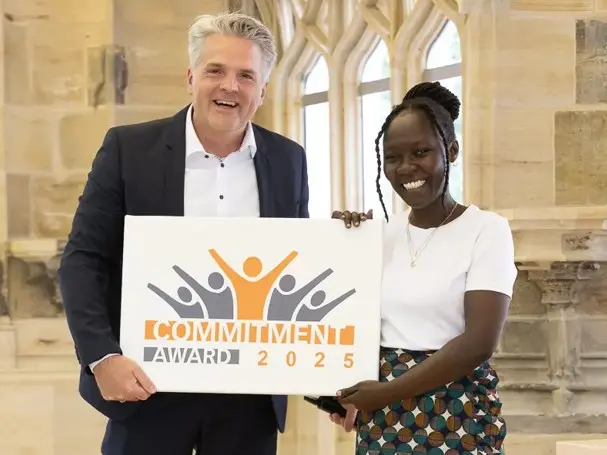
Frida Akumu Onyango entered the race for the Commitment Award with her project “Mvita Adult and Continuing Education”. This is a special learning centre that offers literacy and secondary school programmes for adults (aged 18 and over). Its primary goal is to reduce the illiteracy rate among adults in Kenya's Mombasa County and to empower people through education. "Most of our learners are working. That's why we offer flexible lesson times, including morning, afternoon and evening classes, so that they can combine work and education," explains Frida Akumu Onyango. "Our school fees are heavily subsidised and therefore affordable, making the offer accessible to all. With education for adults, we promote their personal development, improve employment opportunities and raise the standard of living in the region." At the same time, her project contributes to the realisation of the United Nations' fourth Sustainable Development Goal – quality education – by ensuring inclusive, equitable education and lifelong learning opportunities for all. School fees have already been paid for adult learners in need. In addition, a team led by Frida Akumu Onyango offers classes at the Jela Baridi correctional facility to help inmates reintegrate into society after their release.
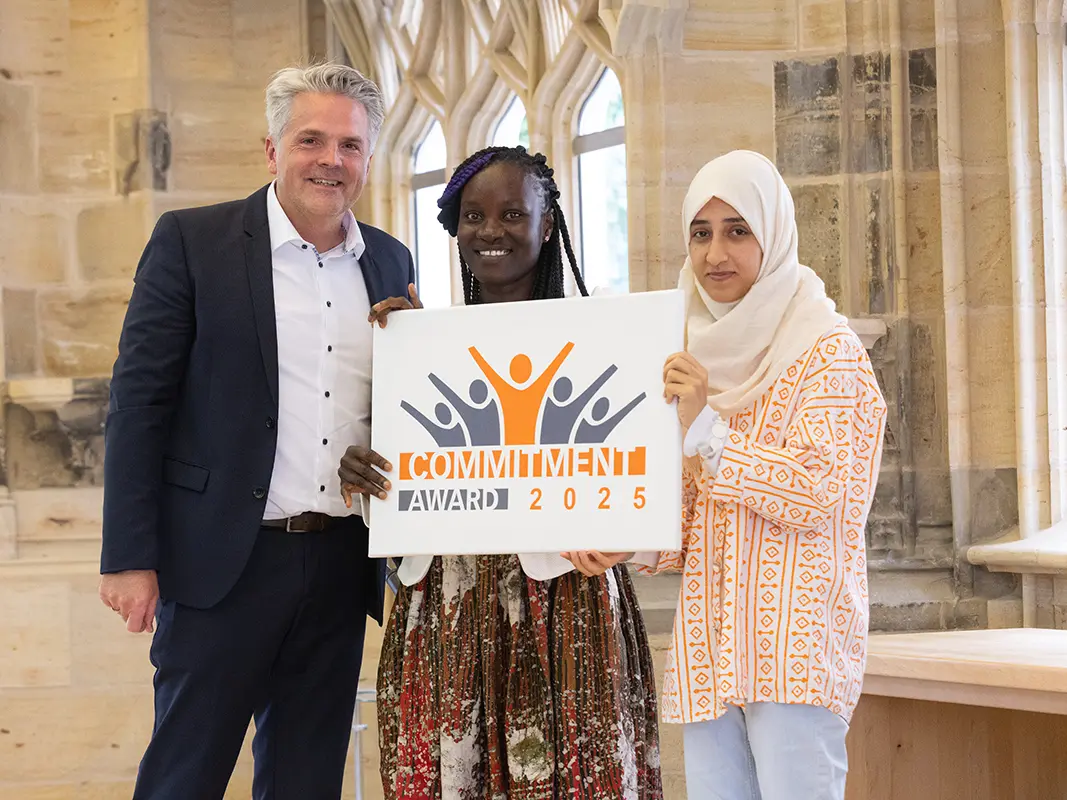
With their project “Eco-Flow Ghana and Afghanistan”, Audrey Ampoma Boadu and Tahmina Kakar are committed to improving menstrual health, empowering women and environmental sustainability. "We want to provide socially disadvantaged girls in Ghana and Afghanistan with affordable, reusable sanitary towels so that they can continue to go to school and overcome their stigmatisation," explain the two students. Millions of girls in Ghana and Afghanistan have no access to menstrual products due to poverty, cultural stigmatisation and simply limited availability. This not only poses a health risk for them, but also means that they do not go to school. Disposable sanitary towels are expensive, unavailable in rural areas and also harmful to the environment. "The Eco-Flo business model aims for sustainability, we take care of subsidies or donations and thus enable the distribution of free sanitary pads to women and girls," explain Audrey Ampoma Boadu and Tahmina Kakar. The two are also launching education programmes on menstrual health to reduce stigma and raise awareness of hygiene. Through strategic partnerships and community engagement, Eco-Flow aims to ensure that no girl misses school due to menstruation. We want to empower women economically and offer sustainable solutions for all of this."
Professor Bettina Rockenbach, President of the German National Academy of Sciences Leopoldina, was among the first well-wishers that afternoon. In this year's Brandt Lecture, she had previously spoken about the question of how free science is in times of geopolitical upheaval. Of course, congratulations also came from the numerous guests in the Collegium Maius, the university lecturers and fellow students. Professor Andreas Goldthau, Director of the Brandt School: "We are very proud of our students, because it takes courageous and inspiring people to change the world one step at a time."
Congratulations to all the winners!



![[Translate to English:] facebook icon](/fileadmin/SocialMediaIcons/iconfinder_06-facebook_white.svg)

![[Translate to English:] instagram icon](/fileadmin/SocialMediaIcons/iconfinder_38-instagram_white.svg)
![[Translate to English:] YouTube icon](/fileadmin/SocialMediaIcons/iconfinder_18-youtube_white.svg)
![[Translate to English:] xing icon](/fileadmin/SocialMediaIcons/iconfinder_xing_white.svg)
