Der Bauernkrieg zwischen Wissenschaft und Instrumentalisierung
Hardly any other historical event has been interpreted and instrumentalised as differently as the Peasants' War of 1525: The event, which was still perceived as disorderly at the time, was later described from different perspectives as a "revolt against feudal oppression", a "religious struggle for freedom", a "rebellion" or a "revolution" - even the term "Peasants' War" is controversial. In the anniversary year 2025, there are a large number of publications, exhibitions and public events. What new interpretations are there, and how do they fit into older patterns? Does the uprising of 1525 still have something to say to us today? And is it possibly being improperly instrumentalised in the current political and cultural battle of opinions?
Professor Dr Gerd Schwerhoff is Senior Professor of Early Modern History at TU Dresden, specialising in crime and witch-hunts. In 2024, he published "Der Bauernkrieg. Geschichte einer wilden Handlung", a non-fiction book on the subject published by C.H. Beck.
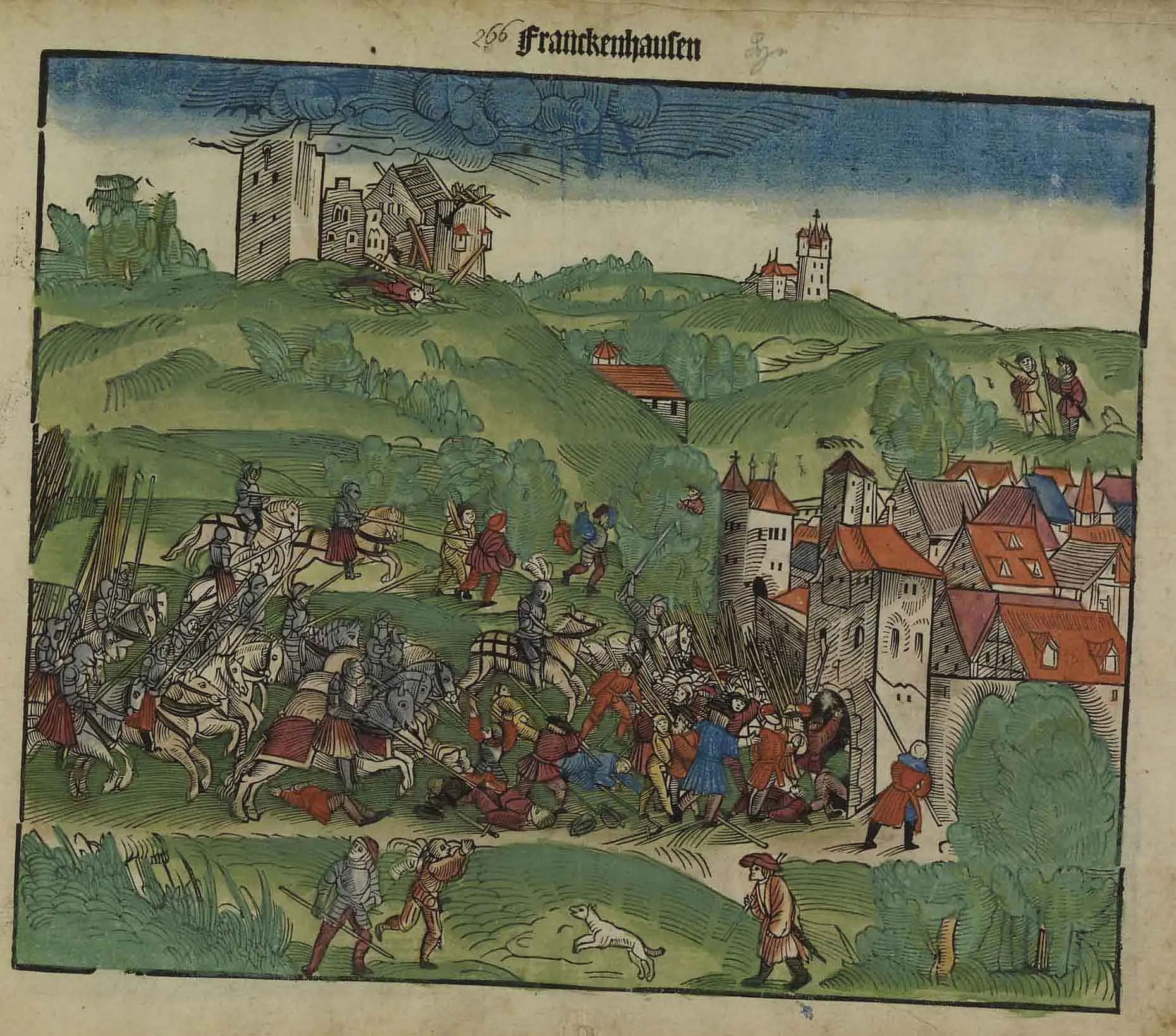
Caption: The peasants are defeated near Frankenhausen, Bamberg Castle Book, RB.H.bell.f.1, p. 66, Public domain Mark 1.0.

![[Translate to English:] facebook icon](/fileadmin/SocialMediaIcons/iconfinder_06-facebook_white.svg)

![[Translate to English:] instagram icon](/fileadmin/SocialMediaIcons/iconfinder_38-instagram_white.svg)
![[Translate to English:] YouTube icon](/fileadmin/SocialMediaIcons/iconfinder_18-youtube_white.svg)
![[Translate to English:] xing icon](/fileadmin/SocialMediaIcons/iconfinder_xing_white.svg)
