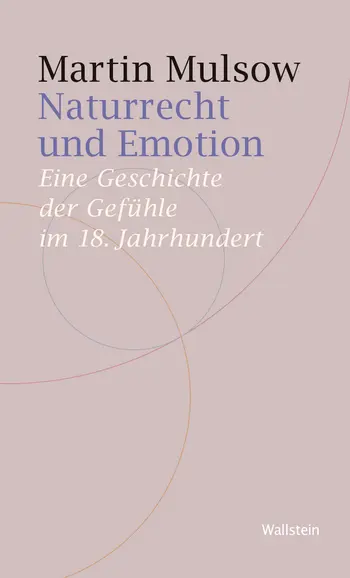
What happens when people are completely at the mercy of their feelings and desires – because the voice of reason is no longer effective? While today a political psychology that assumes the intelligence of emotions can gain something from the situation, around 1700 there was already an epistemic situation that faced up to the power of feelings; but with a pessimistic undertone. What remains to be done then? Are fear of punishment and hope of reward the only legitimate affects on which natural law and social peace can be built? Or are there liberations through which humans can still find their way to constructive ways of life? Martin Mulsow, a historian of ideas who has won numerous awards, takes an exciting rollercoaster ride through the disciplines, steering through Philosophy and Theology, but also Medicine, Embryology and Criminal Law, Music and Economics, Philology and Church History, to explore what knowledge of emotions was at the beginning of the 18th century. In this way, surprising perspectives emerge that reveal the discourses of today in the distant mirror of the early Enlightenment.
Natural law is the law of reason, but people are almost always ruled by their emotions. Philosophy, medicine and theology around 1700 tried to explore this more precisely."

![[Translate to English:] facebook icon](/fileadmin/SocialMediaIcons/iconfinder_06-facebook_white.svg)

![[Translate to English:] instagram icon](/fileadmin/SocialMediaIcons/iconfinder_38-instagram_white.svg)
![[Translate to English:] YouTube icon](/fileadmin/SocialMediaIcons/iconfinder_18-youtube_white.svg)
![[Translate to English:] xing icon](/fileadmin/SocialMediaIcons/iconfinder_xing_white.svg)
