Calendars and almanacs are typical certificates of the book and publishing culture of the 18th century, which aimed to entertain, educate and inform an aristocratic and increasingly bourgeois audience. When the Duchy of Gotha developed into a nationally recognised publishing centre in the 18th century, the first calendars were also published here.
|
Campus Gotha,
Gotha Research Library,
Knowledge, Spaces, and Media,
Research,
Events
"ADEL MACHT STAAT": Annual Exhibition of the Gotha Research Library
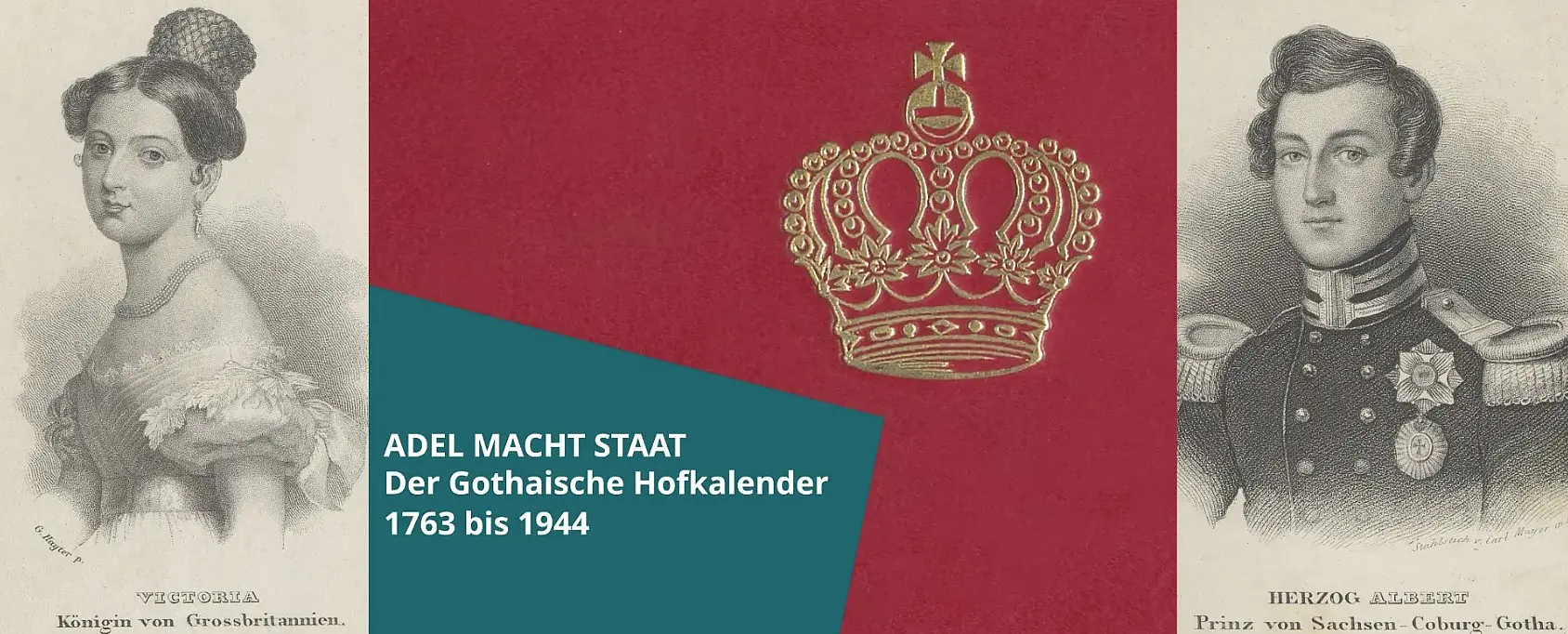
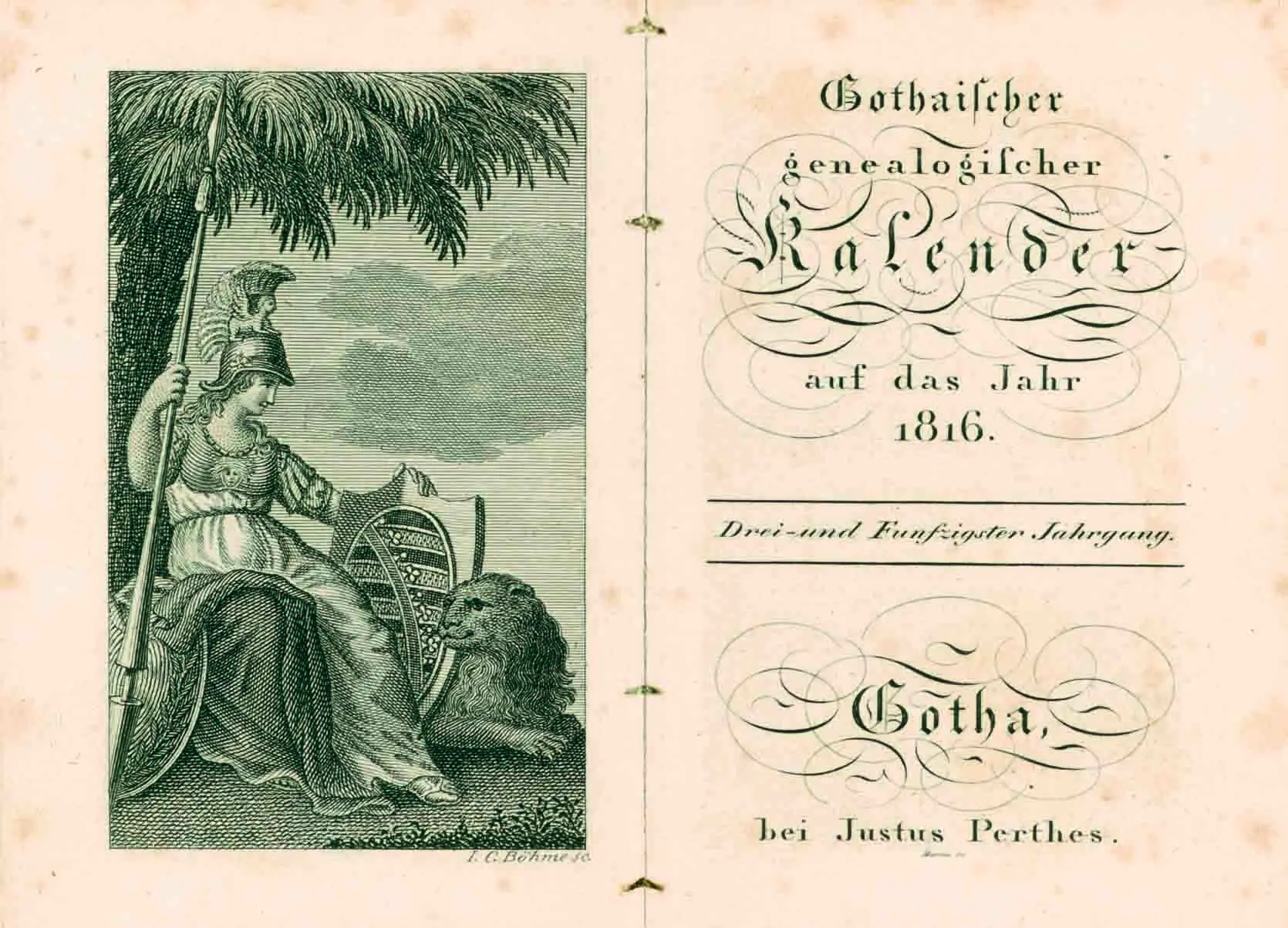
The "GOTHA" developed from the widespread calendars of the early modern period and was created in the mid-18th century during the Enlightenment. From the very beginning, it was present on the European market as a German-French parallel edition – as the "Gothaischer Hofkalender" and the "Almanach de Gotha". Important Gotha printers and publishers included the "GOTHA" in their programmes from 1763. In 1785, Johann Georg Justus Perthes took over the publishing and distribution of the "GOTHA" and thus founded the famous Justus Perthes Verlag Gotha. In the 19th century, the "GOTHA" established its unique reputation, which was forever associated with the city of Gotha. It rose to become the most important standard genealogical work of the European aristocracy and an influential handbook of the states of the world.
The exhibition now traces its history. The concept and content are based, among other things, on the latest research findings of the DFG-funded research project "The Gotha – A study of the most important genealogical reference work in modern Europe" by Professor Markus Friedrich and Hannah Boeddeker from the University of Hamburg.
The annual exhibition will be complemented by an accompanying programme of lectures, discussions, guided tours and the "Gotha Perthes Collection Open Day". For details please see our flyer or the exhibition website.
Opening hours of the exhibition:
- Tuesdays to Sundays, from 10 am to 5 pm, as well as on public holidays on 20 September, 3 October and 31 October.
- The exhibition will be closed from 2.30 pm on 22 October.
The exhibition is also accompanied by a catalogue, which is available from the Gotha Research Library: Sven Ballenthin/Petra Weigel (eds.), ADEL MACHT STAAT. Der Gothaische Hofkalender/Almanach de Gotha 1763 bis 1944, Gotha 2025.
By the way...
Our research blog “WortMelder” also provides insights into the history of the "GOTHA".


![[Translate to English:] facebook icon](/fileadmin/SocialMediaIcons/iconfinder_06-facebook_white.svg)

![[Translate to English:] instagram icon](/fileadmin/SocialMediaIcons/iconfinder_38-instagram_white.svg)
![[Translate to English:] YouTube icon](/fileadmin/SocialMediaIcons/iconfinder_18-youtube_white.svg)
![[Translate to English:] xing icon](/fileadmin/SocialMediaIcons/iconfinder_xing_white.svg)
