Panelists:
- Thomas Yoshimura, Policy Advisor China, Konrad-Adenauer-Stiftung e.V.
- George Yin, Senior Fellow, Mercator Institute for Chia Studies
- Michael Laha, Senior Fellow, German Council of Foreign Relations (DGAP)
- Moderated by Dr. des. Madeleine Böhm, Academic Coordinator of the doctoral program De-Globalization and Global Decoupling (DeGlobE)
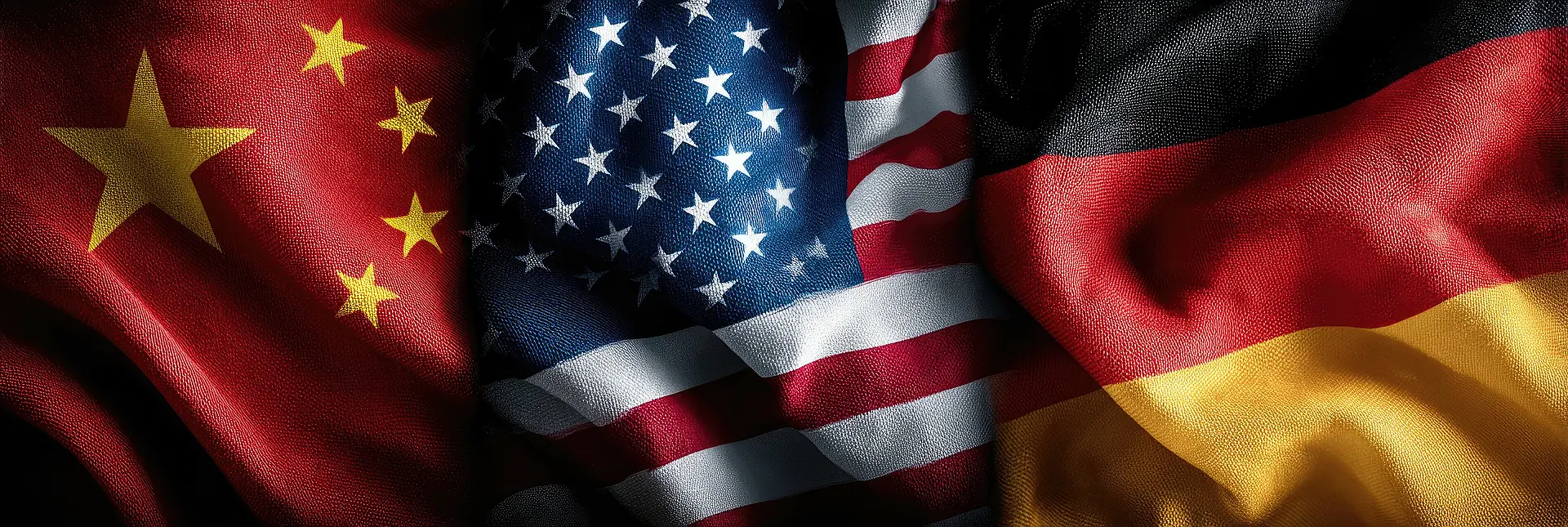
From a German perspective, the debate is shaped by questions of economic dependence, technological vulnerability, and the task of reconciling values-based foreign policy with industrial competitiveness. Germany’s focus on de-risking and human rights reflects its struggle to balance partnership and caution in its China approach.
The United States views China primarily through the lens of strategic rivalry, emphasizing national security, technological competition, and geopolitical influence across the Indo-Pacific. Discussions often revolve around deterrence, export controls, and the broader contest over global norms.
Across Asia, China is both an indispensable economic partner and a dominant regional power whose actions influence security dynamics, trade flows, and political stability. Countries in the region navigate a complex mix of cooperation, competition, and cautious hedging in response to China’s rise.
This interactive conversation will examine where these perspectives diverge, where common ground emerges, and how transatlantic cooperation can meaningfully engage with Asia’s evolving realities. We welcome all interested participants to join the dialogue.

![[Translate to English:] facebook icon](/fileadmin/SocialMediaIcons/iconfinder_06-facebook_white.svg)

![[Translate to English:] instagram icon](/fileadmin/SocialMediaIcons/iconfinder_38-instagram_white.svg)
![[Translate to English:] YouTube icon](/fileadmin/SocialMediaIcons/iconfinder_18-youtube_white.svg)
![[Translate to English:] xing icon](/fileadmin/SocialMediaIcons/iconfinder_xing_white.svg)
