New publication: "Aufklärung und Residenzstadt"
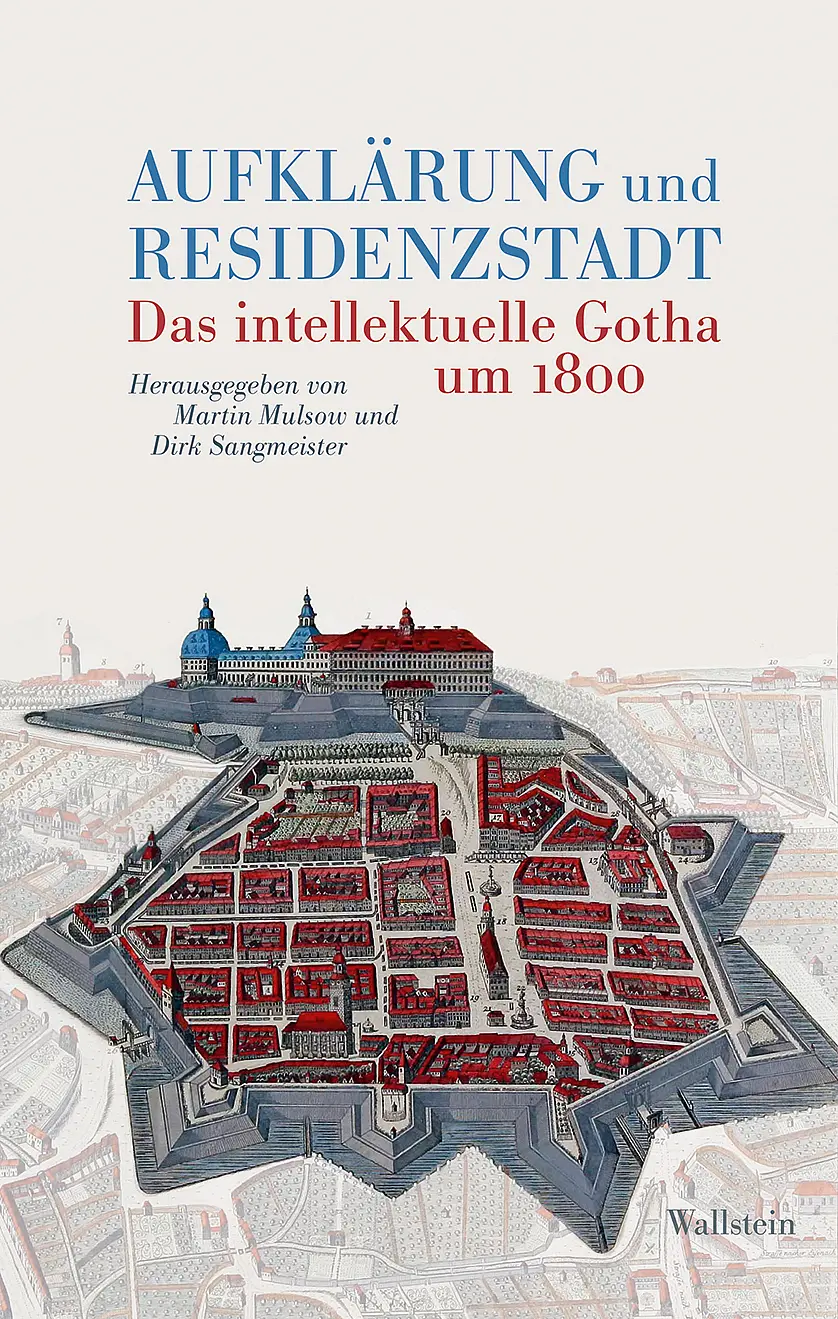
Martin Mulsow and Dirk Sangmeister (eds.)
Aufklärung und Residenzstadt
Das intellektuelle Gotha um 1800
Wallstein publishing house, 2026
ISBN 978-3-8353-5560-6
799 pages
49 EUR (D) // 50,40 EUR (A)
(also available as an e-book )
"Gotha was often overshadowed by Weimar, but also had an intellectual diversity around 1800."
In the decades around 1800, Gotha was a residential city with great charisma, a centre of the late Enlightenment. Under a prince who promoted the sciences, astronomy and geology flourished, as did philology and history. Against the backdrop of numerous collections, an enormous library, a well-functioning state system and favourable postal connections, literary figures and scholars of distinction had an impact on the entire empire from here: Rudolph Zacharias Becker distributed the greatest bestseller of Goethe's time, his popularly enlightened Noth- und Hülfsbüchlein für Bauersleute, as well as his nationally read Reichs-Anzeiger. Georg Anton Benda composed melodramas that set the tone, Friedrich Wilhelm Gotter wrote widely performed plays, Heinrich August Ottokar Reichard distributed his almanacs, the publisher Carl Wilhelm Ettinger printed the first complete edition of Voltaire and prestigious scholarly newspapers, Conrad Ekhof wrote theatre history with his standing stage and the banned Illuminati Order found the centre of its late phase here. Until now, Gotha has been overshadowed by Weimar in the attention of researchers. This volume is the first to shed light on the significance of the city and to fan out the diversity of its intellectual landscape.
Read the interview with Professor Martin Mulsow in our "WortMelder" research blog!
You are in the news section of our publications pages.
Further news, press releases and current topics can be found on the "News" pages of the University of Erfurt.

![[Translate to English:] facebook icon](/fileadmin/SocialMediaIcons/iconfinder_06-facebook_white.svg)

![[Translate to English:] instagram icon](/fileadmin/SocialMediaIcons/iconfinder_38-instagram_white.svg)
![[Translate to English:] YouTube icon](/fileadmin/SocialMediaIcons/iconfinder_18-youtube_white.svg)
![[Translate to English:] xing icon](/fileadmin/SocialMediaIcons/iconfinder_xing_white.svg)
