The Order of the Illuminati, which marks its 250th anniversary this year, existed for longer than previously thought – and had its final centre of activity in Thuringia. This is the conclusion reached by the Centre for Illuminati Research at the Gotha Research Centre of the University of Erfurt.
On 1 May 1776, the Ingolstadt canon lawyer Adam Weishaupt (1748–1830) founded the Order of the Illuminati. The ban imposed by the Electorate of Bavaria in 1785 has long been regarded as the end of the secret society. However, the Gotha research shows that under the leadership of the translator and Freemason Johann Joachim Christoph Bode, the Order continued to exist until 1787 – with a focus on Thuringia. Gotha thus became its final stronghold and is today also a key location for its academic study.
New perspectives on a much-discussed secret society
Since 2018, the Illuminati Research Centre has been systematically cataloguing key sources on the history of the Order. The project involves historians Dr Markus Meumann, Prof. Martin Mulsow and Dr Olaf Simons, as well as other researchers. The aim is to precisely reconstruct the historical reality of the Order and separate it from the numerous myths that still surround it today. At the heart of this research lies an extraordinary collection of sources: the so-called ‘Swedish Chest’. It comprises extensive documents from Bode’s circle. After the Second World War, the materials were thought to have been lost and were only rediscovered in the late 1980s. To date, they have been analysed only in part.
Gotha as a hub of the Order
The newly analysed sources paint a nuanced picture: Contrary to previous research, the centre of the Order shifted to Central Germany in the 1780s. Under the patronage of Duke Ernst II of Saxe-Gotha-Altenburg, an active provincial branch of the Order known as ‘Ionia’ was established there. It developed into the organisational and intellectual hub of the late Illuminati Order.
New publication in the anniversary year
To mark the anniversary, the Research Centre is preparing a comprehensive academic publication: *The Illuminati: Metamorphoses of a Secret Society 1776–1787*, which is due to be published by Wallstein Verlag in 2027. The volume brings together the current state of research and offers new insights into the Order’s organisation, communication structures and internal debates. In addition, members and networks that have received little attention to date are being systematically examined for the first time.
Between the Enlightenment and conspiracy narratives
The Order of the Illuminati was a phenomenon of the late European Enlightenment. Starting as a student reading circle, it developed into an elitist network with ambitious educational goals. Its members included scholars, civil servants, nobles and commoners – women were not admitted.
The ban of 1785 and the publication of confiscated documents contributed significantly to the creation of legends, which were further reinforced in the context of the French Revolution. Many of the ideas about the Order that are still prevalent today stem from these early interpretations – not from historical facts.
The Gotha research, by contrast, shows: “The Order of the Illuminati was a phenomenon of the Enlightenment that was clearly limited in time and space,” says Meumann. “It is fascinating enough to do without myths.”
|
Campus Gotha,
Gotha Research Centre,
Knowledge, Spaces, and Media,
Research
250 Years of the Order of the Illuminati: New Research Puts Gotha in the Spotlight
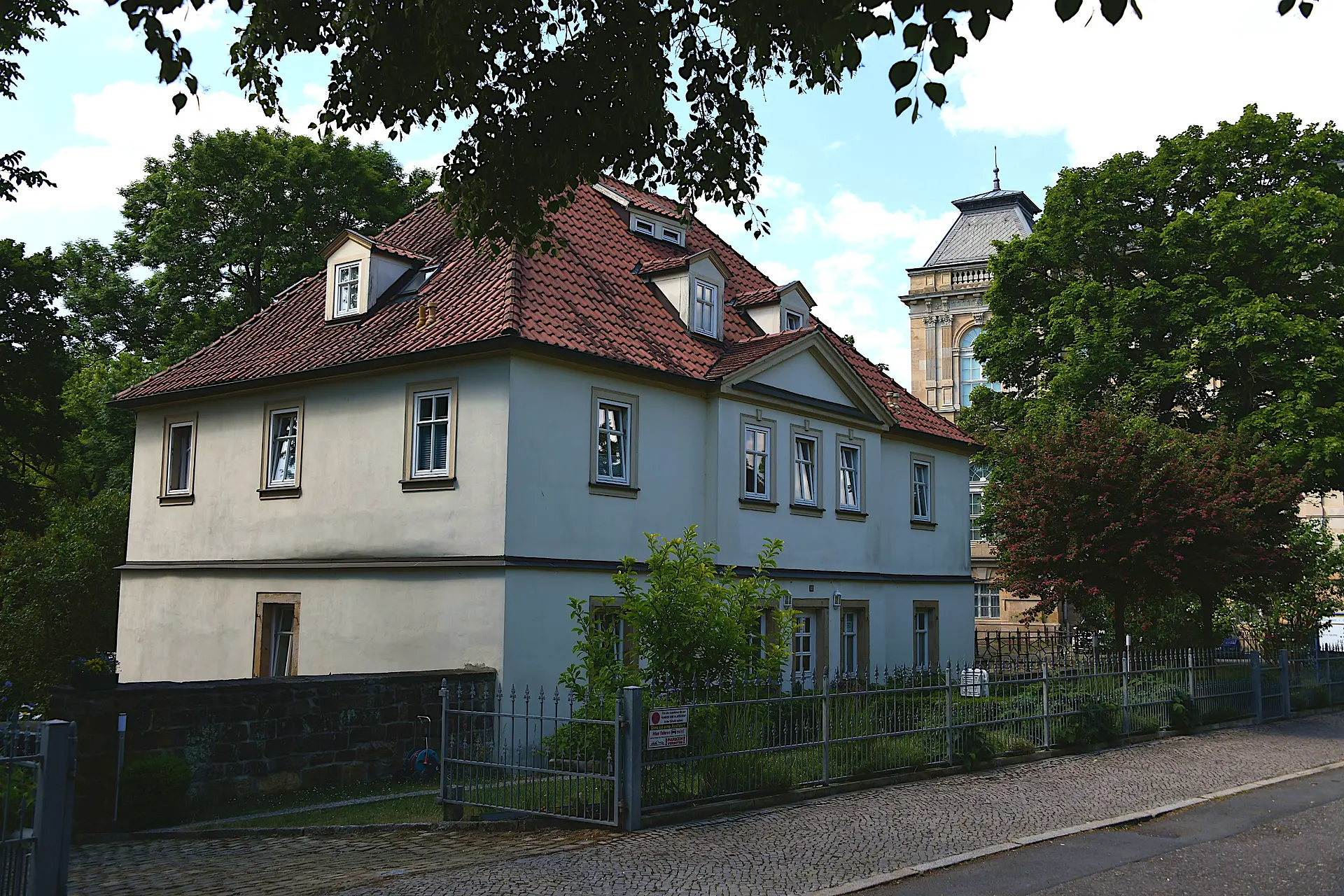
Illuminati Research Unit
The Illuminati Research Unit, established at the Gotha Research Centre in 2018, is dedicated to the historical study of the Order of the Illuminati. A key objective is to systematically catalogue the surviving writings of the Order and its members and make them accessible both to researchers and to the wider public.
In addition to academic publications and events, the focus is particularly on digital dissemination: through the ‘Gotha Illuminati Research Base’ platform, the Research Centre makes its findings available in the form of an information portal, thereby creating a central reference point for further research. In recent years, Gotha has thus developed into a leading centre for research into the Order of the Illuminati.


![[Translate to English:] facebook icon](/fileadmin/SocialMediaIcons/iconfinder_06-facebook_white.svg)

![[Translate to English:] instagram icon](/fileadmin/SocialMediaIcons/iconfinder_38-instagram_white.svg)
![[Translate to English:] YouTube icon](/fileadmin/SocialMediaIcons/iconfinder_18-youtube_white.svg)
![[Translate to English:] xing icon](/fileadmin/SocialMediaIcons/iconfinder_xing_white.svg)
