The Policy Ultra-Briefs on climate protection were developed by members of the DGPs interest group ‘People, Climate, Sustainability’. The new format presents current psychological and behavioural science findings in a compact, understandable, and action-oriented way for political decision-making processes. Prof. Dr. Cornelia Betsch, Director of the Institute for Planetary Health Behaviour, is one of the co-editors of the series. Other researchers from the institute have contributed articles.
|
Institute for Planetary Health Behaviour
Presentation of the Policy Ultra Briefs: Psychological impulses for climate policy

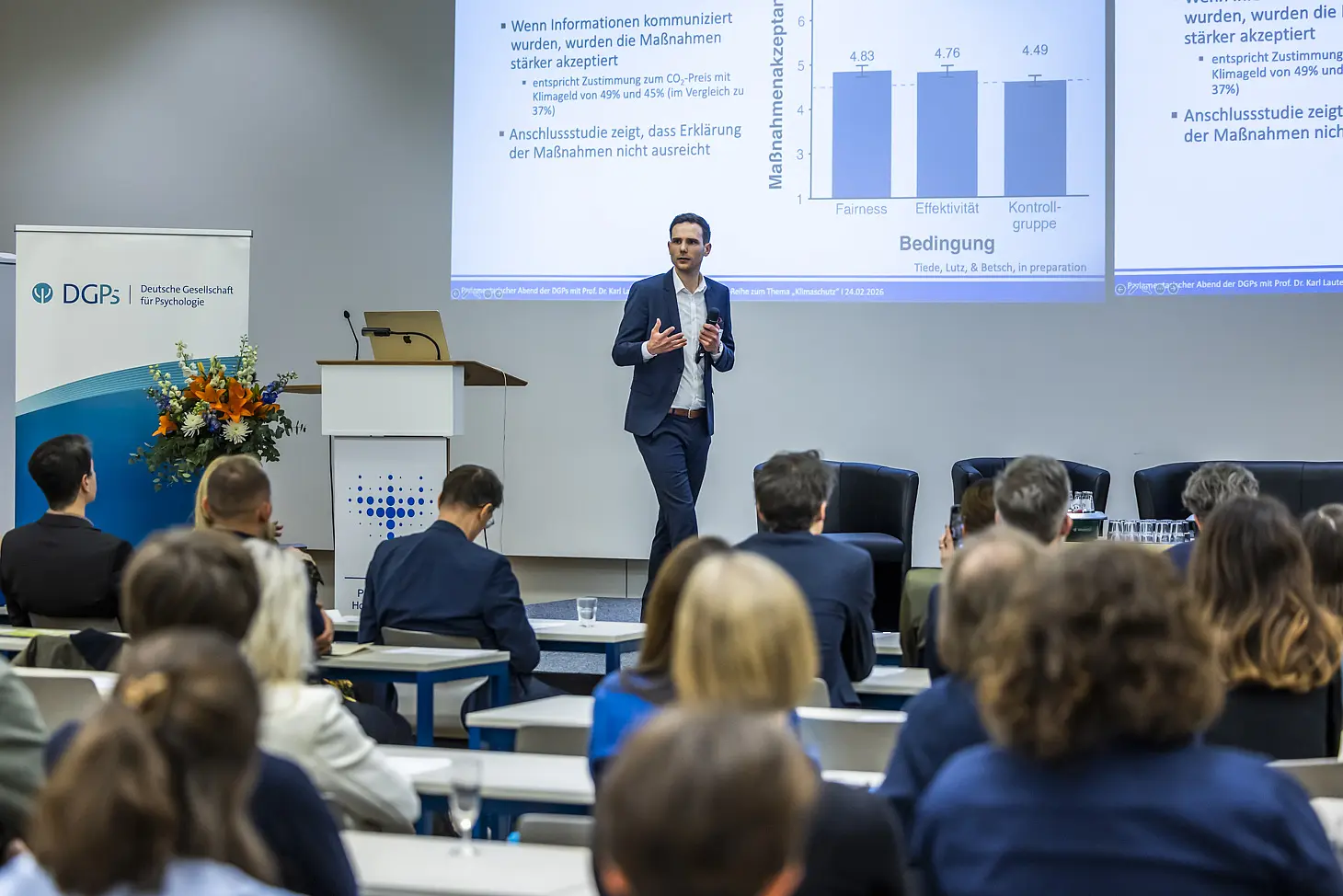
In a keynote speech, Dr. Kevin Tiede showed which levers are crucial from a psychological perspective to ensure that climate protection measures meet with greater approval, from the specific design to effective communication.
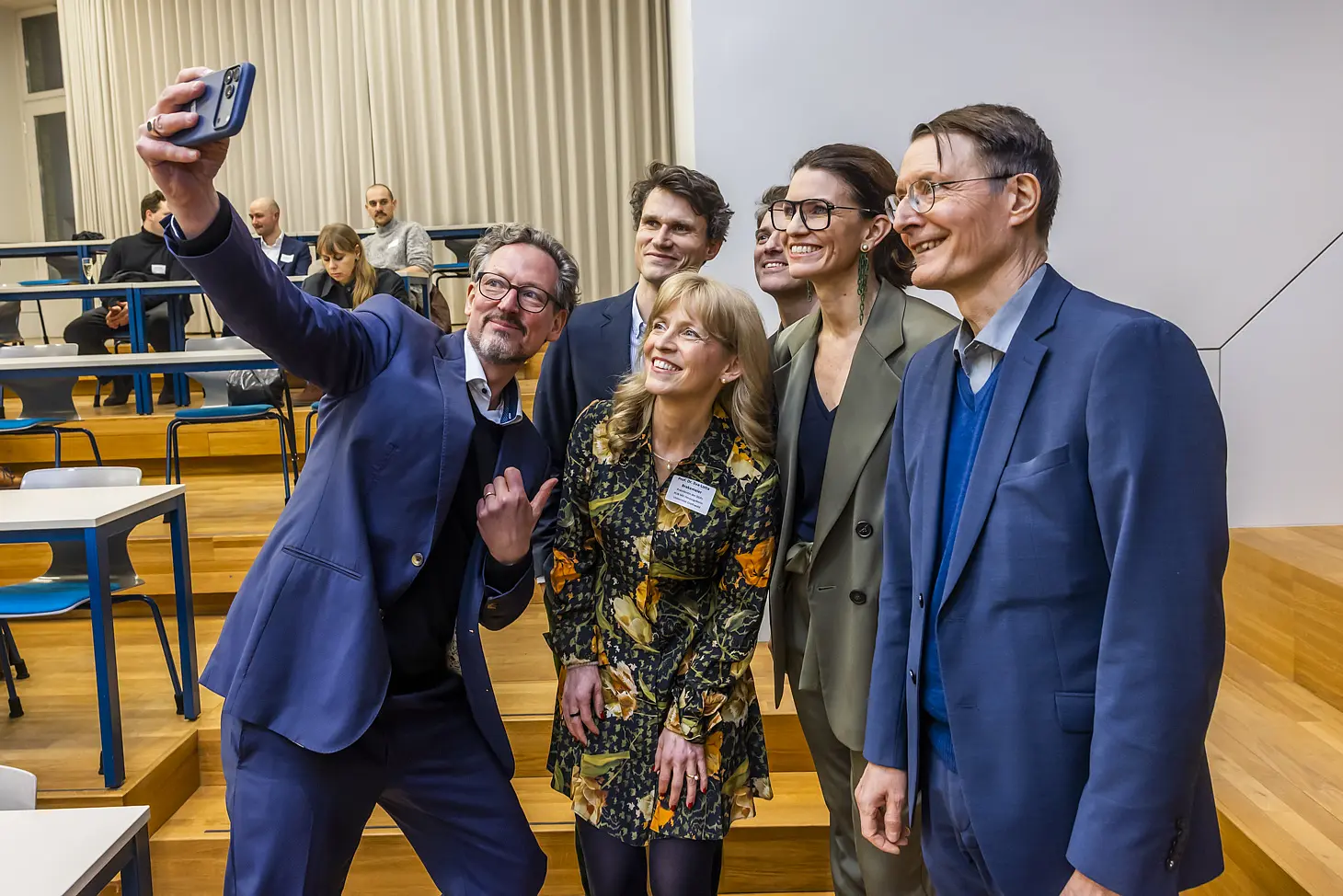
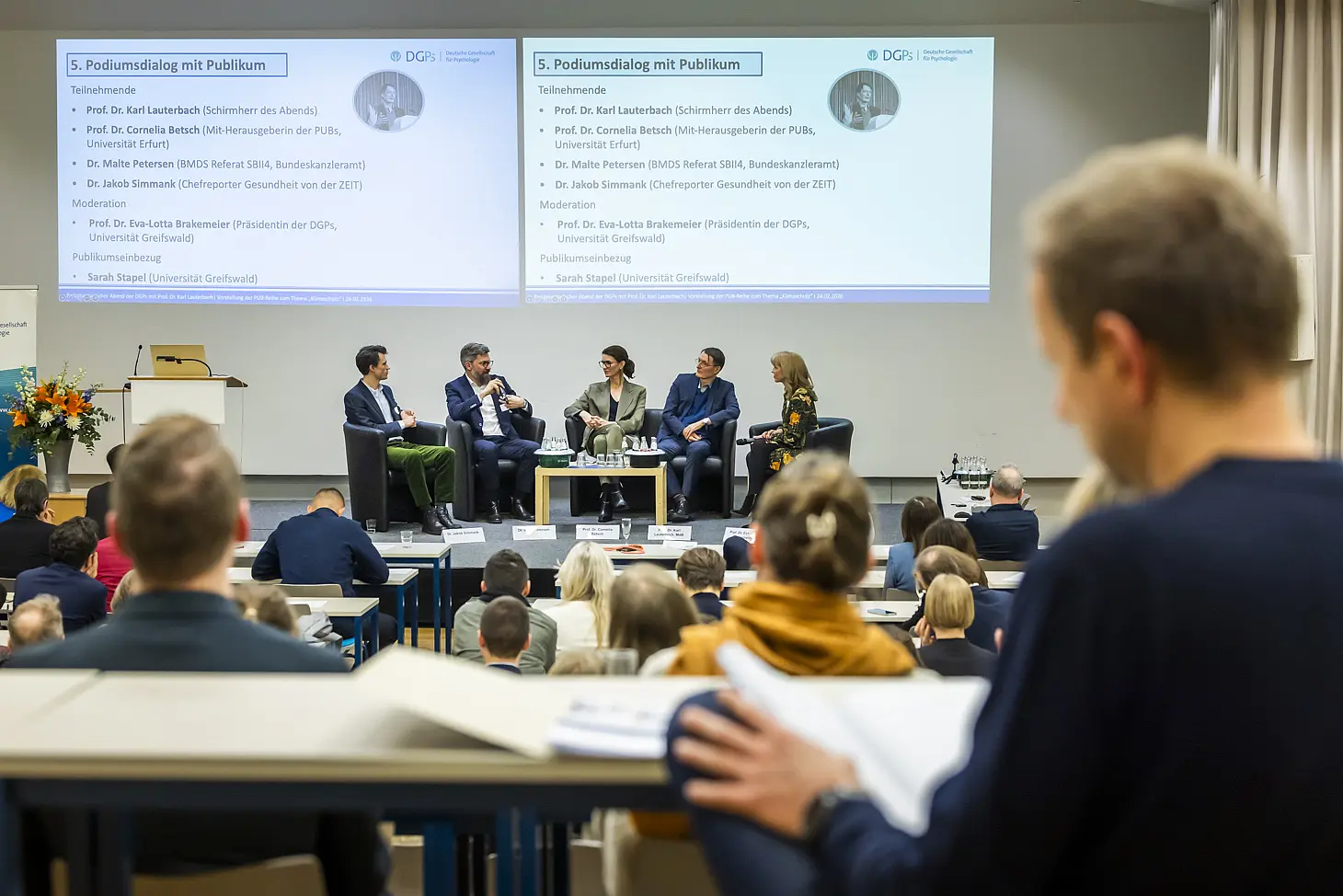
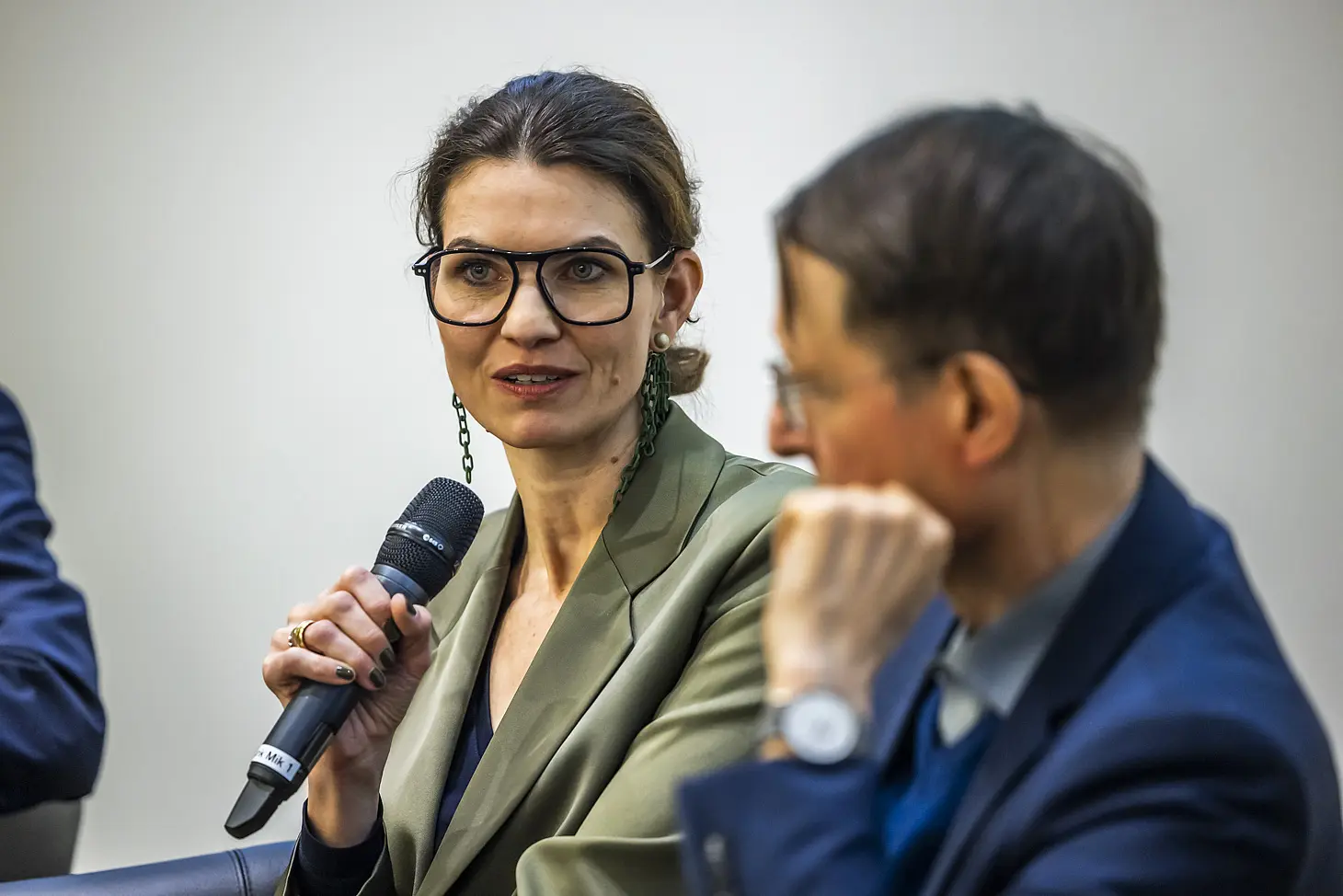
In the subsequent panel discussion, the patron of the evening, Prof. Dr. Karl Lauterbach, Member of the German Bundestag, discussed with Prof. Dr. Cornelia Betsch, Dr. Malte Petersen (Consultant "Effective Governance", Federal Chancellery), Dr. Jakob Simmank (Chief Health Reporter, DIE ZEIT) and Dr. Eckart von Hirschhausen (doctor and science journalist) how scientific evidence can be effectively incorporated into political processes - and which actors can help to disseminate and strengthen findings. Structural and administrative hurdles in political decision-making processes were also discussed. Together with the audience, the declining public awareness of climate protection and the climate crisis was also addressed. The responsibility of science to provide reliable findings at an early stage and in a way that is appropriate for the target audience was emphasised, as was the key role of the media in providing continuous information.
At the subsequent get-together, the discussion with guests from politics, practice, science, and the media was intensified.
Outlook
The next PUB series is already in the works: There is a call for the new PUB series "Early Warning Systems", edited by Cornelia Betsch and Dominik Daube, among others. The focus is on the perception and impact of warnings, risk communication, effects on protective behaviour, and the design and use of early warning systems. Submissions will be accepted until March 1, 2026.
Photos: Rolf Schulten
Background: The DGPs' Policy Ultra Briefs
With the Policy Ultra-Briefs, the DGPs is establishing a new dialogue format at the interface of psychology and politics. Further series of topics, including Democracy & Psychology and AI & Psychology, are already being planned. All previously published Policy Ultra Briefs on climate protection can be accessed here: psychologie.de/oeffentlichkeit/policy-ultra-briefs/klimaschutz/

![[Translate to English:] facebook icon](/fileadmin/SocialMediaIcons/iconfinder_06-facebook_white.svg)

![[Translate to English:] instagram icon](/fileadmin/SocialMediaIcons/iconfinder_38-instagram_white.svg)
![[Translate to English:] YouTube icon](/fileadmin/SocialMediaIcons/iconfinder_18-youtube_white.svg)
![[Translate to English:] xing icon](/fileadmin/SocialMediaIcons/iconfinder_xing_white.svg)
