Martin Buber's relationship with the Hebrew University of Jerusalem unfolded over several decades and can be traced in four phases, which together form a picture of intellectual closeness, responsibility and lasting influence:
At the beginning of the 20th century, Martin Buber was one of the formative voices of the cultural Zionist movement. In his early deliberations on the establishment of a Jewish university, he contributed a vision that saw education and science as central vehicles of cultural renewal. The university appeared to him as an intellectual centre in which tradition and modernity, research and responsibility, knowledge and human encounters were linked. During this phase, Buber acted as an intellectual co-founder whose ideas had a lasting impact on the normative horizon of the project.
With the ceremonial opening of the Hebrew University of Jerusalem in 1925, the project entered a new historical phase. Martin Buber accompanied this step with great attention. Even without a direct institutional function, he remained closely associated with the university and was perceived as an internationally recognised thinker whose work and attitude reflected the intellectual aspirations of the young institution. This phase is characterised by mutual esteem and a bond that is expressed less in formal roles than in a shared intellectual orientation.
The political upheavals of the 1930s led Martin Buber to Jerusalem and to a more intensive relationship with the Hebrew University. With his entry into academic teaching, he introduced a philosophical perspective that focused on dialogue, human interaction and the responsibility of thought. These years marked a period of convergence in which personal experience, intellectual authority and institutional affiliation came together in a new way.
Martin Buber made his most lasting impact during his years of teaching at the Hebrew University. As a teacher, he influenced students far beyond the lecture hall. His lectures combine Philosophy, religious thought and social ethics and focus on dialogue and human education. Even after his retirement, his intellectual legacy remains part of the university's self-understanding. For Buber, the university becomes a place of activity where thinking takes on responsibility and science takes on a human form.
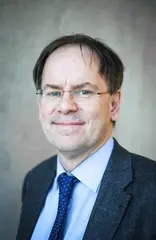
The speaker
Dr Francesco Ferrari, is an Associate Fellow at the Max-Weber-Kolleg of the University of Erfurt and has long been engaged as a researcher in the socio-political thinking of the Jewishreligious philosopher Martin Buber.

![[Translate to English:] facebook icon](/fileadmin/SocialMediaIcons/iconfinder_06-facebook_white.svg)

![[Translate to English:] instagram icon](/fileadmin/SocialMediaIcons/iconfinder_38-instagram_white.svg)
![[Translate to English:] YouTube icon](/fileadmin/SocialMediaIcons/iconfinder_18-youtube_white.svg)
![[Translate to English:] xing icon](/fileadmin/SocialMediaIcons/iconfinder_xing_white.svg)
