"We want to make an offer that works for everyone"
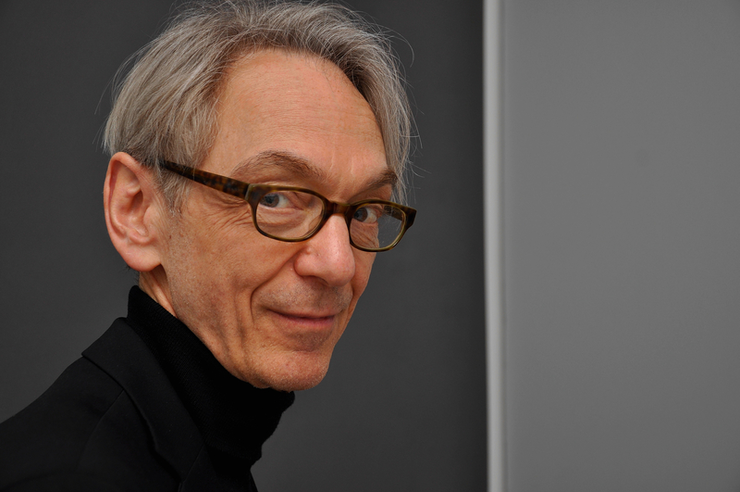
Professor Bauer-Wabnegg, why does the University of Erfurt need another health survey?
Walter Bauer-Wabnegg: The short answer is: Because the health of our employees and students is important to us. In more detail: It is also a key strategic issue for several reasons. Universities are complex working environments and the demands on employees and students have increased significantly in recent years. Across Germany, we are seeing an increase in the number of days of absence due to chronic and, in particular, mental illness. As a public institution, we have a legal – and caring – duty to protect the health of our members. After all, it is the basis for good teaching, strong research, functioning administration, innovation, employer attractiveness and long-term performance.
What has the University of Erfurt done so far to improve the health of its employees and students?
Walter Bauer-Wabnegg: Firstly, with the support of AOK PLUS as a health partner, we have established sustainable and strategic structures over the past six years to improve the health of university members: The preventative exercise and mindfulness programmes have been made permanent and can now be partly funded from our own resources. There are also corresponding formats for students in the Studium Fundamentale programme. We have created rooms for this so that we can also offer corresponding courses during the ongoing sports hall renovation. Another focus for us is strengthening a health-conscious management culture. This includes management consulting measures such as coaching and accompanying programmes as well as workshops and training courses on topics such as "Healthy (self-)leadership", "Dealing with conflict" and "Leadership at a distance". Incidentally, our efforts are not only recognised but also rewarded: In 2025, the University of Erfurt was awarded the "Thuringian Seal for Healthy Work" in gold as an employer. I think we can be very proud of that.
And what has happened in the area of mental health?
Walter Bauer-Wabnegg: The topic was another focus of university health management. For example, we launched the "Worry Phone", a unique student project in the state, which is now also open to students from other universities in Thuringia. We have created a counselling service for employees in stress and crisis situations. We have trained numerous Mental Health First Aid counsellors and thus established a close-knit network of contact persons at the university. In addition, we now regularly organise "Mental Health Weeks" and themed health days. This year, our "Dies Academicus" on 3 June will be dedicated to the topic of "Neurodiversity". Last but not least, we have introduced flexible working hours and work location models and continue to work intensively on occupational integration management.
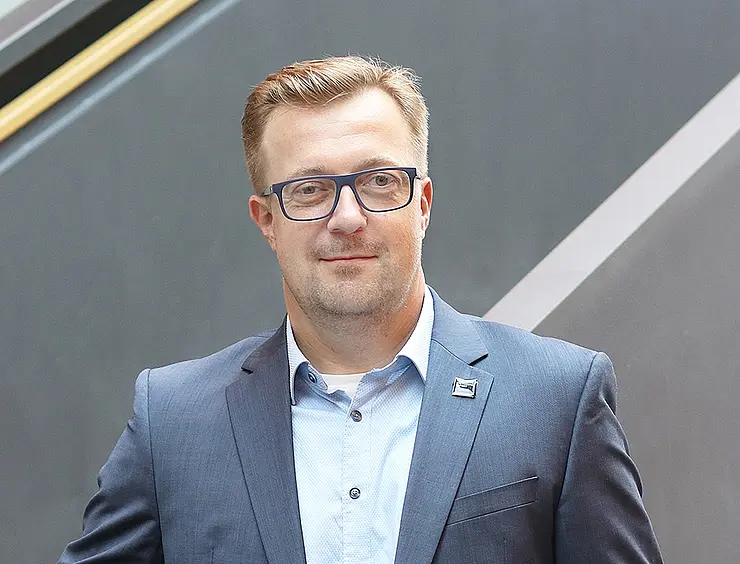
Mr Schellhardt, what specific goals is the university management pursuing with the new health survey and why is it so important that as many university members as possible take part?
Christian Schellhardt: We want to make an offer that works for all university members, i.e. that is perceived as helpful and therefore also accepted. Otherwise we will have to adapt it. The survey therefore offers everyone the opportunity to have their say and help shape it. Quite apart from that, a sponsor naturally wants to know that their money is being invested sensibly. If we don't meet our needs, we won't get any support. But we need it to be able to offer a programme as diverse as the one we have at the University of Erfurt. Because, quite honestly, without this support we wouldn't be able to do it to this extent.
The last health survey at the University of Erfurt was five years ago. Afterwards, some people criticised the fact that the results were not used to take effective action. How do you ensure that the results lead to noticeable changes this time?
Christian Schellhardt: The 2021 survey was primarily intended to fulfil the requirements of the mental health risk assessment, which we as an employer are obliged to carry out every five years. At the time, the results were analysed on a very small scale and to varying degrees of quality in the individual areas. Where the need for action became apparent in the form of a "red traffic light", we tried to achieve improvements in team workshops with external support. We will do this again this time. However, we also want to analyse the results in focus group workshops – provided we can find enough interested members of the university to participate. The invitation is hereby extended.
How will university members find out the results of the survey and what will happen next – is there already a plan for this?
Christian Schellhardt: The results of the health survey will be presented by the commissioned company Ramboll at a public event at the university in June and published on the intranet on the health management pages. All interested members of the university are then cordially invited to take part in the discussion and implementation process during the coming winter semester. In addition to the aforementioned focus group workshops, a project evaluation workshop is also planned for the autumn. The "Healthy University of Erfurt" concept will then be updated based on the results. The university has had a steering group for health promotion since 2015, in which all stakeholders and interest groups can participate. This group then discusses and decides on the final update of the concept.
And what role do managers play in the survey and the subsequent implementation of the measures?
Christian Schellhardt: They play an important role, as does the Student Council, given that we want them to promote participation in the survey in their respective areas. That's why we're planning a digital management training course on 22 April. After all, healthy university employees are also a sign of modern leadership and a good organisational culture. Successful implementation of the survey and its results is therefore in everyone's interest.
Employees will receive a personalized link via email to participate in the survey.
Students can participate via the following link.
Thank you for participating!
You are in the news section of our "Healthy University" service pages.
Further news, press releases and current topics can be found on the "News" pages of the University of Erfurt.
![[Translate to English:] facebook icon](/fileadmin/SocialMediaIcons/iconfinder_06-facebook_white.svg)

![[Translate to English:] instagram icon](/fileadmin/SocialMediaIcons/iconfinder_38-instagram_white.svg)
![[Translate to English:] YouTube icon](/fileadmin/SocialMediaIcons/iconfinder_18-youtube_white.svg)
![[Translate to English:] xing icon](/fileadmin/SocialMediaIcons/iconfinder_xing_white.svg)
