Your path to the classroom – teacher training within the Bachelor’s/Master’s system
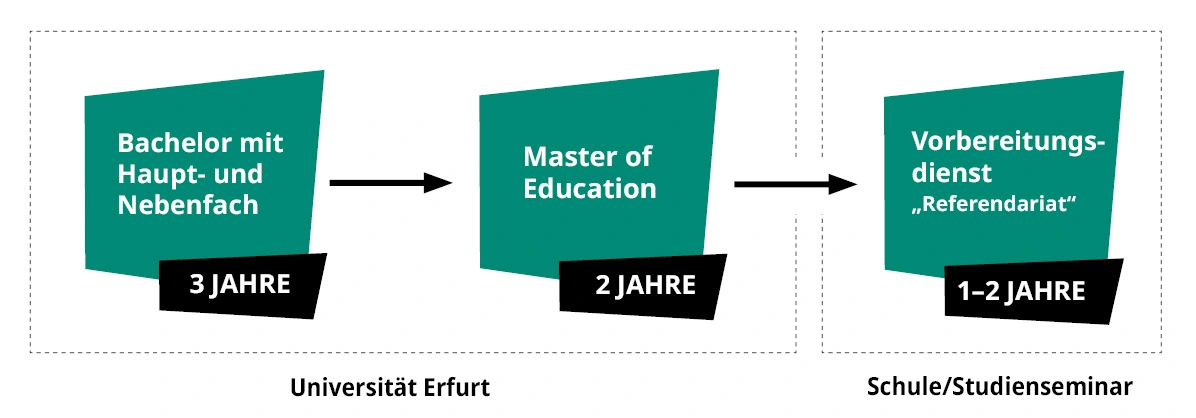
Structure of teacher training: By studying at the University of Erfurt (both the Bachelor’s degree programme and the Master of Education Special Needs Pedagogy programme) and completing the subsequent pre-service training, you will be qualified to teach, support and advise children and young people – particularly those with special educational needs – in primary schools, secondary schools, special schools and special education centres. You will work in multi-professional and interdisciplinary teams.
Which areas of special educational needs does the teacher training programme prepare students for?
In the second semester of the BA programme, you will choose two of the four special educational needs specialisms. The special educational needs specialisms studied at Bachelor’s level are explored in greater depth in the Master of Education (MEd) programme.
Please select two of the four focus areas:
Emotional and Social Development
Focus area: Emotional and Social Development
The funding priority area of emotional and social development addresses the causes of, the identification of, and the educational interventions for age-inappropriate and atypical difficulties in the perception and regulation of emotions, in understanding other people’s perspectives, and in communication and relationships with them.
The causes are examined from an interdisciplinary perspective, drawing on fields such as psychology, education and medicine. Scientifically-based educational interventions aim to support the social-emotional learning and social integration of children and young people with behavioural difficulties. In line with the multifactorial approach to understanding the causes, multi-professional cooperation plays a key role in this context.
Intellectual Development
Focus area: Intellectual Development
In the area of special educational needs focusing on intellectual development, we support people with varying degrees of intellectual disability. This affects them throughout their lives, from childhood right through to old age. We show trainee teachers and professionals in Special Needs Pedagogy how they can provide support and educational opportunities in all areas of life in accordance with the provisions of the UN Convention on the Rights of Persons with Disabilities. Our aim is to support individual educational pathways, regardless of whether the person attends a specialist support centre, is educated in an inclusive setting or receives out-of-school education. We also aim to foster the skills that enable people with intellectual disabilities to lead self-determined lives.
Learning
Focus area: Learning
In the special educational needs specialism focusing on learning, we address learning difficulties arising from challenging learning and life circumstances. The aim is to understand learning and its complex determining factors, as well as to identify possible causes of learning difficulties. In doing so, we examine both challenging learning situations – such as difficulties in acquiring basic literacy and numeracy skills – and discrimination and challenging life circumstances, such as those arising from experiences of poverty, migration or displacement. Ultimately, the subsequent master's programmes will prepare you to plan, design and evaluate inclusive learning environments against this backdrop. This also includes consultancy work in the field of innovative organisational, school and teaching development.
Language & Communication
Focus area: Language & Communication
The ‘Language & Communication’ support focus addresses the needs of people who experience difficulties with their language and communication skills. This involves an interdisciplinary approach that brings together various specialist fields such as education, linguistics, medicine and psychology. Both in theory and in practice, we address these impairments in the areas of education, teaching, support and therapy, in both school and non-school settings. Our focus spans the entire lifespan of people with language and communication impairments. It is a truly exciting and varied field!
Presentation of the ‘Language & Communication’ specialisation (pdf)
Teaching Profession in Special Needs Pedagogy: Which subjects does the teaching profession programme prepare students to teach?
| Subject | Subject taught |
|---|---|
| English and American Studies | English |
| Protestant Religion | Protestant Religion |
| Special Education and Inclusive Pedagogy* | German or Maths or Social Studies and Science |
| German Studies | German |
| History | History |
| Catholic Religion | Catholic Religion |
| Arts | Arts |
| Mathematics | Mathematics |
| Music | Music |
| Philosophy | Ethics |
| Religious Studies | Ethics |
| Romance Studies | French |
| Slavic Studies (phased out) | Russian |
| Physical Education and Movement Pedagogy | Physical Education |
| Economics, Law and Social Sciences | Social Studies |
| Technology | Economics/Technology etc. |
Requirements for secondary school teaching degree
What requirements do you need to fulfil to study to become a regular school teacher? A valid university entrance qualification, usually the general higher education entrance qualification (Abitur), is required for the undergraduate Bachelor's degree programme. Proof of a passed aptitude test is required for the subjects Arts, Music and Sport.
Bachelor’s degree programme
On the Bachelor’s degree programme, you will combine your major subject – Special Education and Inclusive Pedagogy – with a minor subject relevant to teacher training. Your choice of subjects will determine the two subjects you will teach.
1. Major subject
Special Education and Inclusive Pedagogy: 1st subject

The major in Special Education and Inclusive Pedagogy comprises training in the first teaching subject. Within this major, students acquire the subject-specific knowledge required to teach German, Mathematics or Social Studies and Science at primary schools.
Depending on your chosen minor subject, within the main subject of Special Education and Inclusive Pedagogy you will select modules from Foundations of German, Foundations of Mathematics or Integrative General Studies with a focus on sustainability education.
In the second semester of the BA programme, you will choose two of the four special educational needs specialisms:
- Emotional and Social Development,
- Intellectual Development,
- Learning,
- Language.
2. Minor subject
Choice of second subject
The choice of a minor subject to complement the major subject of Special Education and Inclusive Pedagogy corresponds to the choice of a second teaching subject, which can later be taught at lower secondary level. The first teaching subject, which can later be taught at primary level, is determined by the main subject (German, Mathematics or Social Studies and Science).
English and American Studies (English)
Protestant Religious Education (Protestant Religious Studies)
German Studies (German)
History (History)
Arts (Arts) aptitude test for Arts
Catholic Religion (Catholic Religious Studies)
Mathematics (Mathematics)
Music (Music) aptitude test for Music
Philosophy (Ethics)
Religious Studies (Ethics)
Romance Studies (French)
Sport and Physical Education (Sport) aptitude test for Sport
Economics, Law and Social Sciences (Social Studies)
Technology (Economics/Technology)
Combination rules
Subject combinations for the teaching profession in Special Education and Inclusive Pedagogy
The main subject of Special Education and Inclusive Pedagogy cannot be combined with Educational Science. If you are aiming to qualify for the teaching profession in Special Needs Pedagogy, you must choose a subject relevant to the teaching profession as your minor.
When combined with...
- German Studies as a minor subject, choose either Foundations of Mathematics or Integrative General Studies with a focus on sustainability education as your major subject.
- with a minor in Mathematics, choose either Foundations of German or Integrated General Studies with a focus on sustainability education as your major.
- another subject relevant to teacher training as a minor, choose either Foundations of German or Foundations of Mathematics as your major.
Subjects relevant to teacher training
| Main subject (teaching subject) | Minor subject (teaching subject) |
|---|---|
| Special Education and Inclusive Pedagogy (German, Maths or Social Studies and Science) | English and American Studies (English) |
| Protestant Religion (Protestant Religion) | |
| German Studies (German) | |
| History (History) | |
| Catholic Religion (Catholic Religion) | |
| Arts (Arts) | |
| Mathematics (Mathematics) | |
| Music (Music) | |
| Philosophy (Ethics) | |
| Religious Studies (Ethics) | |
| Romance Studies (French) | |
| Physical Education and Movement Pedagogy (PE) | |
| Economics, Law and Social Sciences (Social Studies) | |
| Technology (Economics/Technology) |
You can enrol in the bachelor's programme in Special Education and Inclusive Pedagogy (major only), which has no entry restrictions, and your chosen minor subject from 1 May to 15 September. If your minor subject has restricted admission, you can only submit your application by 15 July.
Master’s programme: Specialisation & Teaching Practice
The Bachelor’s degree is followed by the Master of Education in Special Education and Inclusive Pedagogy (for the teaching profession).
Master of Education in Special Education and Inclusive Pedagogy at the University of Erfurt
You will be prepared to support children and young people in accordance with their individual backgrounds and specific educational needs, and to teach two subjects (one primary school subject and one lower secondary school subject). In addition, you will familiarise yourself with the possibilities for inclusive school development and acquire skills in advising on and facilitating change processes.
Master of Education in Special Education and Inclusive Pedagogy
Internships as part of a teacher training programme
The Master’s programme places greater emphasis on practical school experience. Put what you have learnt into practice during the various internships.
- Subject-specific internships
(one internship in the foundation subject, two internships in the specialisation subject) - Educational science internships
(in the 1st semester: diagnosis, assessment and counselling; in the 2nd semester: teaching, classroom management, conflict resolution) - Special educational needs internships
(two internships in the chosen areas of special educational needs)
Study abroad placements during teacher training (optional)
The various internships available during your Bachelor’s and Master’s degree programmes offer you the opportunity to broaden your horizons, gain an insight into school systems in other countries and enjoy unique experiences abroad as part of your teacher training.



How do I become a teacher in Special Education and Inclusive Pedagogy? (in German)
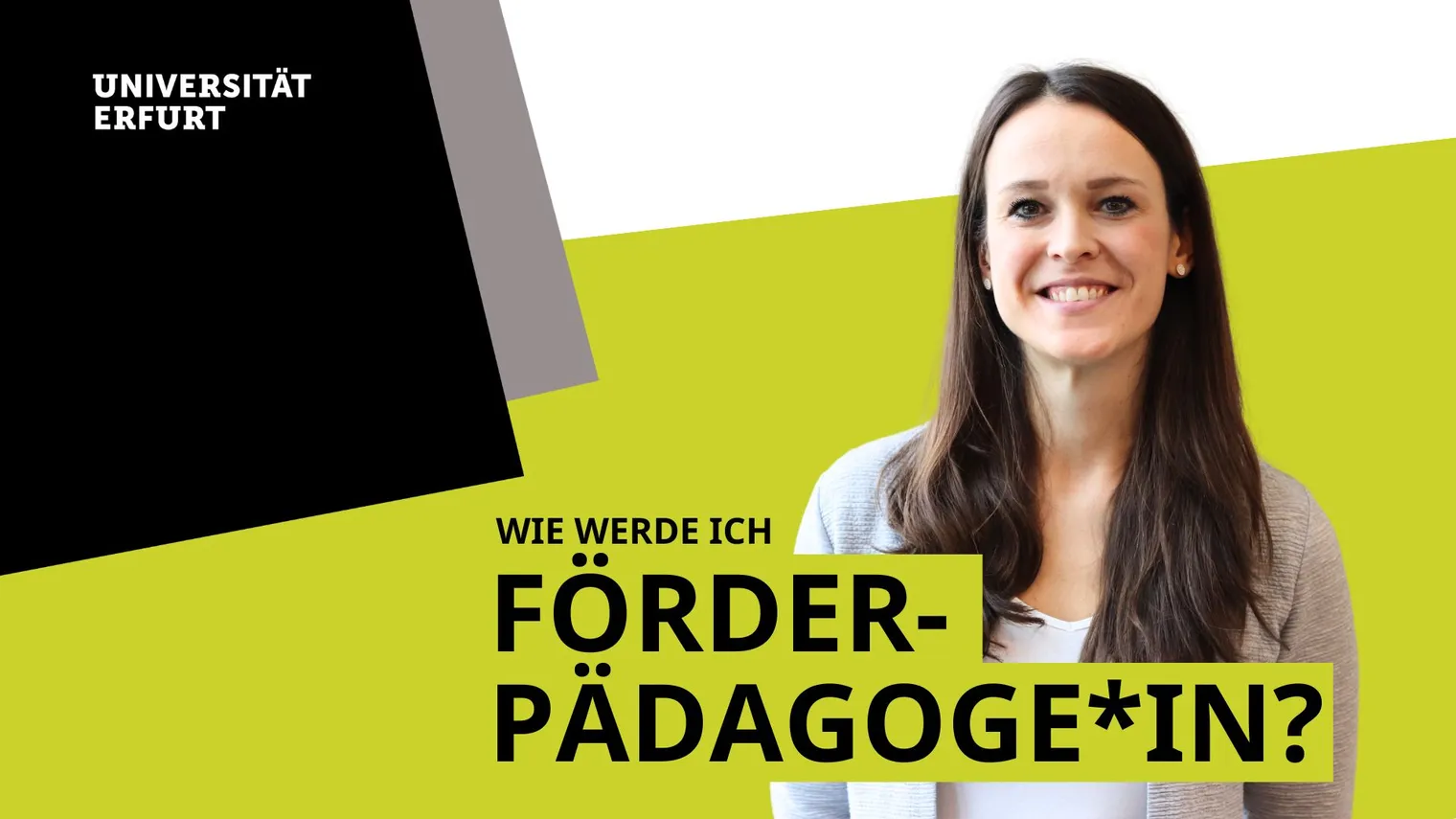
Please note: Once you watch the video, data will be transmitted to Youtube/Google. For more information, see Google Privacy.
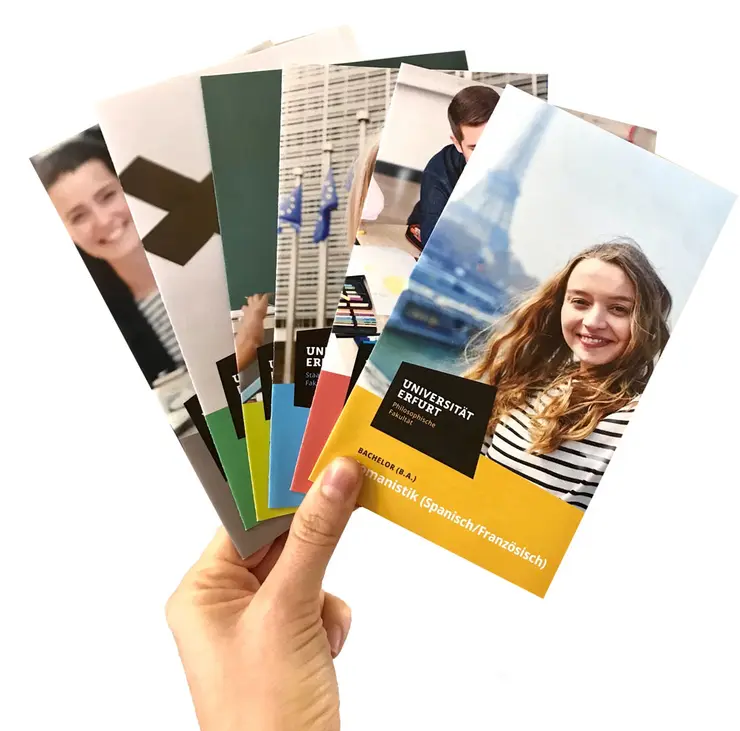
Information material
Leaflet: ‘Studying at the University of Erfurt’ (pdf)
Leaflet ‘Studying to enter the teaching profession at the University of Erfurt’ (pdf)
Leaflet “How do I become a teacher in Special Needs Pedagogy?” (pdf)
Leaflet: ‘Bachelor's Programme in Special Education and Inclusive Pedagogy’ (pdf)
Leaflet: “Master of Education – Teaching Profession in Special Needs Pedagogy and Inclusive Education” (pdf)

Our graduate Anna Werisch, a teacher at primary schools (in German)
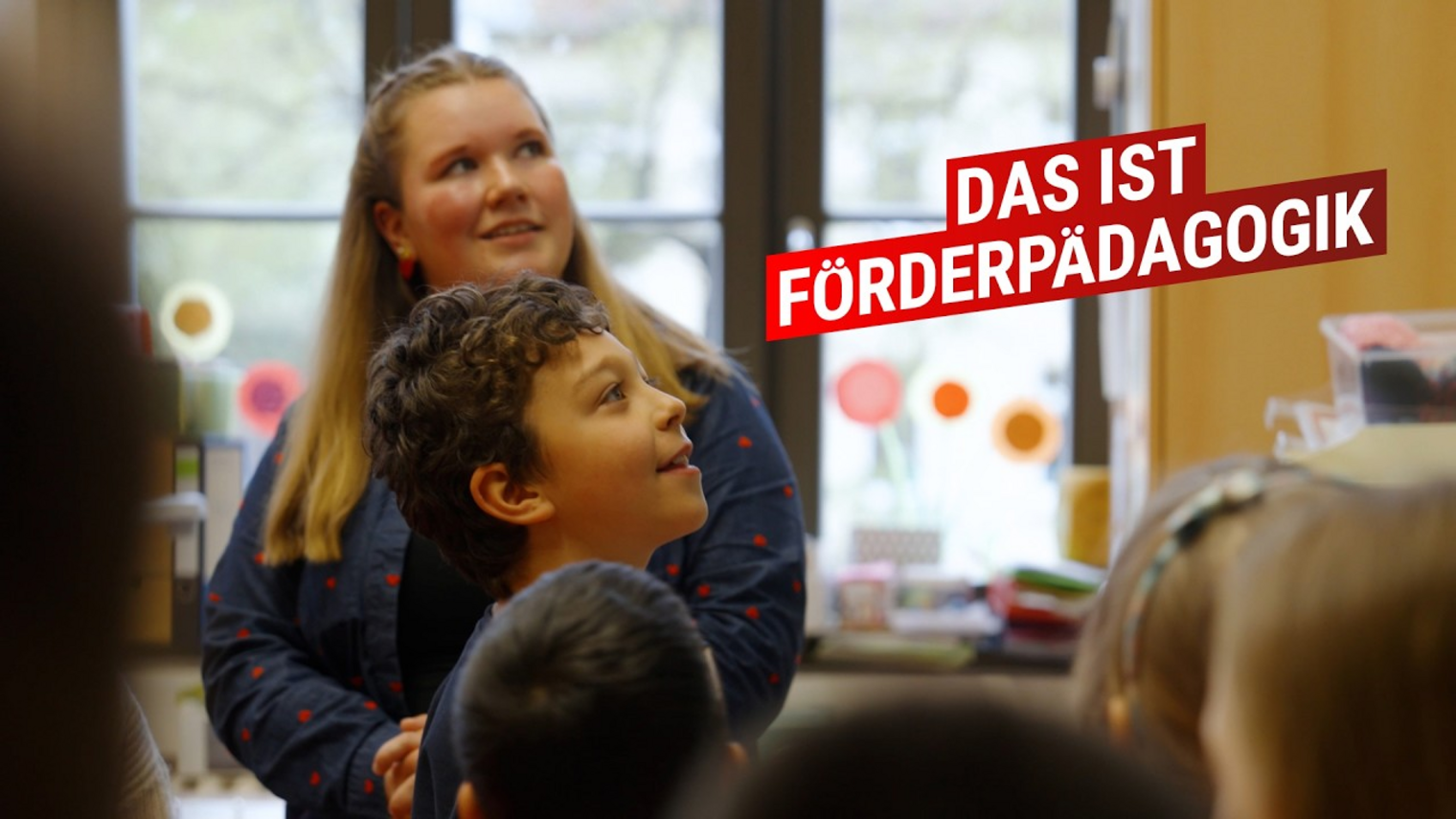
Please note: Once you watch the video, data will be transmitted to Youtube/Google. For more information, see Google Privacy.
Advice on teacher training

General Student Advice and Counselling Service
by telephone: Monday to Friday 9-11:30 a.m.


![[Translate to English:] facebook icon](/fileadmin/SocialMediaIcons/iconfinder_06-facebook_white.svg)

![[Translate to English:] instagram icon](/fileadmin/SocialMediaIcons/iconfinder_38-instagram_white.svg)
![[Translate to English:] YouTube icon](/fileadmin/SocialMediaIcons/iconfinder_18-youtube_white.svg)
![[Translate to English:] xing icon](/fileadmin/SocialMediaIcons/iconfinder_xing_white.svg)
