International Relations

Degree Profile
Course Details of the International Relations
The BA International Relations deals with the cross-disciplinary dimensions of a changing world order.
Subject areas are the growing interdependence of national political systems and economies, as well as the role of transnational governmental and non-governmental organisations. The degree programme is decidedly interdisciplinary, combining legal, social and economic perspectives.
As part of this interdisciplinary programme, students should acquire the basic scientific knowledge and skills in the field of international relations required for a successful career. To achieve this, students learn how to scientifically analyse major problems in international relations and how to strengthen their powers of judgement.
The degree programme teaches fundamental contexts, concepts and approaches to international relations, and teaches logical, structured and critical approaches, thus enabling students to deal independently with the global challenges of our time.
- Theories of International Relations
- International political economy
- Normative foundations of world politics
- Foreign policy and security
- Applied Statistics and Data Collection
- Microeconomics or Macroeconomics
- Fundamentals of Law
- Constitutional Law
- International Law
Niklas studies International Relations at the University of Erfurt
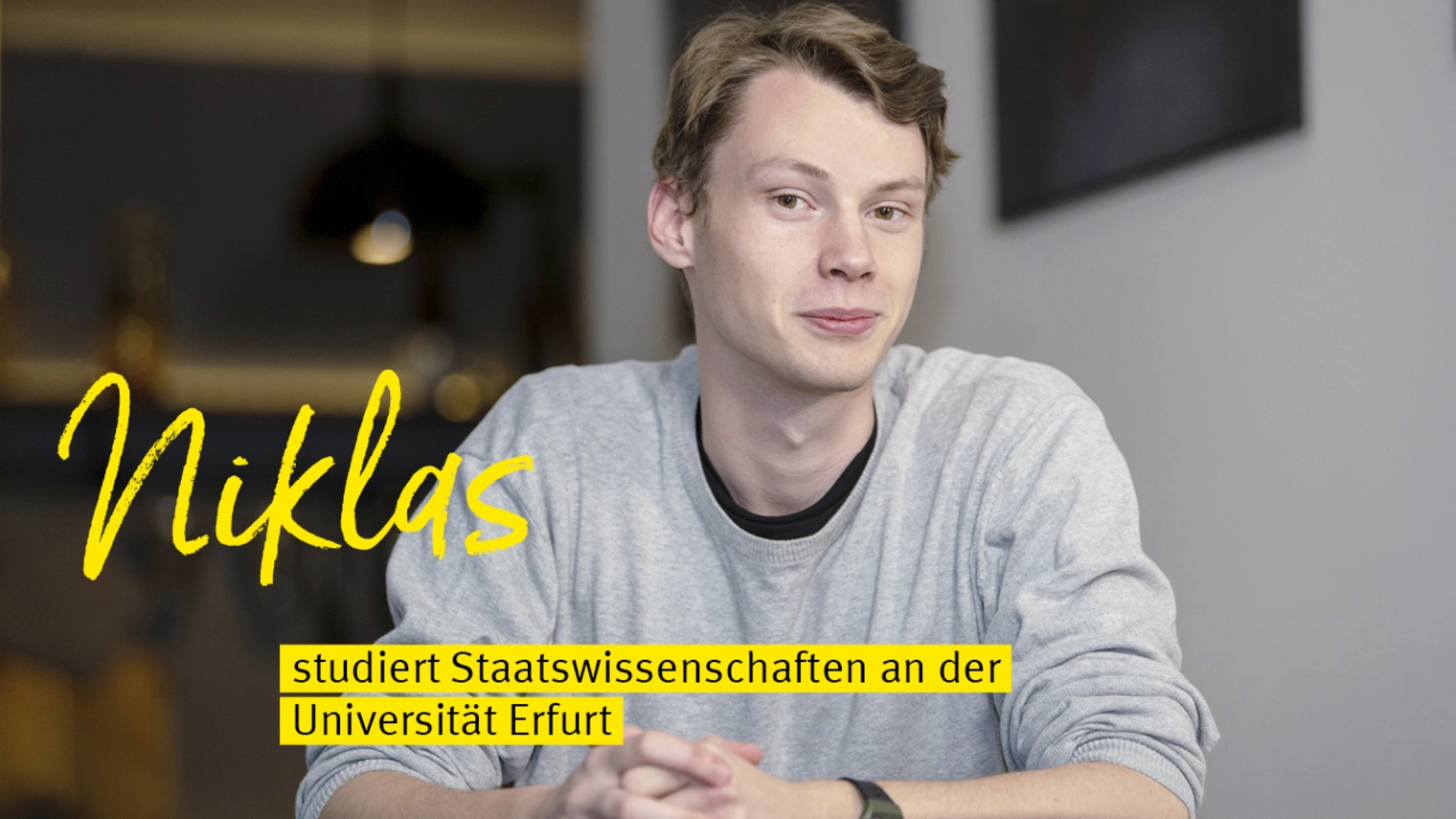
Please note: Once you watch the video, data will be transmitted to Youtube/Google. For more information, see Google Privacy.
Career opportunities
You will acquire interdisciplinary knowledge for professional activities:
- in public or private organisations in an international context,
- in international and supranational institutions,
- in the state,
- in non-governmental organisations,
- in political education and adult education,
- in peace and security policy,
- in management consultancy and in associations,
- in the media and in journalism,
- in public relations work for e.g. political parties, associations and foundations,
- in market and opinion research,
- in the church.

Show moreI would study at the University of Erfurt again: Not everywhere can you study politics, law and economics in such an interdisciplinary way and add a further specialisation with a minor subject. In addition to the degree programme itself, university life in Erfurt was incredibly enriching for me.

Show moreDon't be afraid to try things out, even if you don't know anything about them at first - most things are learnt by doing. After all, studying is also about trying things out, learning new things and questioning the status quo. The seriousness and routine of professional life usually come soon enough.
Our former students of the Faculty of Economics, Law and Social Sciences
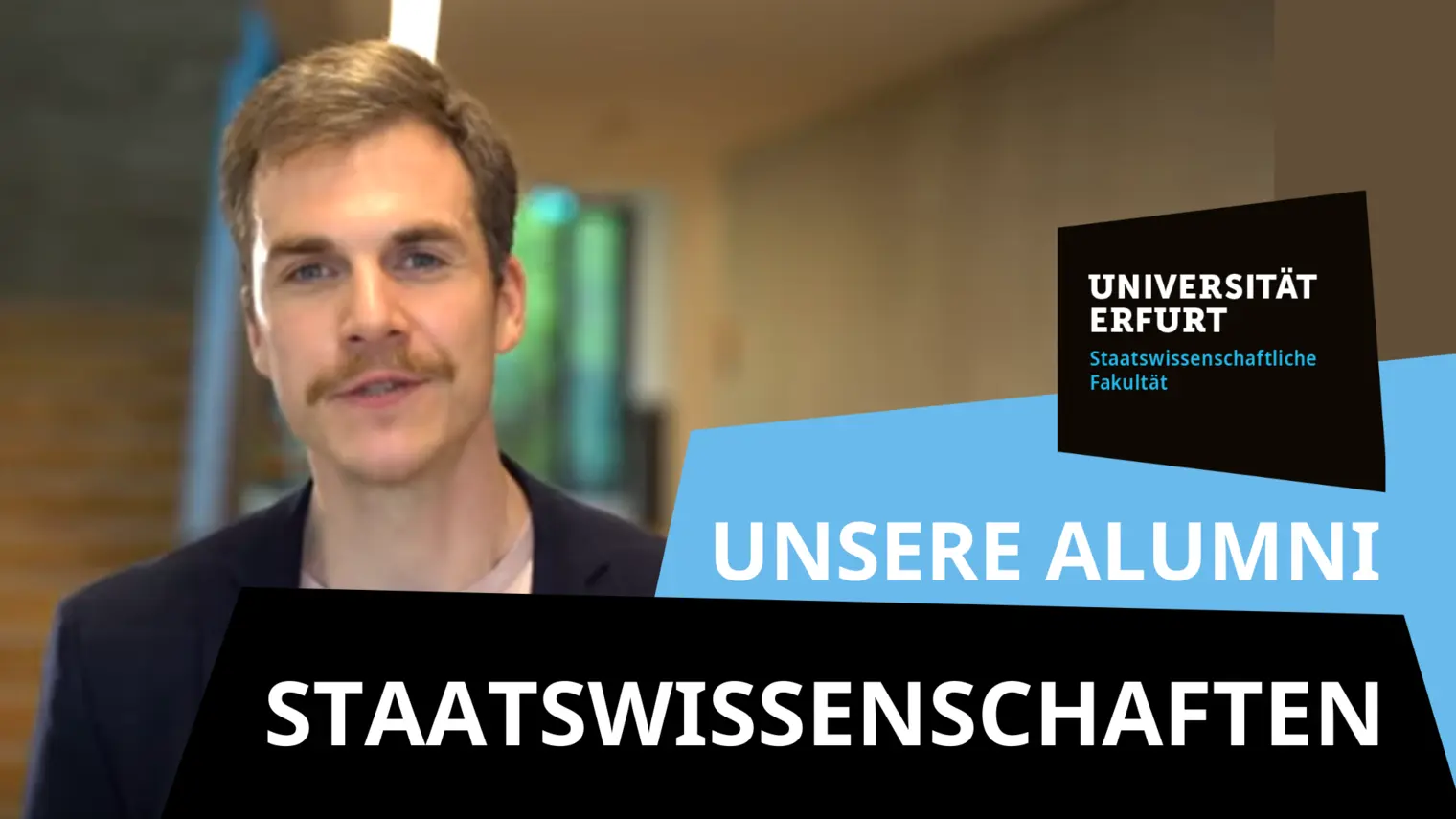
Please note: Once you watch the video, data will be transmitted to Youtube/Google. For more information, see Google Privacy.
Programme structure International Relations
Structure of the International Relations degree programme
The bachelor's programme (two-subject bachelor's degree) at the University of Erfurt comprises the major subject International Relations and a chosen minor subject as well as the Studium Fundamentale integrated into the major subject. The aim of the programme is to teach subject content and professional orientation as well as interdisciplinary skills. The standard period of study is six semesters.
Orientation phase (1st - 2nd semester)
Option A: If you combine the subject International Relations with a minor from the Faculty of Economics, Law, Law and Social Sciences - Law concentration, you will take part in the joint orientation phase of the Faculty of Economics, Law and Social Sciences - Law concentration.
Compulsory modules:
- Fundamentals of Law I (6 CP)
- Constitutional Law (6 CP)
- Civil Law I (6 CP)
- Fundamentals of Social Sciences: International Relations (6 CP)
- Social Science Foundations: Introduction to the Social Sciences (6 CP)
- Fundamentals of Social Sciences: Statistics (6 CP)
- Introduction to Business Administration (6 CP)
- Introduction to Microeconomics (6 CP)
- Introduction to Macroeconomics and Economic Policy (6 CP)
and a Q-phase module of the major or minor subject (open for the O-phase)
Option B: If you have combined the subject International Relations with a minor outside the Faculty of Economics, Law and Social Sciences - Law concentration (not Management, Law, Social Sciences or Economics):
Compulsory modules:
- Fundamentals of Law I (6 CP)
- Constitutional Law (6 CP)
- Fundamentals of Social Sciences: International Relations (6 CP)
- Fundamentals of Social Sciences: Statistics (6 CP)
- Introduction to Microeconomics (6 CP) or Introduction to Macroeconomics and Economic Policy (6 CP)
Qualification phase (3rd-6th semester)
In the qualification phase of the International Relations degree programme, modules worth 90 credit points (LP/ECTS) must be completed.
Compulsory modules:
- International Law (6 CP)
- Social Science Basics: Applied Statistics and Data Collection (6 CP)
- Social science specialisation: Theories of International Relations (6 CP)
- Two language modules from ZS ENi 2020 (6 CP each)
- Final module - International Relations (12 CP)
Compulsory elective modules:
- European Law (6 CP)
- Social science specialisation: International political economy (6 CP)
- Social science specialisation: Normative foundations of world politics (6 CP)
- Specialisation in Social Sciences: Foreign Policy and Security (6 CP)
- Research Seminar International Relations (6 CP)
- Technologies of Scientific Work (6 CP)
- International Economics I (6 CP)
- International Economics II (6 CP)
- International Economics II (6 CP)
and a professional field module (6 CP) and three compulsory elective modules in the area of Studium Fundamentale (18 CP).
Language studies
In the course of the Bachelor's degree programme in International Relations, students must achieve a language proficiency level (according to the Common European Framework of Reference for Languages) with the completed language course modules.
Seminar programme: Model United Nations University of Erfurt
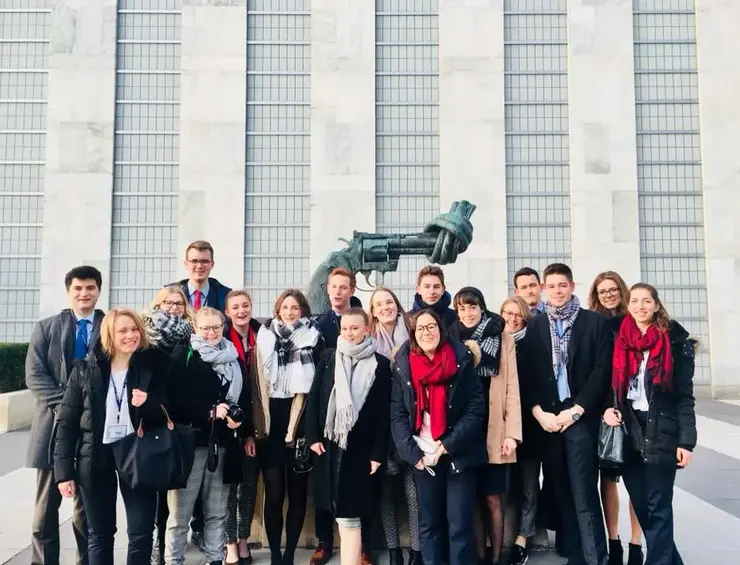
Model United Nations (MUN) is a practical simulation of the United Nations (UN) in which participants represent an assigned country in one of the UN bodies. During this simulation, current international problems are discussed, whereby specialised knowledge, rhetorical skills, diplomatic skills and negotiation skills are particularly in demand.
The seminar is divided into two parts, with the first part deepening the participants' knowledge in the areas of international law, international relations, rhetoric, negotiation strategies and political writing. In the second part, participants take part in preparatory UN simulations. Here they represent their assigned country in the UN bodies through public negotiations that take place in informal meetings. An annual highlight is participation in the Model UN Conference in New York City, USA.
Examination and study regulations, sample curriculum & module catalogue
Examination regulations & module catalogue
In the respective examination regulations you will find important information on the study objectives and content, language requirements, the structure of the programme as well as the teaching units and module examinations.
Examination regulations major subject International Relations 2021 (pdf)
Study abroad: theory & practice abroad

Your semester abroad
A semester abroad in an English-speaking country is strongly recommended. The semester abroad should take place during the qualification phase, if possible in the 5th semester.
Get to know our students who have already studied abroad in our blog "I like my university".
Your path to studying abroad
As a rule, 12 to 18 months are estimated for planning and preparation before the start of studies abroad. Scholarship applications in particular have a long lead time. First discuss with your mentor which stage of your studies makes the most sense for a semester abroad. At the same time, think about the target region and the university you would like to go to.

Erasmus programme
Would you like to study abroad for one or two semesters during your degree programme? ERASMUS+ offers you the opportunity to study in another country and thus expand your social and intercultural competences in addition to your subject-related skills. The University of Erfurt offers you ERASMUS exchange programmes with around 75 universities in 25 countries.

Internships during your studies: Professional practice
Admission requirements
Admission Requirements International Relations
Studying with Abitur
- general qualification for university entrance or the subject-related higher education entrance qualification or a comparable previous education
General information on the admission requirements (study without Abitur):
www.uni-erfurt.de/studium/vor-dem-studium/bewerbung-zulassung-einschreibung
Language Requirements of International Relations
Language requirements for studies
Before beginning the study of International Relations:
- English at language level B2
By the end of the International Relations degree programme:
In the major subject International Relations, two language modules must be completed, which are aimed at the acquisition of a further language level according to the European Framework of Reference for Languages.
Language Centre
The Language Centre (Sprachenzentrum) offers around 140 language courses per semester in 16 modern and ancient (foreign) languages. It supports you in acquiring and deepening your language skills.
www.uni-erfurt.de/sprachenzentrum
Admission limitation (with NC)
Only a limited number of places are available for the International Relations programme (internal university admission restriction, numerus clausus). The number of places is determined anew for each winter semester.
Information on the application of admission restricted study programmes
Details about the International Relations degree programme
After the Bachelor's degree: Master's programmes
Further master's programmes at the University of Erfurt
Master's programme Democracy and Economy
Master's programme Public Policy
Master's programme Economics, Lawand Social Sciences
Open Day & Discovery Days
Order or download information material

Similar degree programmes



What our international relations students say
Experience reports and evaluations of the International Relations degree programme
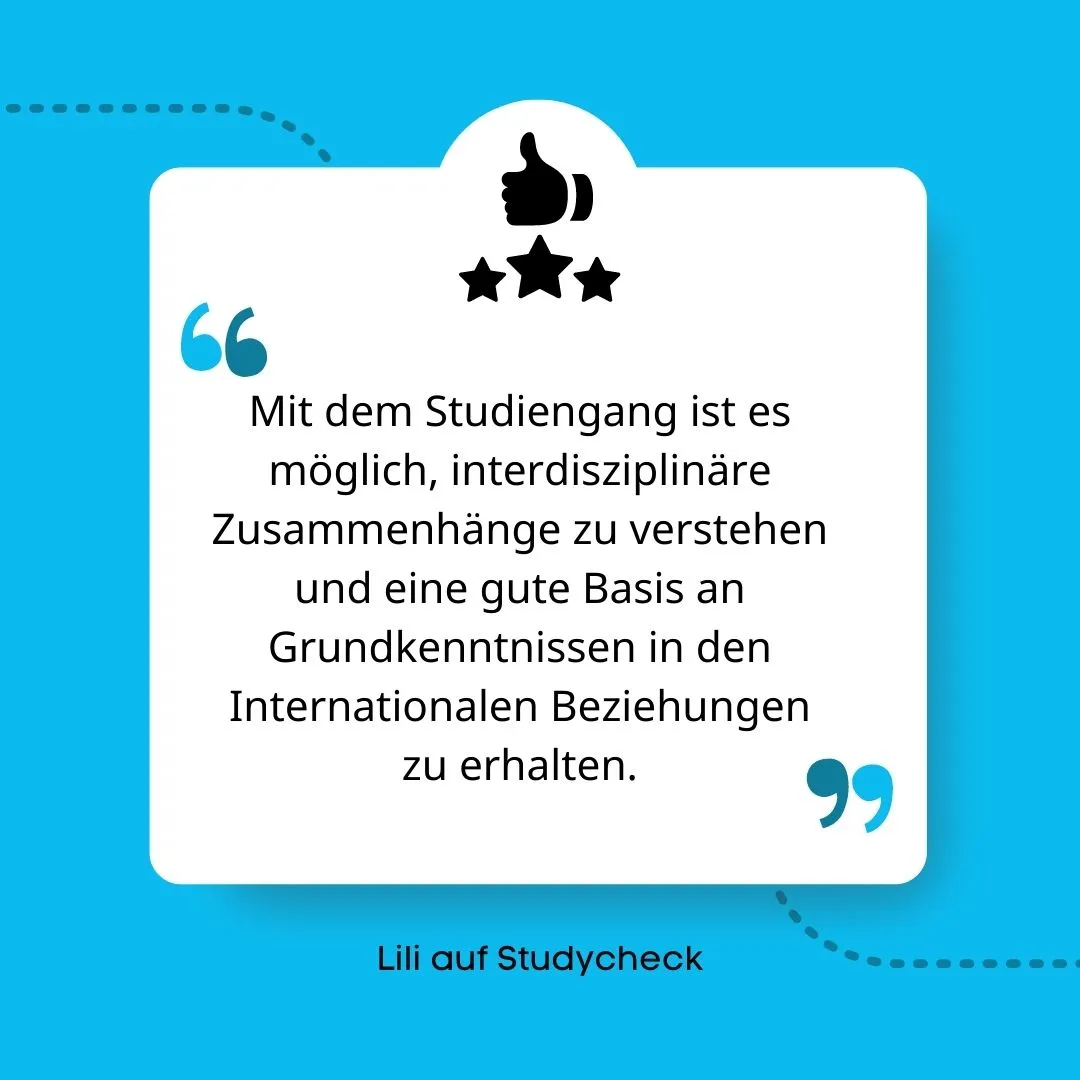
If you want to study an interdisciplinary subject, you are in good hands with the International Relations programme. Once you have completed the O phase, there is plenty of scope to choose seminars according to your own preferences. The subject areas are very broad and many modern approaches are covered.
Rating from Jakob on Studycheck
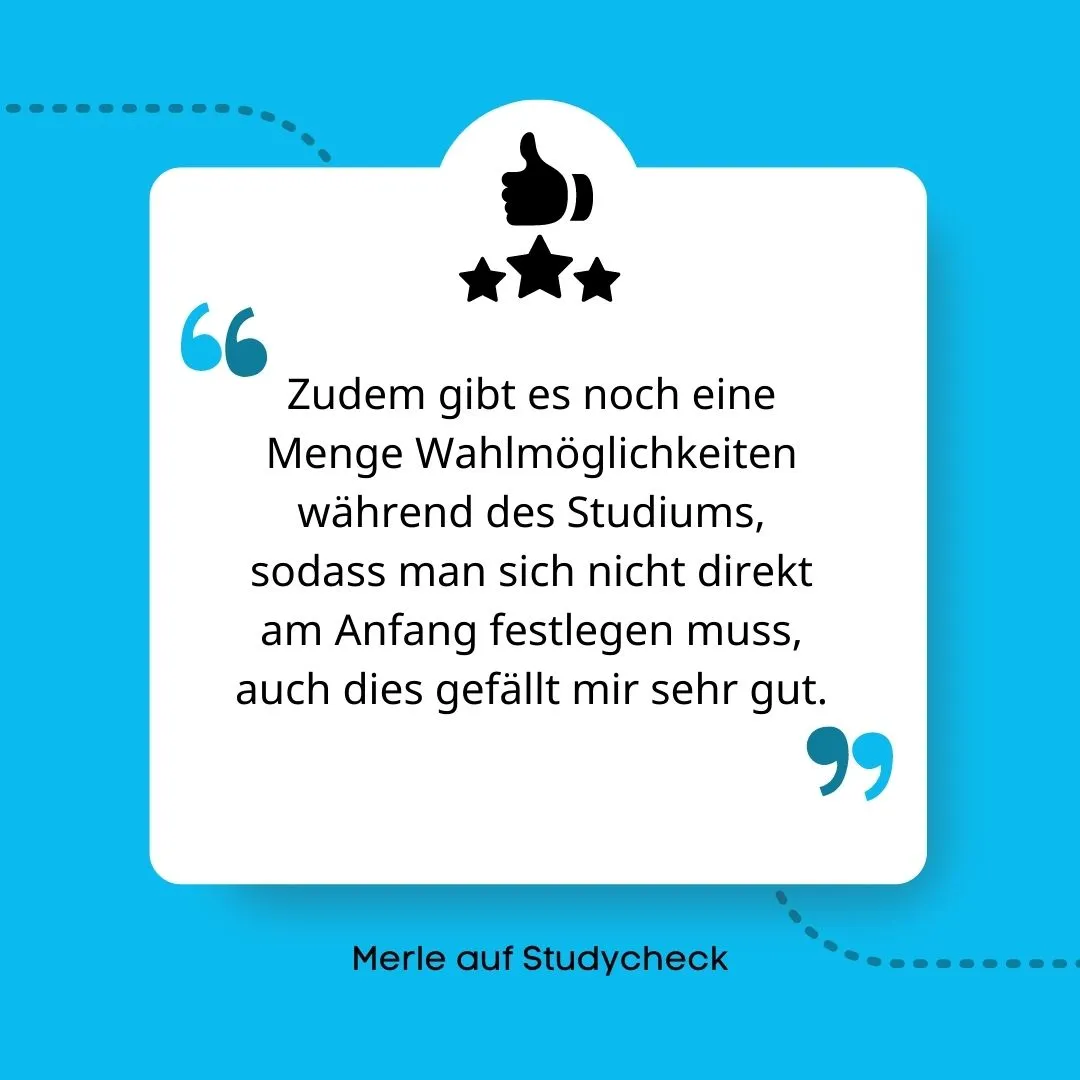
The programme is great for gaining a broad insight into the various areas and topics of international relations and then building on this with a Master's degree. It is very interdisciplinary and there are many options to choose from, which makes the programme very customisable, depending on your future career aspirations.
Review by Sarah on Studycheck
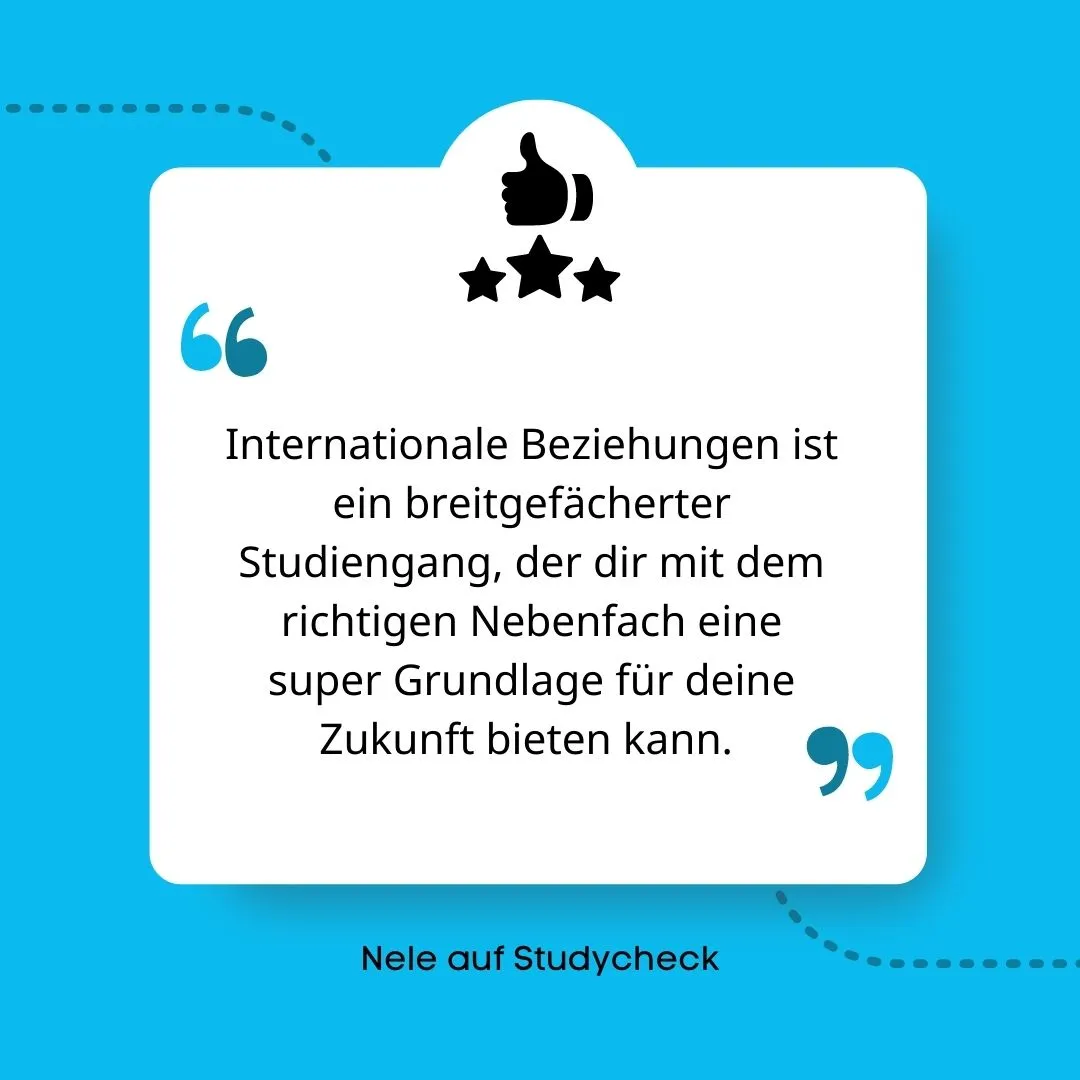
The International Relations degree programme is always combined with a minor subject, in my case Social Sciences. This combination option and a broad introduction to related subjects such as constitutional law, contract law, economics (micro and macro) and social sciences promotes a more general understanding of the related fields in reality.
Evaluation by Thomas on Studycheck
The International Relations degree programme is very comprehensive, as you gain knowledge in various fields, e.g. law, administration, economics, politics and sociology. In my opinion, the combination with another Economics, Law and Social Sciences subject is a very good addition, even though it requires discipline.
Now that I'm doing a semester abroad , I can compare my knowledge of international relations with that of my colleagues here, and many topics that didn't mean much to me before, I now understand how important it is to study them. What I also like about the University of Erfurt is that there is the opportunity to learn a third language, which is very useful and necessary for a professional life in international relations.
Evaluation by J. on Studycheck
The International Relations degree programme is admission-restricted (with NC).
Application for the two-subject Bachelor's programme:
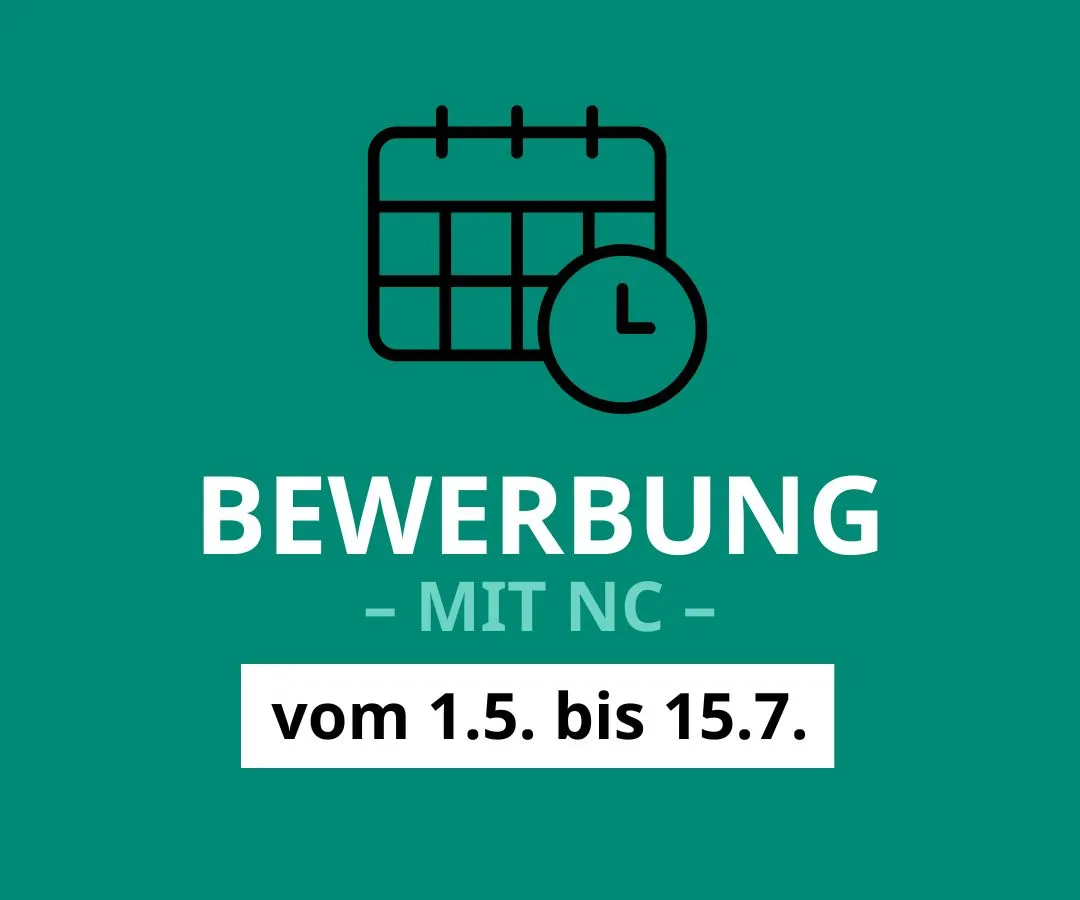
If you are combining International Relations with an admission-free (without NC) or admission-restricted minor subject (with NC), please apply from 1 May to 15 July via the following link.
Subject advice and counselling

Please briefly describe your request in advance and, if applicable, attach a statement from your student account and a certificate of enrolment.
Student Council Staatswissenschaften
Would you like to talk to students? Write to them or follow them on Facebook and Instagram!
- fsstaatswissenschaft@uni-erfurt.de
-
Facebook: FSR Staatswissenschaften
-
Instagram: FSR Staatswissenschaften

Are you considering studying Economics, Law and Social Sciences at the University of Erfurt, but are still unsure what to expect?
Then simply contact us by e-mail at: stawi2b@uni-erfurt.de
and we will arrange a telephone call.
We are happy to answer any questions you may have about course content or future opportunities, but also about Erfurt as a city to study in or our student life.
Download info pack
Flyer "Studying at the University of Erfurt" (pdf)
Flyer "Course offerings at the University of Erfurt" (pdf)
Flyer "Bachelor's programme in International Relations" (English, pdf)
Flyer "Studying Economics, Law and Social Sciences at the University of Erfurt" (pdf)
Download the International Relations information pack

What inspires me about my degree programme...
Timo has combined International Relations with Romance Studies .
![[Translate to English:] facebook icon](/fileadmin/SocialMediaIcons/iconfinder_06-facebook_white.svg)

![[Translate to English:] instagram icon](/fileadmin/SocialMediaIcons/iconfinder_38-instagram_white.svg)
![[Translate to English:] YouTube icon](/fileadmin/SocialMediaIcons/iconfinder_18-youtube_white.svg)
![[Translate to English:] xing icon](/fileadmin/SocialMediaIcons/iconfinder_xing_white.svg)
